
Being a Lawyer is a Calling to Serve
Justice according to law was never just an abstract idea to me. How the law is administered by our courts determines whether a person is deprived of his livelihood or liberty or regains them, and in some cases, whether a person’s life is forfeited or not.
In Re Tay Quan Li Leon, the Chief Justice said that “[l]awyers are called to be ministers in the temple of justice”.1(2022) SGHC 133 at (1). Although this was pronounced in the context of a lawyer’s ethical responsibility, it also reflects the reality that without lawyers to speak on their behalf, litigants usually do not have an easy time seeking justice in this temple.
We are human after all. Some litigants may not have the education to understand legal proceedings and legal language. Some may also be intimidated by the justice process – the Judge seated high above everyone, opposing lawyer dressed immaculately and speaking eloquently about “novus actus interveniens”, the “public interest” or the need for “specific deterrence”. This experience and sense of helplessness are all the more harrowing for the vulnerable in our community.

Unfortunately, the reality is that lawyers do not come cheap and not everyone can afford a lawyer. Without lawyers, the journey in the temple of justice is a frightening and difficult one for the vulnerable. And for the vulnerable, their legal troubles may be a result of deeper personal or socio-economic issues. Justice for them is wider than just what the law can offer.
The pursuit of justice is therefore a deeply personal mission to me. From the moment I graduated from law school, I knew I wanted to use the law to help those who needed it most. That calling has shaped every decision I’ve made in my legal career.
Finding My Footing in the Legal World
In 2015, I graduated with a Bachelor of Laws (First Class Honours) and a Bachelor of Economics from the Australian National University. Upon completing my Part A exams, I started as a Trainee at Dentons Rodyk & Davidson LLP, gaining experience in competition and corporate law.
But it wasn’t long before I was drawn to the courtroom and litigation. In 2016, I joined the Attorney-General’s Chambers as a State Counsel and Deputy Public Prosecutor.
Later, I served as a Justices’ Law Clerk (JLC) at the Supreme Court of Singapore. This role profoundly shaped my understanding of the administration of justice in Singapore, exposing me to the importance of fairness in our justice process. It is inspiring to see firsthand how tireless lawyers work to ensure their client’s case is heard and presented well in court and then how tireless judges work to ensure that the legal process is fair for parties and that the outcome is fair according to the law and the facts as presented.
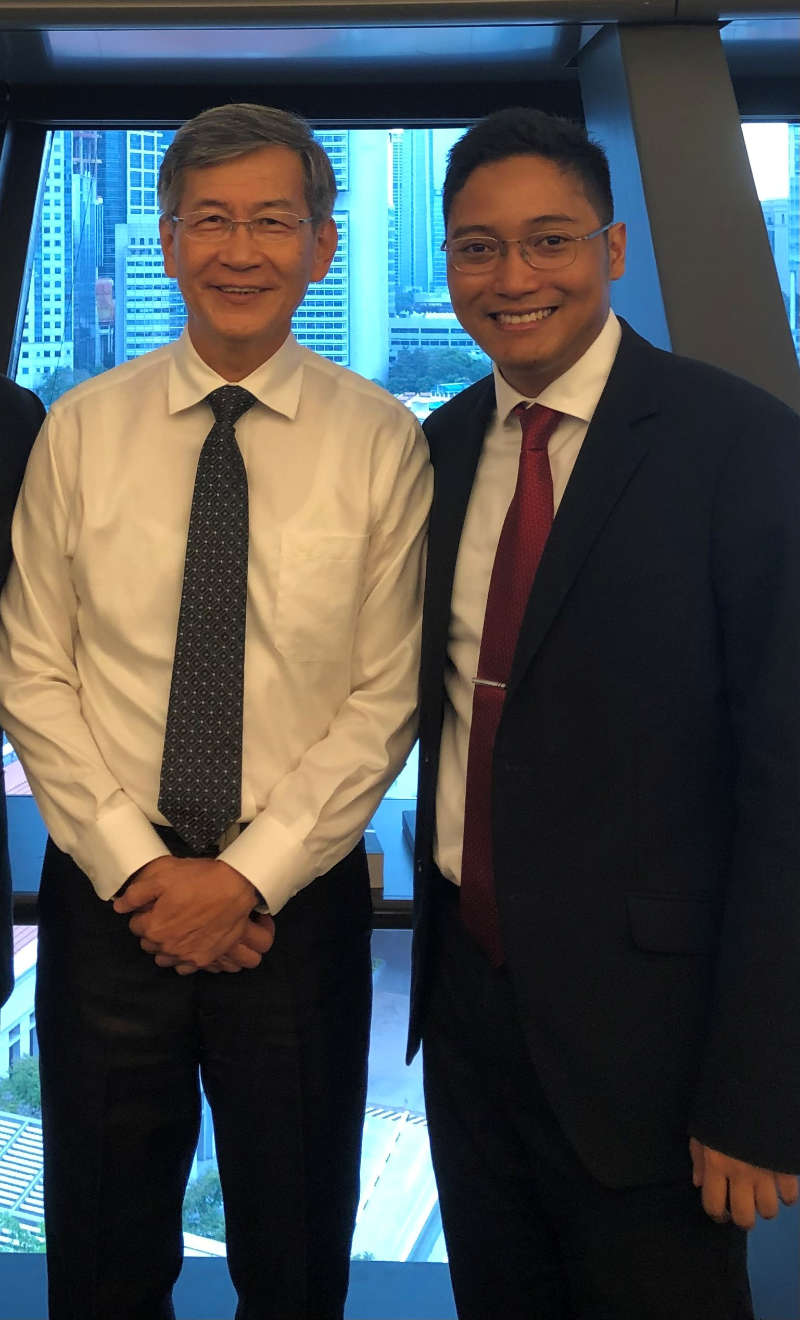
As a JLC, I had the privilege and honour to clerk for Justice Tan Siong Thye for 6 months out of my 2 years stint.
From Private Practice to Public Mission
When my stint as a JLC concluded, I decided to join private practice. My time in Dentons, and Tan Rajah & Cheah (TRC) gave me the privilege to work with senior counsel and represent clients in high-stakes commercial and civil disputes. From multi-million-dollar fund recovery cases to appeals involving fiduciary duties and contractual breaches, the work was challenging and fulfilling.
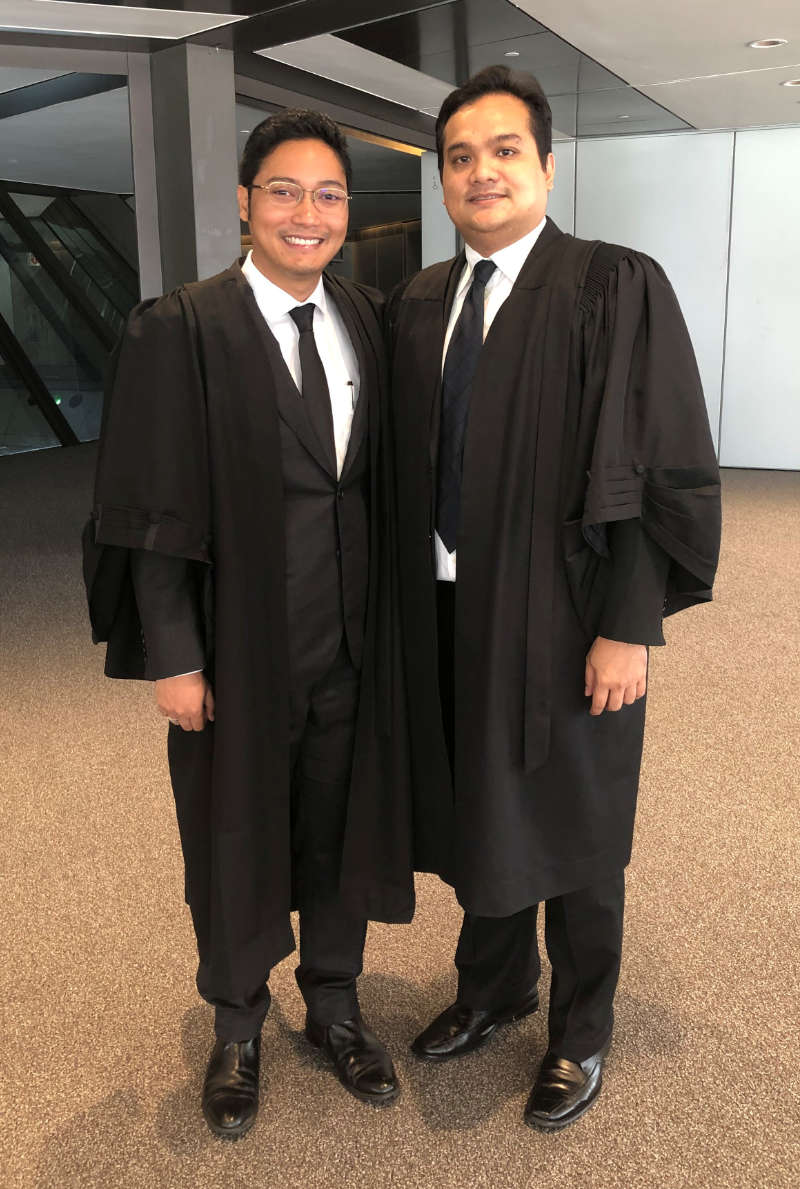
I was so honoured and humbled when Mr Rizuan Pathie, a dear friend and mentor from Dentons Rodyk, agreed to move my call. Here begins my time in private practice.
After a few years, I decided to venture off on my own. I wanted to work with my own clients and put what I’ve learnt into practice. I then joined Vijay & Co and Regal Law and worked on my own cases.
After about four years in private practice, I still felt that something was missing.
It was then in April 2023 that I joined the PDO (Public Defender’s Office), and this brought everything full circle.
Today, I serve as a Senior Assistant Director at the PDO — a role that merges my professional experience with my belief that legal representation should never be a privilege. In this office, our mission is clear: to represent those with limited means and ensure they receive the same access to justice as anyone else.
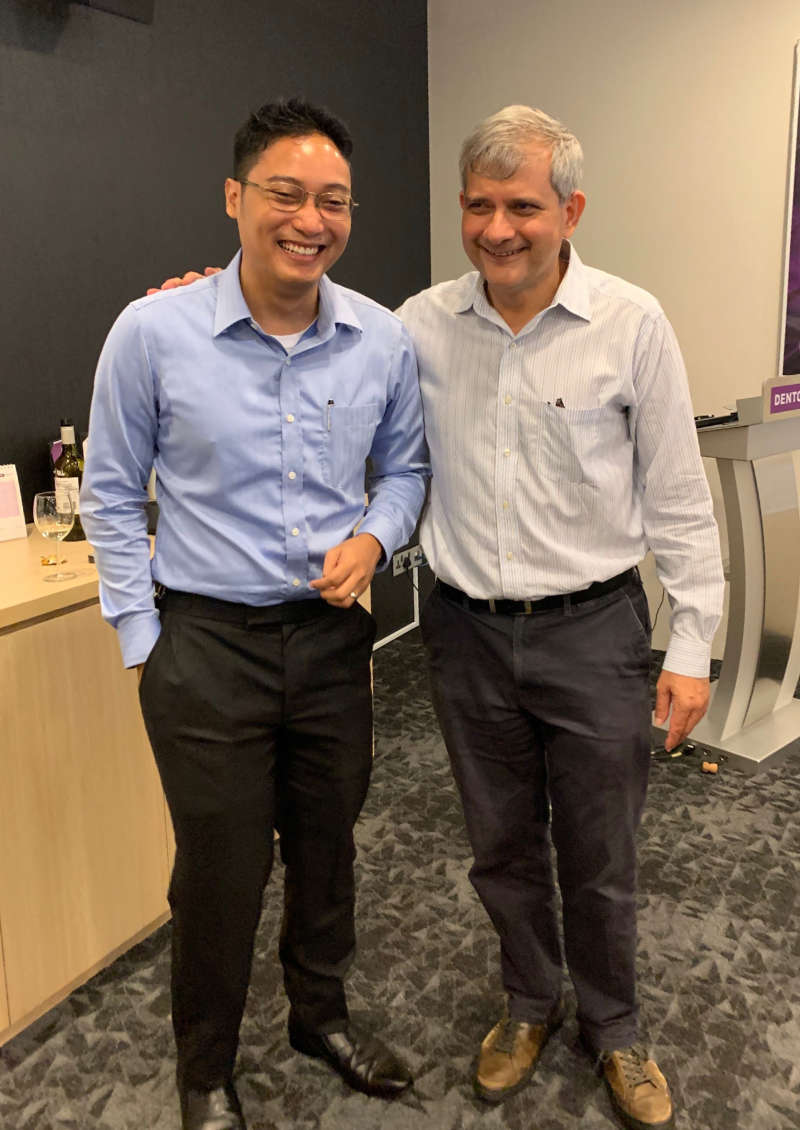
Working as an associate to Senior Counsels (here with Philip Jeyaretnam SC (as he then was)) taught me the importance of hard work, thoroughness and mindfulness in legal work – a discipline that helped me to this day.
The Work of the PDO
Applicants for criminal legal aid belongs to the 35th percentile of households in terms of household income. To be eligible for criminal defence aid, applicants need to have an average per capita gross monthly household income of $1,650 or lower to be eligible.
In its second year of operation, the PDO received almost 1,900 applications with about 1,000 assessed to be eligible for aid.2Welcome Address by Minister for Culture, Community and Youth, and Second Minister for Law, Edwin Tong SC at the Access to Justice Symposium 2025 (26 Mar 2025) <https:/www.mlaw.gov.sg/welcome-address-by-2m-edwin-tong-sc-at-the-access-to-justice-symposium-2025/>.
With the set-up of the PDO, criminal defence aid for Singaporeans and PRs are fully funded by the government. Being fully funded by the government and staffed by public officers, Public Defenders in the PDO are able to provide timely and quality legal representation for those with limited means.3Singapore Parl Debates; Vol 95; (1 March 2024) (Ms Rahayu Mahzam, Senior Parliamentary Secretary to the Minister for Law).
Furthermore, being part of the Ministry of Law allows the PDO to give more than just legal assistance to those we represent. The PDO is networked with social support agencies in the government, including the Ministry of Social and Family Development as well as the Housing Development Board. With such network, the PDO is therefore able to make necessary referrals to address the socio-economic needs of our clients.4The Public Defender’s Office: Singapore’s Publicly-funded Criminal Defence Aid (2024) 36 SAcLJ 758 at (125).
Indeed, since I joined the PDO, it has always been the standing mission of the PDO to provide quality legal representation and holistic assistance to our clients. This mission is always foremost on the minds of my fellow Public Defenders and the Chief Public Defender, Mr Wong Kok Weng.
My Journey as a Public Defender
When I joined the PDO, I was one of the first few to join as a team leader. I lead a team of four junior public defenders.
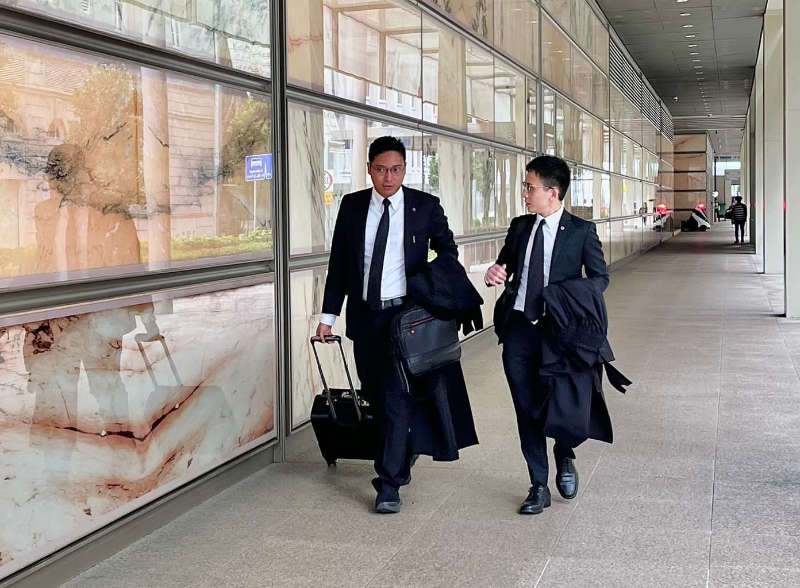
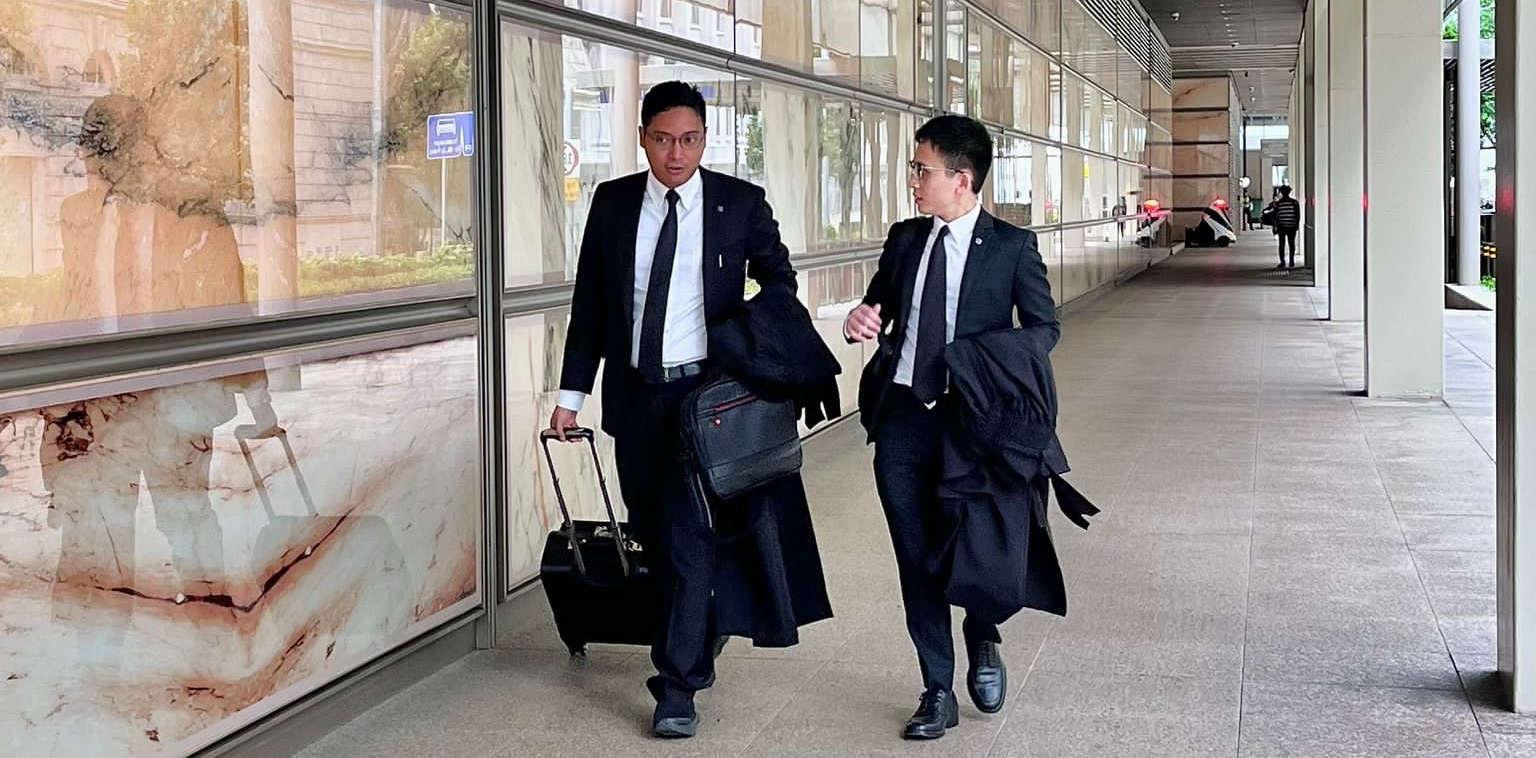
As Public Defenders, we strive provide quality legal representation to the vulnerable in our community. I was with my junior walking to the High Court to conduct one of our Magistrate’s Appeal.
In our two plus years of operation, my team and I had worked on more than 200 cases together. Every case we take on is a story of vulnerability. Some are illiterate, some suffer from intellectual disability, some are with mental illnesses like schizophrenia, and others are with less than six years of formal education. All of them are financially vulnerable.
Without the PDO, these vulnerable accused persons would have to stand alone before the law.
To share one notable but representative case handled by the PDO, my team and I once represented a 41-year-old woman (Mdm A) who lived alone with her elderly mother. Her elderly mother is immobile and suffers from chronic asthma and obstructive pulmonary disease.
Mdm A works as a cleaner at a place not too far from home. She cycles to and from work every day.
On the day of the offence, Mdm A was working when her mother made a distress call to Mdm A. Mdm A’s mother was complaining of difficulty breathing and chest pain.
In a panic, Mdm A left her workplace to rush home. Not being careful and in a state of panic, she rode her bike into a coffeeshop and collided into an elderly victim. The elderly victim was hospitalized and suffered quite severe injuries. Mdm A was charged under section 338(a) of the Penal Code 1871 (causing grievous hurt by rash act).
Mdm A only has a primary 6 education. She only speaks Malay. This is also her first brush with the law. Without a lawyer, her experience in the criminal justice system will be a harrowing one. She may not even understand why she was going to prison. Her lack of understanding of the law might make her disillusioned about the law or feel that the law is unfair towards her.
So, the Court advised her to apply for the PDO and she did. When aid was granted, we handheld her every step of the way. We explained the evidence and the law to her in Malay. We issued representations to appeal her situation to the prosecution. We then represented her in court and conducted her mitigation. She was ultimately sentenced to two weeks’ imprisonment – a fair outcome given the circumstances of the case (both for Mdm A and her victim).
Our journey with Mdm A did not just stop at the law. When legal aid was granted to her, we realised that she was alone in caring for her elderly mother. She carried the heavy burden of being the sole caregiver for an immobile vulnerable elder and the sole breadwinner to her and her mother.
As such, we reached out to the Social Service Office to engage the family. We also referred her and her mother to the Agency for Integrated Care. Social workers from both agencies promptly answered our call and reached out to her family.
We also reached out to Mdm A’s neighbours and they stepped up to help Mdm A and her mother.
When Mdm A was sentenced to imprisonment, her immobile vulnerable mother was no longer alone. Social service officers are in touch and her neighbours are taking turns to care for her mother.
It is heartening to know that when Mdm A returns to home, she will no longer be carrying the heavy burden of caring for her mother alone. She will have the help she needs.
Working on Mdm A’s case gives great meaning to the work I do as a Public Defender. What constitutes justice in Mdm A’s case is more than just the law. As a Public Defender, I felt that we have done more than just assist Mdm A as her lawyer.
Looking Ahead
The setting up of the PDO is a significant step by Singapore towards building an inclusive society, one that is mindful and compassionate towards the more vulnerable amongst us. It is to this calling that I answer every day as a Public Defender.
My journey in law so far has taught me that as lawyers, we have the immense responsibility — and privilege — of being a voice for those who have none. As I continue this journey, I remain guided by three principles: service, justice, and fairness. At the PDO, I am grateful for the opportunity to remain true to these principles every day.
The views and opinions expressed by the author in this article are solely those of the author’s and do not represent or reflect the official policy or position of the Public Defender’s Office or of the Ministry of Law.
Endnotes
| ↑1 | (2022) SGHC 133 at (1). |
|---|---|
| ↑2 | Welcome Address by Minister for Culture, Community and Youth, and Second Minister for Law, Edwin Tong SC at the Access to Justice Symposium 2025 (26 Mar 2025) <https:/www.mlaw.gov.sg/welcome-address-by-2m-edwin-tong-sc-at-the-access-to-justice-symposium-2025/>. |
| ↑3 | Singapore Parl Debates; Vol 95; (1 March 2024) (Ms Rahayu Mahzam, Senior Parliamentary Secretary to the Minister for Law). |
| ↑4 | The Public Defender’s Office: Singapore’s Publicly-funded Criminal Defence Aid (2024) 36 SAcLJ 758 at (125). |