
President’s Message
76.35k
This was the speech delivered by the President at the Opening of the Legal Year on 13 January 2025.
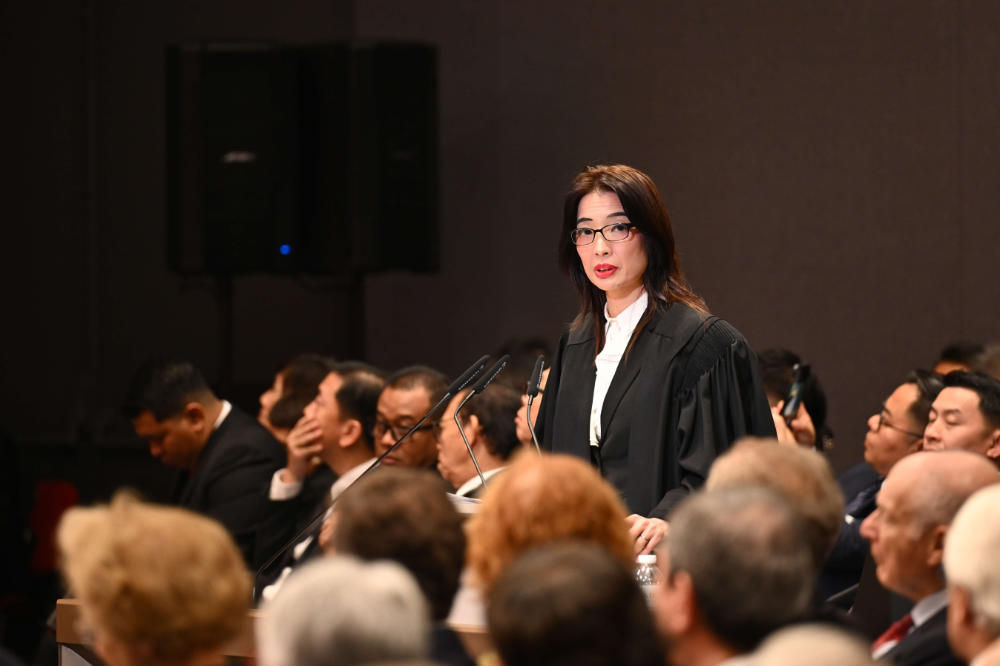
Photo: SG Courts
- May it please Your Honour, the Chief Justice, the Attorney-General, Ministers, Justices of Appeal, Judges, and Judicial Commissioners.
- I am honoured to extend a warm welcome to our overseas Bar leaders and representatives, including:
- President Mohamad Ezri Abdul Wahab from the Malaysian Bar;
- President Nazim Maduarin and Immediate Past President Datuk Roger Chin from the Sabah Law Society;
- President Gurvir Singh Sandhu from the Advocates Association of Sarawak;
- President Haji Muhammad Zainidi from the Law Society of Brunei Darussalam;
- Chairman and Senior Counsel Victor Dawes from the Hong Kong Bar Association;
- President Roden Tong from the Law Society of Hong Kong;
- Vice President Jiang Min ( 蒋敏) from All China Lawyers Association;
- President He Hongtao (何洪涛) and Vice President Li Shangze (李尚泽) from Chongqing Bar Association;
- President Deng Chuanyuan (邓传远) from Guangzhou Lawyers Association;
- Vice President Zhou Xuan ( 周璇) from Guangdong Lawyers Association;
- President Prashant Kumar from the Bar Association of India;
- President of LAWASIA and Vice President of the Bar Association of India, Mr Shyam Divan;
- Ms Hanim Hamzah, Vice President of the International Bar Association’s Section on Public and Professional Interest Council; and
- Ms Masako Takahata, the Vice-Chair of the International Committee of Daini Tokyo Bar Association.
Appointments and Departures
- Last year, Justice Tay Yong Kwang and Justice Woo Bih Li had two- year extensions as Justice of the Court of Appeal and Judge of the Appellate Division, respectively.
- The Singapore judiciary also welcomed five distinguished international jurists. Justice David Wolfe Rivkin of the United States of America was appointed to the Singapore International Commercial Court. Justice Peter Meier-Beck from Germany, Justice Lady Mary Howarth Arden from the United Kingdom, and Justices Anthony James Besanko and Anthony John Meagher from Australia joined the Supreme Court as international judges.
- At the Registry level, Ms Jill Tan Li Ching also assumed the position of the Registrar of the Supreme Court.
- On behalf of the Law Society, I extend our warmest congratulations to Your Honours.
- Former High Court Judge Justice Goh Yihan has taken on the important role of Deputy Attorney-General. We extend our best wishes to Mr Goh in his new role at the Attorney-General’s Chambers.
Key Global Trends Impacting the Singapore Legal Industry
- I shall first outline key global trends shaping the Singapore legal industry and influencing the evolving demands for legal services. These trends are:
- First, the increasing bifurcation of the global economy and its implications for US-led and Chinese-led economies.
- Second, the rise of Asia and the corresponding demand for Asian legal services.
- Third, the expectation for on-demand, 24/7 accessibility to legal services; and
- Fourth, the relentless push towards “more for less” is fuelled by the increasing competition from op-tech solutions that challenge the services offered by traditional legal firms.
- First, Increasing Bifurcation of the Global Economy. The growing divide between US-led and Chinese-led economies is reshaping international business practices. This trend will influence legal norms and the operational framework of law firms. For example, law firms operating across these markets may need distinct operating systems, cybersecurity and Artificial Intelligence (AI) frameworks to comply with divergent regulatory requirements. Trade restrictions and data localisation measures could further complicate cross-border transactions. However, these challenges present opportunities for law firms in neutral jurisdictions, like Singapore, to act as bridges between these two economies.
- Second, the Rise of Asia and the Demand for Asian Legal Services. As Asia continues to rise economically, the demand for region-specific legal expertise grows. Increasingly, clients may favour local or regional laws over English law. Relationship-driven Asian businesses may prefer alternative dispute resolution (ADR) methods over litigation. This shift presents opportunities for dual-qualified, bilingual lawyers and law firms with expertise in Asian laws and business customs.
- Third, On-demand 24/7 Accessibility. The global pandemic and rapid technological advancements have heightened expectations for round-the-clock access to legal services. While large international firms with extensive networks are well-placed to meet this demand, smaller firms with resource constraints must innovate. Leveraging technology and partnering with third-party service providers and other law firms can help these firms remain competitive in a constantly connected world.
- Fourth, The Relentless Push towards “More For Less”. The legal industry is under increasing pressure to provide greater value at lower costs. The disaggregation of legal work fuels this shift, coupled with the rise of tech-driven solutions and the entry of new players into the legal market.
- Five key trends are driving this transformation:
- First, Expansion of the Big Four Accounting Firms: Major accounting firms are investing heavily in LegalTech to broaden their capabilities to address complex issues at the intersection of law, business, strategy, and technology.
- Second, In-House Legal Departments: Companies are expanding their in-house legal teams to gain cost efficiencies and niche legal expertise. These departments increasingly resemble internal law firms, often onboarding newly-qualified lawyers with little or no practice experience.
- Third, Automation and Digitalisation: Adopting automation tools and off-the-shelf software requiring little or no customisation enables firms to handle routine tasks faster and more accurately. Technology drives efficiencies across the board, from back-office operations to client-facing processes.
- Fourth, Demand for Localised LegalTech: While many LegalTech solutions cater to Western markets, there is a growing need for tools designed to address the nuances of Asian legal systems and languages. Relying solely on LegalTech solutions focusing on Western markets and laws may not meet the increasing demand for Asian legal services.
- Fifth, Asian LegalTech Innovation: Effective Asian LegalTech solutions must accommodate cross-jurisdictional needs, integrate civil and common law systems, and provide multilingual capabilities, including translation and transcription features for diverse Asian languages.
- These trends necessitate reimagining how legal services are regulated and delivered. Multi-disciplinary approaches, collaborative technologies, and region-specific innovations are essential for law firms to remain competitive in this rapidly evolving landscape.
- The need for diverse skill sets requires lawyers to go beyond expertise in local laws and the laws that affect clients’ businesses. Lawyers must identify cultural indicators and navigate cultural differences and nuances – a skill known as “Cross-Cultural Competency” – when dealing with clients from different countries, regions, or backgrounds.
- Different cultures approach decision-making differently. Some prioritise consensus-building and group decision-making, while others place more value on individual autonomy. Singapore Lawyers must quickly recognise and adapt to these cross-cultural differences to avoid alienating their clients. Misunderstandings can hinder buy-in on important legal issues and lead to missed opportunities to build trust and rapport with their clients.
- Upholding the Legal Profession’s Core Values Amid Change. It is undisputed that legal service providers’ evolving modes and models aimed at promoting competition, efficiency, and innovation within the legal industry must not violate the profession’s core values. These values are centred fundamentally on the mission to protect the public, ensure access to justice, and uphold the rule of law.
The Singapore Lawyer – Asian at Heart But with a Global Outlook
- The Law Society has undertaken various initiatives to enhance our lawyers’ cross-cultural competency in an increasingly diverse world. This involves fostering long-term relationships and opportunities through collaboration with Asian bar associations to effectively equip our members to navigate cultural differences and nuances.
- This year, the Law Society will deepen its engagement with Asian bar associations, law firms, and arbitration and mediation institutes. Through these efforts, we aim to connect our members with leading industry thought leaders and broaden their professional horizons.
- Enhancing the role of lawyers in the ADR space remains a key focus for the Law Society. To achieve this, we will adopt a two-pronged approach. First, we will expand our outreach efforts to collaborate with bar associations, professional bodies, trade associations, and chambers to promote Singapore law and encourage partnerships within Asia. Second, we will streamline our ADR initiatives and create specialised ADR processes. This creates opportunities for our members to sharpen their ADR expertise and advocate for their inclusion on international panels of leading Asian institutions.
Increasing Ties and Collaboration with Asian Bar Associations
- The Law Society actively engages with Asian bar associations to foster collaboration and networking opportunities, helping our lawyers enhance their cross-cultural competency. The Lawyers Go Global project is a cornerstone initiative enabling Singapore lawyers to connect with Asian bar associations, law firms, courts, and mediation and arbitration institutes. These engagements provide avenues for professional development, networking, and deeper exposure to diverse Asian legal practices.
- Along with the Lawyers Go Global project, the Law Society has signed multiple Memorandums of Understanding (MOUs) with Asian bar associations. These MOUs strengthen mutual ties, facilitate professional exchanges, and provide platforms for discussing legal developments, sharing best practices, and addressing topics of mutual interest.
- As part of our collaborations with bar associations in South Korea, Vietnam, and China, Singapore lawyers have participated in mission trips to cities such as Seoul and Hanoi; first-tier Chinese cities such as Beijing, Shanghai, and Guangzhou; and new first-tier cities such as Chongqing and Suzhou. These trips offer invaluable insights into local legal systems and practices, which are crucial for developing cross-cultural competency. Joint events during these missions have addressed topics such as Environmental, Social and Governance standards (ESG standards), Asian LegalTech advancements, intellectual property rights in raw data and AI output, the enforceability of foreign arbitral awards, and updates on local law deepening our members’ learning of economic and legal trends outside Singapore.
- To support the growing role of Singapore lawyers in mediation and arbitration across Asia, the Law Society has actively advocated for their inclusion on international panels during mission trips and interactions with Asian bar associations. As a result, several members now serve as mediators, arbitrators, and neutral evaluators in leading Asian international arbitration, mediation, and commercial institution panels, including the China Council for the Promotion of International Trade (more commonly known as CCPIT) Legal Service Centre. These achievements reflect the recognition of Singapore lawyers as leaders in the field, enhancing the Singapore Lawyer Brand.
- The Law Society remains committed to advocating for Singapore lawyers to join international institution panels, further solidifying their presence and influence in the region.
Maintaining Ties and Relations with Various Non-Asian Jurisdictions
- While forging new connections to meet the growing demand for Asian legal services is vital, sustaining strong relationships with non-Asian jurisdictions is equally important. These partnerships create opportunities for Singapore law firms to serve as neutral bridges amidst the increasing bifurcation of the global economy. The Law Society has taken deliberate steps to strengthen collaborations with non-Asian bar associations:-
-
- On 3 June 2024, the Law Society signed an MOU with the European Association of Lawyers to enhance collaboration with European lawyers, particularly in ESG standards, climate reporting, regulations, and carbon border tariffs. Discussions on detailed collaborations are underway.
- The Law Society also entered MOUs with the Law Society of England and Wales, the College of Law Australia, and the Law Council of Australia to advance collaboration in legal technology and continuing professional development training programmes. Further details will be shared later this year.
- I am pleased to announce a joint Law Society/LAWASIA ADR conference scheduled for 22 and 23 May 2025 in Singapore. This conference is expected to draw international delegates and foster a rich exchange of expertise within the global legal community. I am delighted to inform this Court that LAWASIA signed an MOU with the Law Society yesterday. This MOU cements the enduring ties and collaboration between LAWASIA and the Law Society.
The Role of Lawyers in the Alternative Dispute Resolution Space
- The growing popularity of lawyer-led ADR processes underscores lawyers’ essential role in resolving conflicts effectively. Lawyers’ responsibilities extend beyond the courtroom. Justice is not a lofty ideal but a tangible reality for all. Lawyers can bridge the gap between theory and practice as facilitators of justice. Amidst the tumultuous currents of disputes and conflicts, lawyers emerge as skilled mediators, negotiators, and problem solvers, navigating complex disagreements with diplomacy. Their adept negotiation skills and deep understanding of legal nuances facilitate dialogue, foster understanding, and achieve consensus between conflicting parties.
- The Law Society will continue to create opportunities to strengthen Singapore lawyers’ role as trusted facilitators of dispute resolution.
Increasing Our Outreach to Trade Associations and Chambers Covering Legal Services
- Singapore lawyers must, therefore, lead the way in demonstrating how engaging legal counsel can add tangible value – not just during challenging times but in securing future growth. They can better understand their clients’ businesses and industries to uncover the most pressing and strategic industry issues. Recognising this, the Law Society will proactively engage trade associations and chambers of commerce to facilitate open dialogues, identify shared priorities, and initiate collaboration addressing key concerns. We aim to position lawyers as indispensable partners in helping businesses navigate legal complexities and achieve sustainable growth.
- As part of this initiative, the Law Society will sign an MOU with the Singapore Manufacturers Federation (SMF) on 17 January 2025. This partnership will focus on addressing the legal needs of SMF members, particularly in managing investments in Asian countries where critical legal input is required.
- The Law Society initiated a successful networking session with the Association of Small and Medium Enterprises (ASME) on 15 November 2024 and will sign an MOU on 19 February 2025 to enhance cooperation. Key focus areas will include promoting lawyer- led ADR mechanisms, educating businesses on legal pitfalls, and cross-cultural considerations in international disputes.
- I will now cover the Law Society’s ADR Schemes enhancing Singapore lawyers’ role in facilitating dispute resolution.
The Law Society Arbitration Scheme
- The Law Society has identified a growing demand for domestic arbitration to achieve quick, cost-effective, and enforceable awards under the New York Convention. Our ADR committee is reviewing the Law Society Arbitration Scheme (LSAS) rules to better align them with market needs. Domestic arbitration provides a strong foundation for Singapore’s positioning as a legal hub. Regular engagement in domestic arbitration hones Singapore lawyers’ skills, preparing them to handle international arbitration cases when the opportunity arises. The benefits of domestic arbitration cannot be overstated. In addition to being cost-effective and confidential, it offers expedited resolution timelines — typically six months with hearings or three months for a by-documents-only process. Promoting domestic arbitration benefits the business community and alleviates the Court system’s caseload.
The Law Society Neutral Evaluation Scheme
The Financial Industry Dispute Resolution Centre (FIDReC)
- In 2023, the Law Society initiated a collaboration with the FIDReC to offer neutral evaluation opportunities for financial disputes. A second intake of Singapore lawyers for the Law Society/FIDReC Neutral Evaluation Scheme was required and completed in November 2024. This enthusiasm highlights the demand for lawyer-led neutral evaluation in the financial sector.
Partnership with the Consumer Association of Singapore (CASE)
- On 4 June 2024, the Law Society signed an MOU with CASE to provide neutral evaluation services for consumer-related disputes. This collaboration highlights the growing role of the legal profession in resolving consumer and business conflicts through ADR. Through lawyer-led ADR initiatives, Singapore lawyers can empower individuals and businesses, fostering resilience and providing them with the tools to navigate complex legal issues more effectively.
- Lawyer-led community ADR programmes go beyond courtroom advocacy to serve as educators and champions of legal literacy. Through such efforts, lawyers empower individuals from all walks of life, ensuring that legal knowledge is accessible to everyone. Initiatives such as legal educational programmes, pro bono services, community outreach efforts, and now, the lawyer-led, non-binding, neutral evaluation process facilitate access to justice. This ensures that legal literacy is not just a privilege but a fundamental right for all.
The Law Society Personal Injury and Property Damage Mediation/Neutral Evaluation Scheme (the Law Society PIPD Schemes)
- On 30 December 2024, we launched the Law Society PIPD Schemes to enhance the resolution of motor accident personal injury and property damage claims. Insurance companies, workshops, and claimants can use the Law Society’s PIPD Schemes to manage caseloads effectively. The Law Society PIPD Neutral Evaluation Scheme will include sessions where a senior Bar member will provide a non-binding opinion on the likely outcomes of an adjudicated dispute. Complementing the Neutral Evaluation Scheme, a structured Mediation Scheme will be offered to resolve personal injury claims effectively.
The Law Society Probate/Mental Capacity Mediation and Neutral Evaluation Scheme.
- In the years ahead, Singapore’s ageing population is one of the most prominent demographic trends. Singaporeans enjoy one of the highest life expectancies in the world. Against this backdrop, Singapore lawyers can and should play a critical role in helping families navigate and resolve misunderstandings within our inter- generational society. The legal profession can take proactive and facilitative steps to restore family ties and bonds and support the Court’s reconciliatory approach towards family litigation.
- Family disputes, issues concerning estates, and the welfare of elderly individuals can be highly emotive, often involving multiple parties and proceedings. To address this, the Law Society will launch the Probate/Mental Capacity Mediation and Neutral Evaluation Scheme this year. Lawyer-led ADR services offer greater privacy and flexibility than traditional litigation. With sensitive professional judgement, conflicts can be resolved in a respectful, effective and personalised manner. ADR conversations often lead to more tailored and creative solutions that better address the unique needs of families. Further announcements will be made this year.
- I have outlined some key plans for the Law Society in the ADR space. I will now address matters relating to making public leadership statements and ongoing initiatives.
Imposing a Positive Duty on Law Firms and Members to Implement the Best Practice Standards
First, Managing Workplace Bullying and Harassment Policy and Toolkit
- The Law Society recognises its critical role in upholding the legal profession’s reputation and fostering a safe, respectful culture that benefits our members and the wider community. In line with this, we will issue a policy on managing workplace harassment and bullying, reaffirming the legal profession’s zero-tolerance stance on such behaviour. This initiative presents an opportunity for the profession to evolve, innovate, and proactively support the elimination of harassment by fostering mutual respect.
- As part of this effort, the Law Society will issue a public leadership statement, imposing a positive duty on law firms and members to actively create harassment-free and bullying-free workplaces. This statement will empower law firms and individual members to set clear expectations and implement best practice standards. Every member and law firm is responsible for serving as a role model of the legal profession.
- Full details of the Management of Workplace Harassment and Bullying Policy will be announced in due course. A sample template will be provided as part of a toolkit, which law firms can adopt or adapt. In addition, the Law Society will consider implementing this policy as a Council Guidance Note in 2025.
Second, the Sustainability Practice Guidance Note
- On 20 August 2024, the Law Society issued the Sustainability Practice Guidance Note, recommended by the Civil Practice Committee, to safeguard our members’ mental and social well-being. The guidance note underscores the importance of work-life balance, promotes congeniality amongst member-practitioners, and advocates thoughtful planning in civil litigation cases. The note has been well- received, particularly by our younger members.
- The Council of the Law Society will continue to review and refine our strategies, ensuring that we support best-practice approaches. We remain committed to upholding the legal profession’s reputation, promoting excellence, and supporting individuals, law firms, and the broader community.
Other Initiatives for the Legal Profession
- Besides the public leadership statements mentioned earlier, I am pleased to announce six key initiatives by the Law Society for 2024/2025. These initiatives are designed to support our members and enhance the legal profession’s standards. They are:
-
- First, the Ethics Assist Helpline
- Second, the Legal Practitioners’ Support Protocol
- Third, the Structured Mentorship Programme for law firms
- Fourth, the setting up of a Senior Practitioners Standing Committee
- Fifth, a Directory to Connect Younger and Older Lawyers
- Sixth, a mobile phone and website application with Generative AI search functions
First: The Ethics Assist Helpline
- On 10 June 2024, the Law Society launched the Ethics Assist Helpline, a confidential helpline designed to provide lawyers with quick access to external ethical guidance from experienced senior lawyers. With a typical response time of five working days, the helpline offers a more informal and accessible alternative to the formal written requests made to the Advisory Committee of the Professional Conduct Council. Information on the Ethics Assist Helpline is available in the Ethics Resources section of the Law Society website.
- From 10 June 2024 to the end of October 2024, middle-category lawyers accounted for 58% of queries to the helpline, while junior- category lawyers accounted for 23%. Users of the helpline have expressed appreciation for the prompt, efficient responses relayed through the Ethics Assist Secretariat.
Second: The Legal Practitioners’ Support Protocol (LPSP)
- LPSP is a peer-support initiative designed solely for Singapore lawyers. It reflects the legal community’s collective commitment to fostering ethical resilience in the workplace by:
-
- Identifying potential ethical issues early;
- Providing support to lawyers facing ethical challenges;
- Facilitating the resolution of issues before they escalate into formal complaints.
- LPSP is activated when feedback regarding a lawyer is received from members of the legal community. The feedback must relate to one or both of the following:
-
- Situations of concern relating to a lawyer’s practice where it is appropriate to assist the lawyer;
- The inability to practise properly due to health or other personal reasons.
- The Law Society plans to officially launch the LPSP in the first quarter of this year.
Third: The Structured Mentorship Programme for Law Firms
- Building on the success of the second run of the Law Society Members Mentorship Scheme, the Law Society will launch a structured mentorship programme for law firms, focusing on key areas of law firm management. The syllabus for this programme shall include Client Care, Legal Practice Continuity or Exit Matters, and general practice matters. The programme will be disseminated to members through our usual communication channels later this month.
Fourth: The Setting up of a Senior Practitioners Standing Committee
- In my Opening of the Legal Year speech last year, I highlighted the need for ongoing conversations to address the cross-generational needs of the Singapore legal profession. Following these discussions, it has become evident that a Senior Practitioners Standing Committee must delve deeper into the issues identified and continue these conversations. Older lawyers can share their wealth of knowledge, serving as trainers or mentors to offer informal guidance, advice, and orientation to their younger counterparts. Additionally, opportunities for reverse mentoring will allow younger lawyers to keep older lawyers informed about emerging technologies and new practice areas. These connections will naturally cultivate a buddy system fostering mutual support.
Fifth: A Directory to Connect Younger and Older Lawyers
- Complementing the Senior Practitioners Standing Committee initiative, the Law Society now maintains a directory designed to connect:
- Younger lawyers who may be hesitant to establish or continue their own practice due to the lack of office space and administrative support, with
- Experienced older lawyers with the resources and capacity to mentor and guide them in setting up their practices.
- This initiative will enable younger lawyers to accelerate their entrepreneurial journeys by accessing essential law firm infrastructure and support. In comparison, older lawyers can share their expertise and provide informal orientation, advice, and guidance on running a law firm.
Sixth: A Mobile Phone and Website Application with Generative AI Search Functions Made Available to Our Members and Our Secretariat
- In response to the growing demand for 24/7 legal services and the need to deliver “more for less”, I am pleased to announce the launch of the Law Society’s first mobile and website application, which features a Generative AI search function. This tool enhances the accessibility and efficiency of our services. Members can use the Generative AI conversational chatbot to obtain swift and accurate responses to professional ethics, compliance matters, practising certificate renewal information, professional indemnity insurance matters, and membership support schemes and privileges.
- The website application went “live” on 13 January 2025 and is still in its early stages. The mobile application will be launched later this month for iPhone and Android smartphone users. We are committed to enhancing its features in the coming months. As part of our long- term improvement roadmap, this mobile and website application shall support the outreach efforts of our standing committees to benefit the legal profession.
Pro Bono SG (PBSG)
- We are pleased to announce two new appointments to the Board of Directors of PBSG, the Law Society’s wholly-owned subsidiary. Mr Dinesh Dhillon, our former Treasurer and Council member, has been appointed Chairman, while Ms Vivienne Lim, our former Council member, has been appointed Deputy Chairwoman, effective 4 January 2025. We thank Dinesh and Vivienne for their unwavering commitment to PBSG’s mission and willingness to assume these important roles.
- We sincerely thank Senior Counsel Gregory Vijayendran and Mr Kelvin Wong for their years of strong stewardship of PBSG as Chairman and Deputy Chairman, respectively.
- The Opening of the Legal Year 2025 will mark the launch of the Pro Bono Weeks, a new annual tradition introduced by PBSG. This four- week programme, beginning at each year’s Opening of the Legal Year, will highlight the impactful contributions of PBSG and its volunteers. This year, the Pro Bono Weeks will also celebrate a major milestone: the 40th Anniversary of the Criminal Legal Aid Scheme (CLAS), a flagship initiative advancing access to justice. The Pro Bono Weeks will end with Just Jalan, PBSG’s annual walk for justice, on 8 February 2025. I commend Dinesh for his exceptional leadership and organisational skills as the Chairperson of the organising committee of Just Jalan 2024 and 2025 and for spearheading the inaugural launch of the Pro Bono Weeks programme. We urge everyone to lend their strongest support to these meaningful events.
Litigation Conference 2025
- I am also pleased to announce that this year’s Litigation Conference will feature a workshop exploring two important topics: (a) AI and Ethics; and (b) The New Paradigm – covering pleadings, affidavits before discovery, Single-Application Pending Trials (SAPT) and document production, not discovery. Please join us for our annual marquee event from 29 to 30 April 2025.
Conclusion
- On behalf of the members of our Bar, I extend our best wishes for good health, wisdom, and fortitude in the year ahead to Your Honour, the Chief Justice, the Attorney-General, the Minister for Culture, Community and Youth and Second Minister for Law, the Minister of State and all members of the Judiciary. Our members pledge to uphold the rule of law and to assist the Court with diligence and integrity.
- Thank you.

Lisa Sam Hui Min
President
The Law Society of Singapore
President
The Law Society of Singapore