
Chasing Waterfalls, Mountains and Glaciers
Waterfalls have always been our thing. They are the best manifestation of Nature in motion, Nature in action and Nature in its grand performative spectacle.
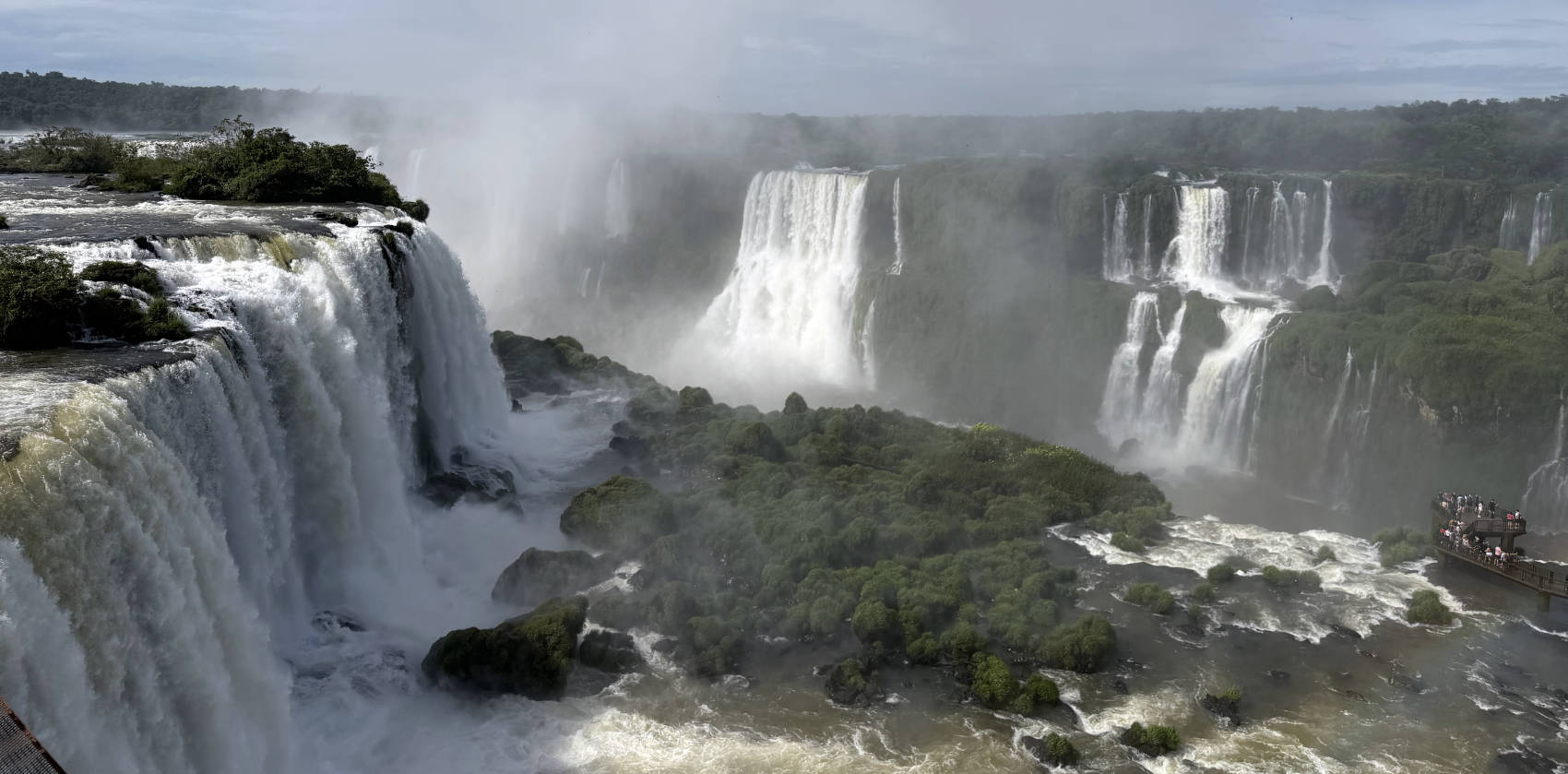
The Iguazú Falls were the number one reason we endured the punishing long flight to South America. It did not disappoint. Straddling between Brazil and Argentina, it is the world’s largest waterfall system with 275 cascades down a massive gorge. At the gorge’s apex lies the Devil’s Throat, a u-shaped chasm of roaring waters plunging into the abyss. It was stunning, beautiful, surreal and fierce all at once. There were so many falls in the huge tear on the earth’s surface we did not know where to look. Views from the Brazilian and Argentine sides offered vastly different perspectives – panoramic from one and up close and personal from the other. Photographs and videos do not do the Falls justice, you must be there to feel the spray hitting your face, to hear the colossal roar, to be awed by random rainbows and to marvel at how small and insignificant you are in the face of these behemoths.
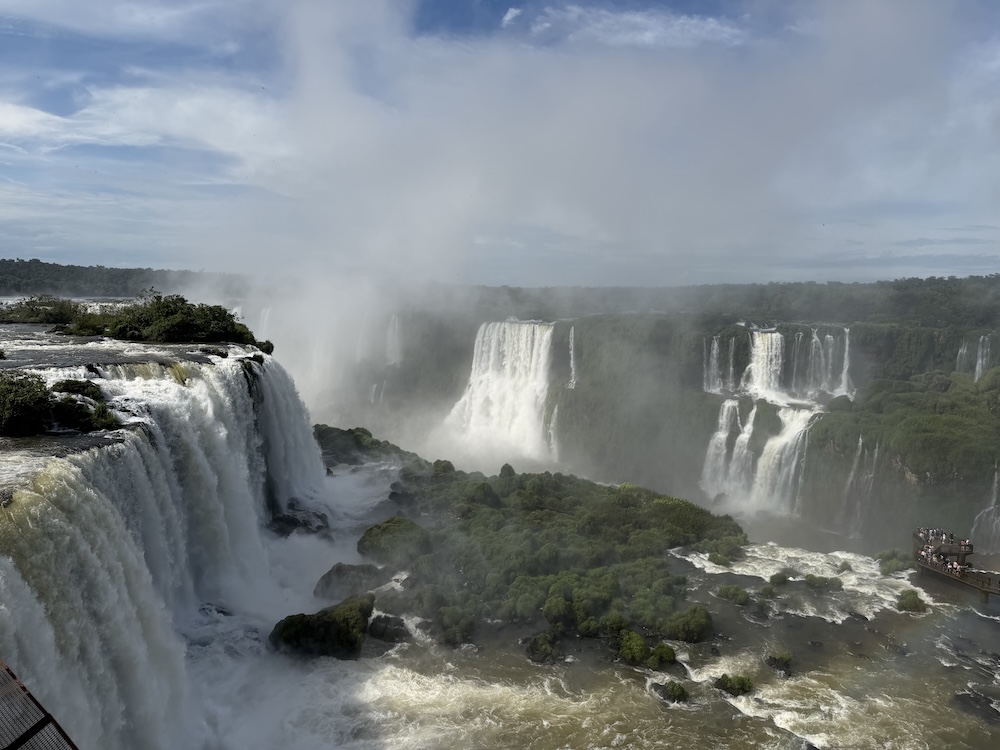
The Brazilian side affords a panoramic view of the Iguazú Falls.
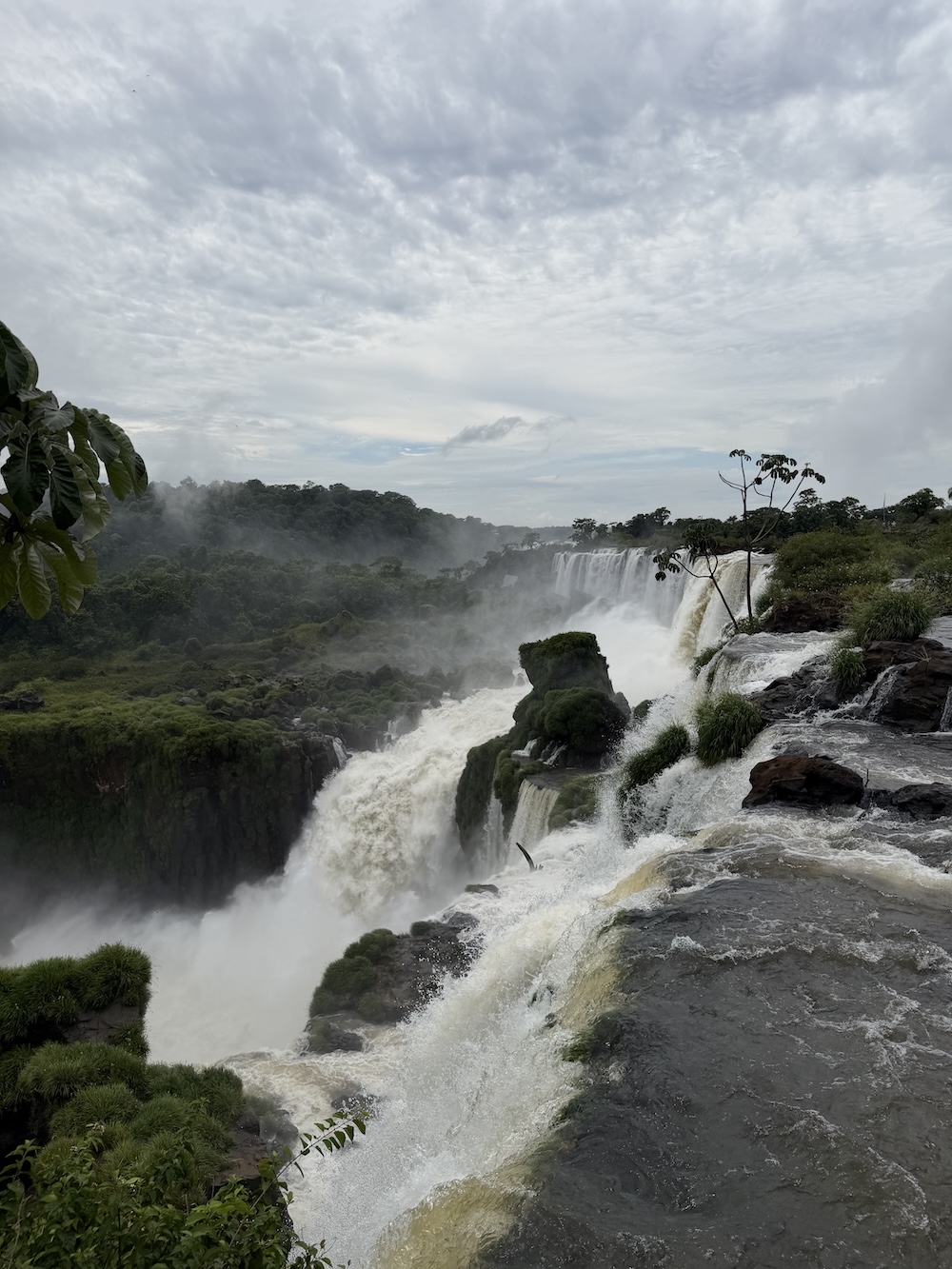
The Argentine side of the Iguazú Falls brings you up close and personal to where the waters plunge over the edge.
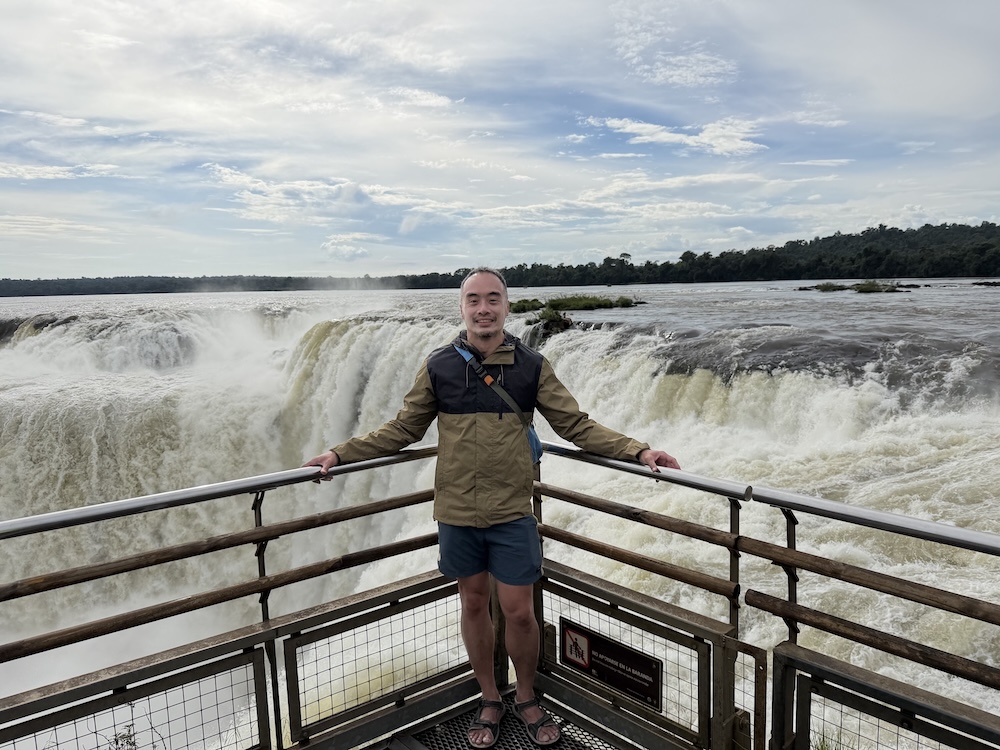
The Devil’s Throat or Garganta del Diablo – 150 metres wide, 82 metres tall with an average of 1,500 cubic metres of water plunging down into the abyss every second. Truly a stunning sight to behold.
The infrastructure surrounding the Falls were very well developed both on the Brazilian and Argentine sides. There were well maintained walkways allowing you views of the Falls from many different angles. A tower on the Brazilian side afforded an excellent vantage point. The extensive paths and metal walkways on the Argentine side of the Falls brought us right up to where the water from the Iguazú River plunged over the edge. The sheer size and volume were exhilarating and humbling at the same time.

The next leg of our trip took us to Patagonia, the vast southernmost tip of South America shared by Argentina and Chile. The region of Patagonia east of the Andes where we were is classified as a desert. It was flat, almost devoid of vegetation and had long straight roads stretching into the horizon. The 2.5-hour drive through the lunar-like landscape with from El Calafate where our flight landed to (the very picturesque) El Chaltén where we were staying was quite an experience.
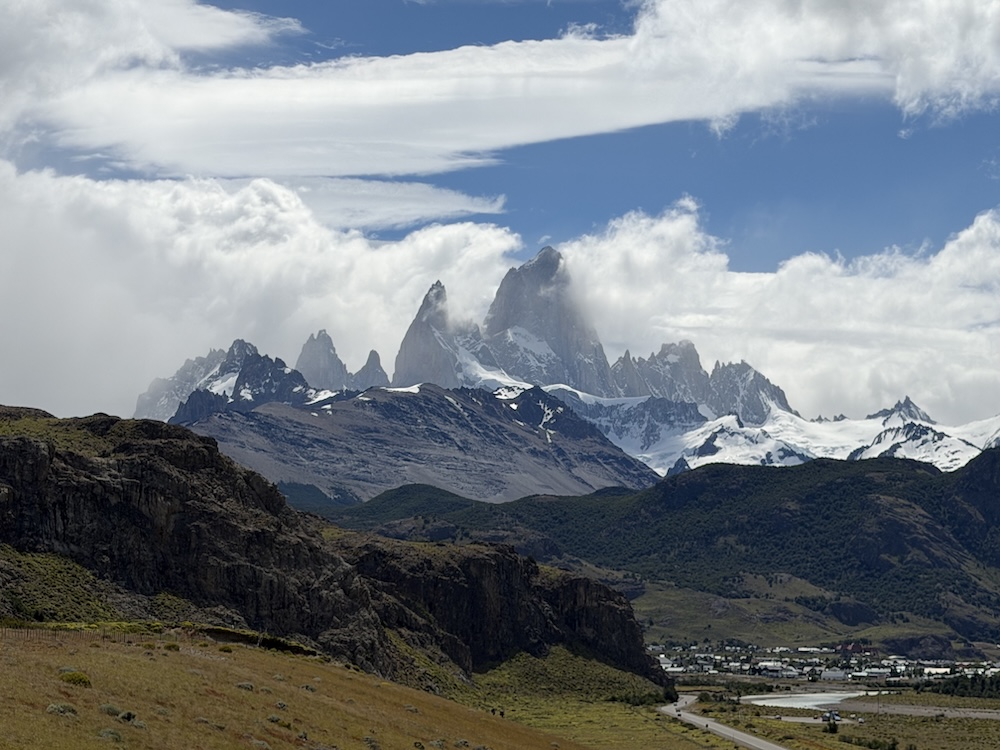
The iconic Mount Fitz Roy in Patagonia with the very picturesque village of El Chaltén below.
Our hike to Laguna de los Tres, a lake at the foot of Mount Fitz Roy, proved to be quite traumatic. While the initial 6.5 kilometres of the trail was relatively flat, the last 1.5 kilometres was a very steep trek up a seemingly never-ending trail of unstable loose rocks, protruding tree roots and more unstable loose rocks, up an elevation of more than 1,000 metres. Though we were rewarded with a close-up view of the famously jagged beauty of Mount Fitz Roy, the fact that we had to go down the same treacherous path was never far from our minds. We then attempted to hike to Laguna Torre, for the three iconic jagged peaks of Cerro Torre. Unfortunately, the peaks were obscured by clouds that day, we contented ourselves with a (still very majestic) view of Cerro Torre and gave Laguna Torre a miss.
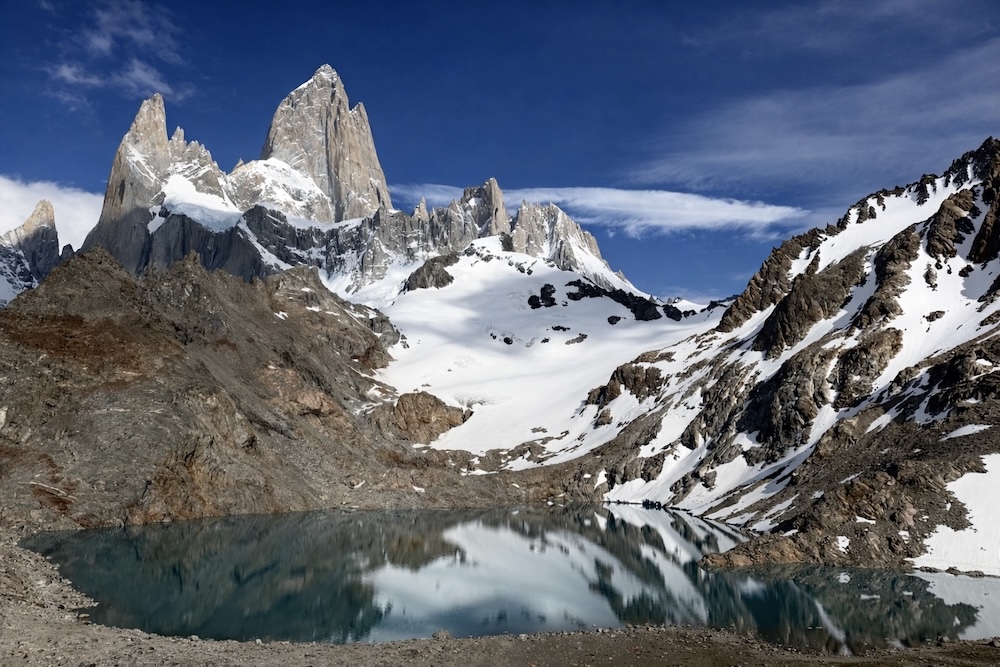
The crystal-clear lake of Laguna de los Tres at the foot of the Andes, a popular viewing point to gaze upon the magnificent Mount Fitz Roy.
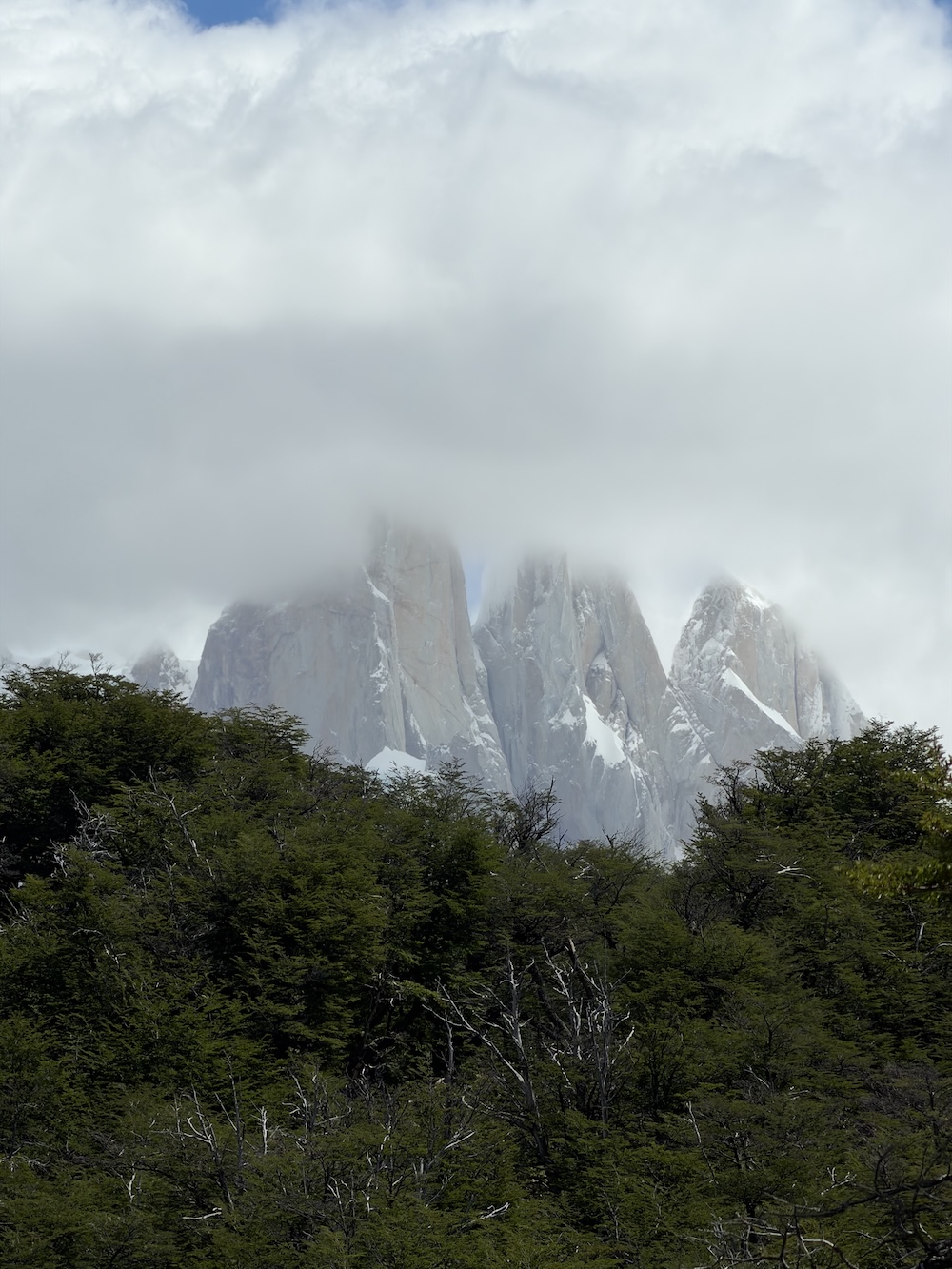
The tips of the three fingers of Cerro Torre were covered in clouds when we were there. Google “Cerro Torre” for how they look without the clouds.
The other famous gem of Patagonia is the Perito Moreno Glacier, a 4-hour drive from El Chaltén. First discovered by a non-indigenous person in 1879, the Glacier occupies its pride of place in the Los Glaciares National Park above Lake Argentino. Loud cracking sounds bellow from the Glacier every so often, signalling how it is alive with the force of the Andean Southern Patagonian Ice Field pushing behind it. We were fortunate to witness two calvings while on the walkways covering the mountain slopes right next to it. Calvings are when large chunks of ice break off from the edge of a glacier into the glacial lake, often with giant spectacular splashes.
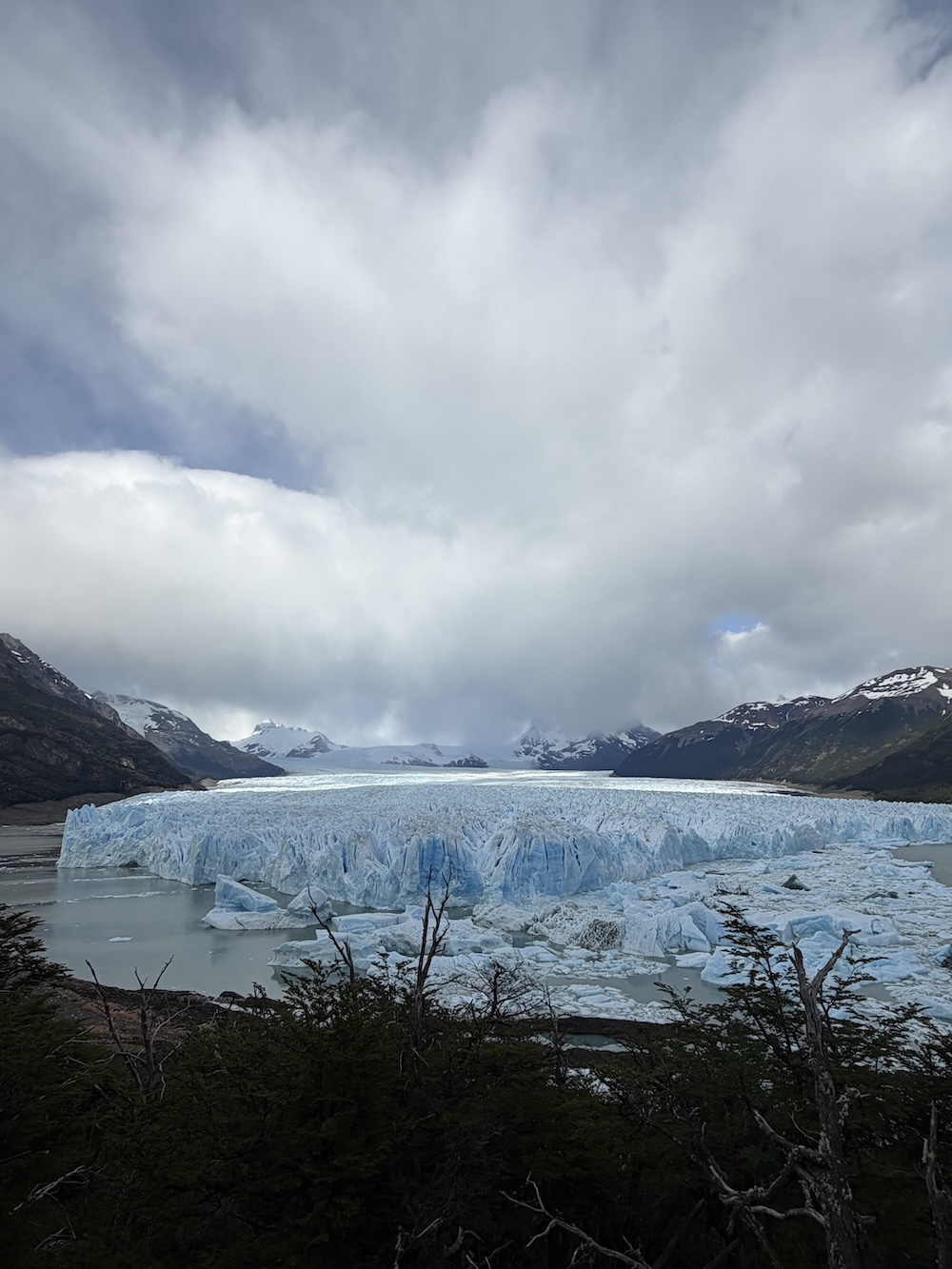
The massively massive and very accessible Perito Moreno Glacier.
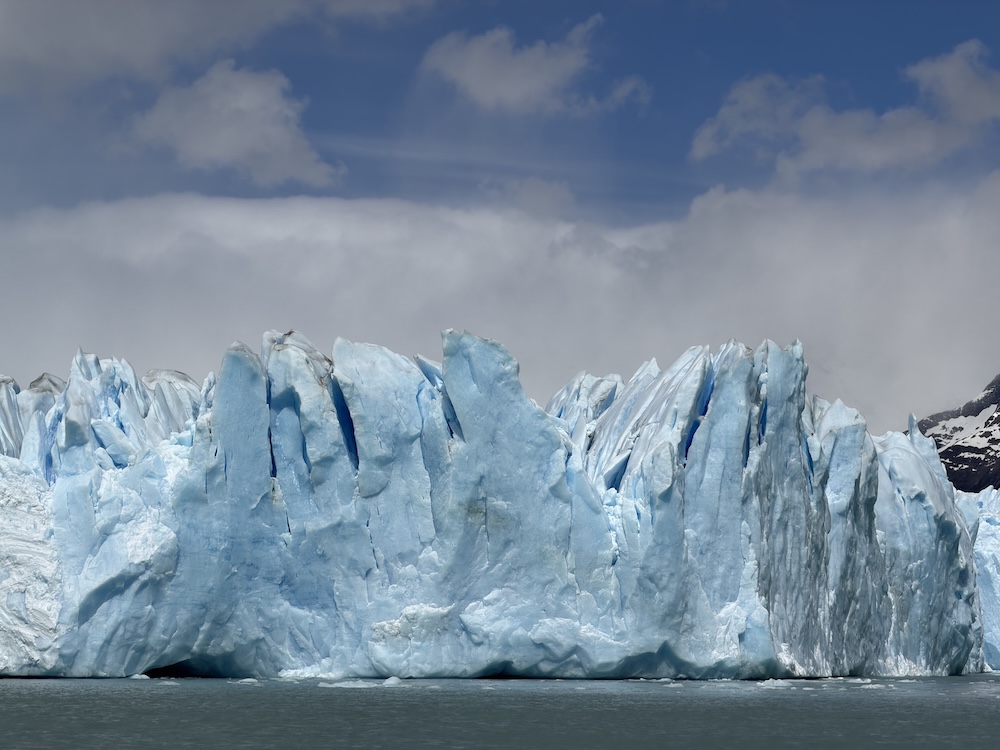
The 60-metre-high walls of the Perito Moreno Glacier are best appreciated from a boat tour on the turquoise waters of Lake Argentino.
Having done all the planning and booking ourselves without professional help, the logistics were quite a nightmare. The 17-day trip through Brazil and Argentina consisted of 11 flights (both international and domestic) and 9 hotels through Rio, Foz do Iguaçu, Puerto Iguazú, El Chaltén, El Calafate, Ushuaia, Buenos Aires and São Paulo. Airports and hotels became an exhausting blur of activity and an ever-draining quest for directions in unfamiliar territory.
But we were glad we did it.