

Are there challenges with talent retention and skills gaps, and if so, what can be done?
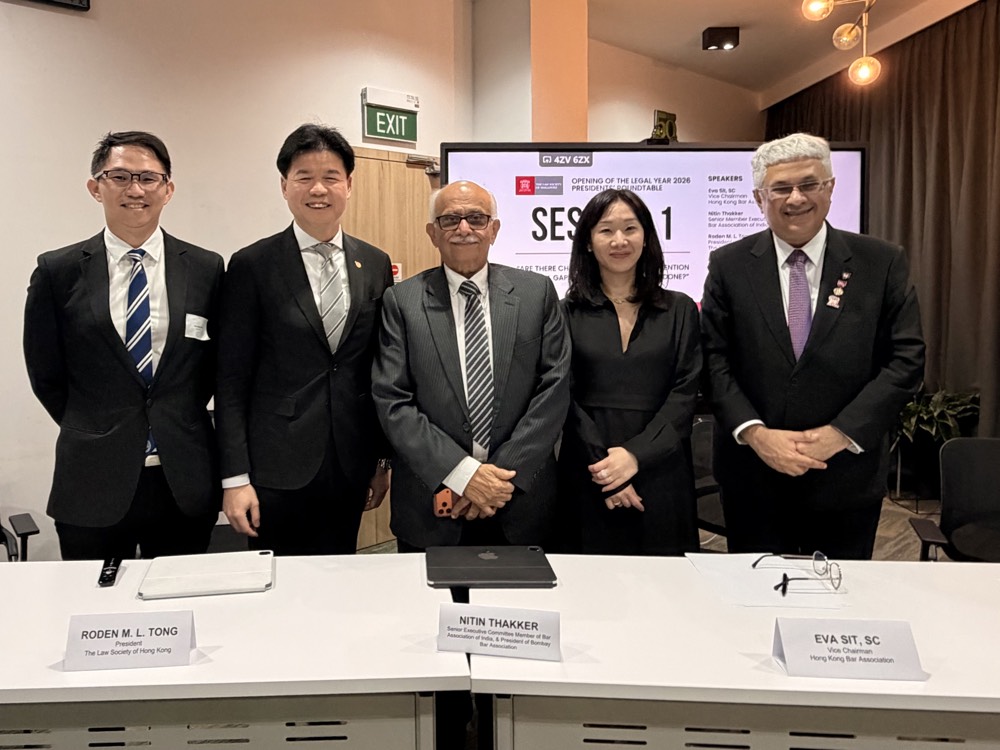
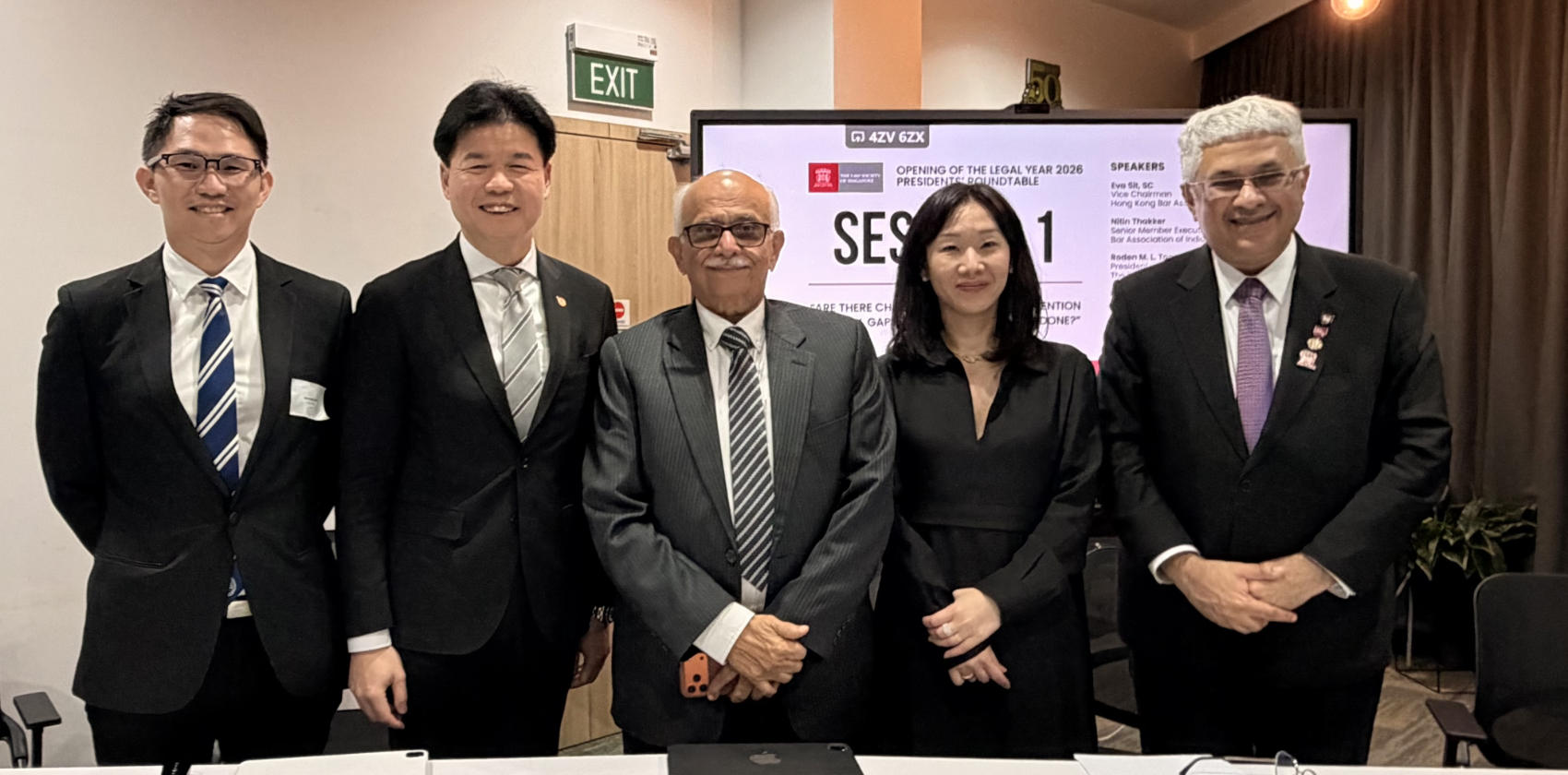
At the Law Society of Singapore’s Opening of the Legal Year (OLY) 2026, I had the honour of moderating the first session of the Presidents’ Roundtable. The distinguished panel featured legal representatives from Hong Kong, India and Malaysia. While this new era of globalisation has created immense opportunities, it has also presented the legal profession with significant and unprecedented challenges. These challenges strike at the heart of professional sustainability. They are exacerbated by technological disruption, intensifying commercial pressures, and generational expectations. While Singapore remains an attractive jurisdiction in terms of remuneration and institutional strength, these advantages alone have proven insufficient to stem attrition, particularly among younger mid-tier lawyers.
Background
The traditional pathway of professional development has been quietly eroded. Artificial intelligence (“AI”) is increasingly absorbing tasks that once formed the foundation of junior training—document review, legal research, discovery, and first-cut drafting. While these AI tools undoubtedly improve efficiency and reduce costs for both clients and law firms, their accelerated development has evoked fear and anxiety among young lawyers that their jobs may soon be replaced. The double-edged impact of technology does not end here.


As technology advances, it has also fostered an expectation of constant connectivity, where emails and instructions are delivered and answered in real time. Young lawyers now face greater pressure to respond swiftly in order to maximise efficiency and productivity. This has blurred the boundaries between professional and personal life, intensifying stress and accelerating burnout. As newly qualified lawyers advance in their careers, their priorities may shift from professional ambitions to other aspects of life. In the face of these changes, more young lawyers have steered away from the demands of legal profession, in search of “greener pastures”.
Compounding this is an emerging skills gap evident at the point of promotion. In many firms, capable young lawyers are advanced on the basis of technical proficiency, without adequate preparation for broader leadership responsibilities. They may be exceptional at drafting or research but insufficiently exposed to the commercial realities of running a practice. When promotion comes with revenue targets, supervisory responsibilities, and business development expectations, it can feel less like advancement and more like abrupt immersion into unfamiliar terrain. Without structured guidance, this transition can be destabilising and contribute to further attrition.
In navigating these issues, comparative perspectives from jurisdictions such as Hong Kong, India, and Malaysia offer valuable lessons for Singapore.
Takeaways

For one, it is important to reframe the way we view AI. As highlighted by Nitin Thakker representing the Bar Association of India, there is an inherent tension between AI and the rule of law. The latter demands transparency, accountability, and reasoned decision-making, which may not always align with the opaque and probabilistic nature of AI models. Instances of non-existent caselaw generated by AI in foreign jurisdictions have exposed the risks of uncritical reliance on technology, underscoring the importance of human accountability. AI should thus be treated as an assistant rather than a substitute, with lawyers retaining ultimate responsibility for the integrity of their work. The responsibility for the rule of law starts and ends with us as lawyers, not AI.
Beyond redefining our relationship with AI, there is also a need to reframe the skill set of young lawyers. As machines take on routine and mechanical tasks, legal training must shift toward skills that AI cannot replicate—persuasion, ethical judgment, and the art of advocacy. Developed legal systems such as Hong Kong and India have thus begun to view AI not as a threat, but as an opportunity to further equip young lawyers with advanced, value-driven skills. As articulated by Eva Sit SC of the Hong Kong Bar Association, we have to proactively let young lawyers know that AI is a tool they should embrace. The role of AI is ultimately not to replace or prejudice the actual value that lawyers as individuals – by reading the cases, the papers or by talking to the clients, would bring to the table.
Separate from AI, newer generations entering the profession have been seen to place greater emphasis on work–life balance. Traditional assumptions which equate commitment with long hours, and personal sacrifice must thus be reassessed. Instead of narrowly focussing on remuneration and productivity, law firms must give greater attention to the holistic well-being of their lawyers. Such improvements have similarly been echoed in Hong Kong and Malaysia. Evidently, creating working environments which are supportive, humane and sustainable is no longer merely a matter of individual preference, but an important component of institutional resilience.
In Hong Kong, retention has also been driven by a broader conception of legal careers. In-house counsels are recognised as full members of the profession within the Law Society of Hong Kong. Their president, Roden Tong is in fact Chief Executive of Berkley Insurance Company. This affirms the notion that movement beyond conventional practice does not equate to “departure from the Bar”. Dual qualification opportunities within the Guangdong–Hong Kong–Macao Greater Bay Area further reinforce the idea that legal training enables professional mobility and cross-border career progression. Such structural flexibility fosters a sense of opportunity rather than confinement, contributing to a steady inflow of new members each year. For Singapore, this suggests that retention may not be viewed solely in terms of keeping lawyers within a narrow model of practice. Instead, the profession can consider embracing diverse pathways while maintaining a shared professional identity. As the world becomes more interconnected, it becomes increasingly urgent for the Singapore lawyer to look beyond our shores and consider what our role should be in the context of the broader ASEAN framework.
Ultimately, tackling legal attrition and skill gaps admits no simple solution. It cannot be resolved by technology, remuneration, or work arrangements alone. At the heart of the challenge lies a change in mindset. The increasing commercialisation of legal practice has narrowed younger lawyers’ perspective of the profession, and senior lawyers must consider whether timeless values are being sacrificed at the altar of profit. As mentioned by Ryan Soo of the Sabah Law Society, we must refocus on our original role as a lawyer, that is to counsel. This cannot be overshadowed by billable hours and short-term profitability, and addressing this requires a fundamental shift supported by the collective efforts of the profession.
Concluding Thoughts
The current age of technological disruption may well be an opportunity for the profession to rediscover our sense of calling, mission and purpose. AI necessitates lawyers moving beyond grunt work and time sheets. A failure to address these challenges will result in clients and younger lawyers seeking value (and values!) elsewhere. Only by grounding sustainability in the timeless values of our calling can the profession endure. In this aspect, experienced practitioners must shape the future by passing down not only technical expertise, but also judgment and professional responsibility. At the same time, younger lawyers must reconnect with the foundational role of being a lawyer – serving public interest by upholding justice. By embracing this shared mission, the profession can restore a sense of purpose, inspire commitment, and foster resilience for generations to come.