

Moot Court, Mythology, and Meaning
Background
In Chief Justice Sundaresh Menon’s speech at the Opening of The Legal Year 2026, he described the 200th anniversary of the Second Charter of Justice as an opportunity to “survey the road ahead”. In that same speech, CJ Menon also saw the Bicentennial as a platform to commemorate the “remarkable story of our courts and our legal system.” Because we think moot court has played a significant role in our nation’s journey in law – one could even say it is very much in our legal DNA – the aim of this article is to first put in perspective what our mooters have achieved internationally over the years, and show how that has contributed to the broader project of developing our legal system. Secondly, can moot court contribute to the meaning of finding purpose, and in turn, allow more to see why being a lawyer is a calling?
Singapore milestones in international moots
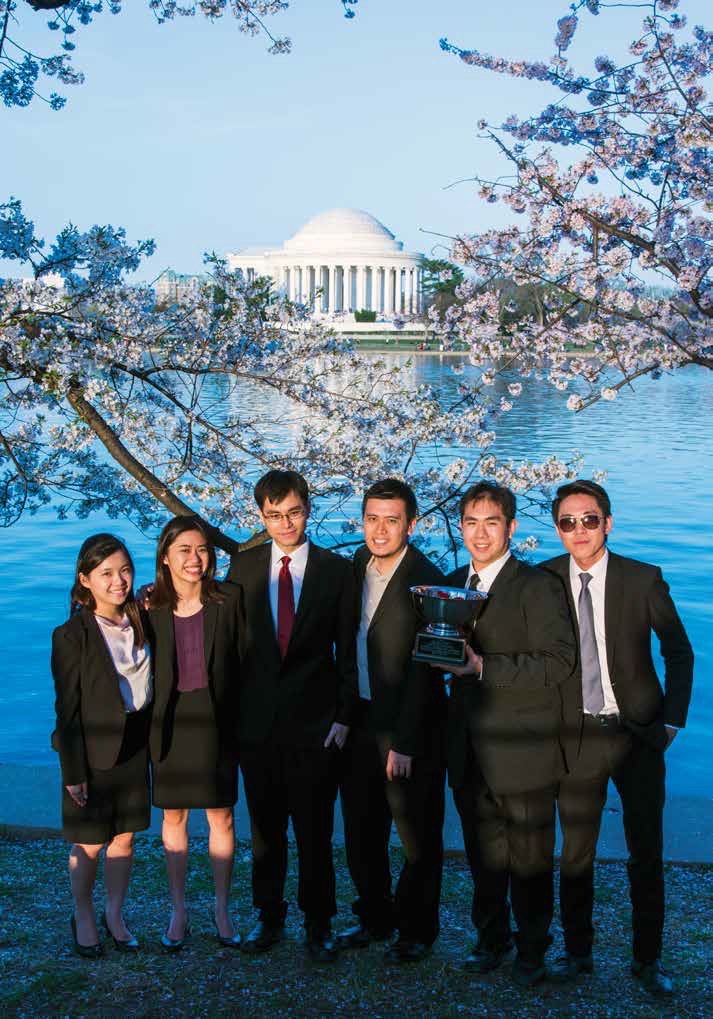
Identifying our most significant milestones in international moots is no easy task. Perhaps it is best to begin in 1973, when the University of Singapore sent a team to compete in an international moot for the first time: the Jessup, the world’s oldest, biggest, and most prestigious moot competition. That team included Jeffrey Chan, who would go on to become Senior Counsel and Deputy Solicitor-General. The 1974 Jessup team also featured a future leader of our legal system: Judith Evelyn de Cruz, whom many would later know as Justice Prakash, Singapore’s first female Judge of Appeal.
It was not long before Singapore achieved a podium finish in the international division of the Jessup. The names of two members of the 1977 team that accomplished this would no doubt be familiar: Lucien Wong and Woo Bih Li, who would go on to become, respectively, Attorney-General and President of the Appellate Division of the High Court. The big breakthrough in the Jessup finally came in 1982, when the quartet of Steven Chong, VK Rajah, Davinder Singh, and Jimmy Yim won Singapore’s first world championship. All four became Senior Counsel, with two serving stints as Attorney-General and Judge of Appeal.

The quartet’s coach, Bob Beckman, would go on to lead the National University of Singapore to a total of 11 Jessup world championship finals in a storied 40-year career. He won his second Jessup world championship in 1985, with Eleanor Wong winning Best Oralist in a memorable final round. The teams before and after were just as notable: the 1984 team, helmed by future Minister K Shanmugam, came in 2nd in the international division, while the 1986 team, featuring CJ Menon and another future Minister in the form of Indranee Rajah, reached the world championship final.
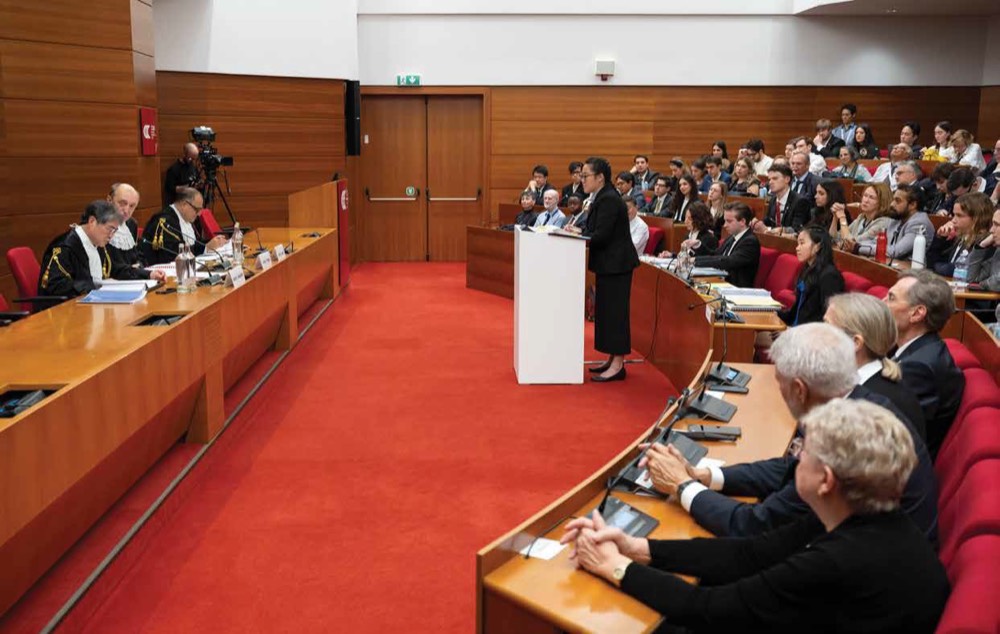
Dominance in the Jessup was firmly established in 1994 when NUS became the first law school to win three world championships. Ang Cheng Hock, now a Judge of Appeal, spoke in the world championship round. In 2001, NUS won its fourth Jessup world championship and in 2002, Singapore’s first world championship in the Vis, the world’s biggest and most prestigious arbitration competition. Jeffrey Chan’s son, Jason Chan, who spoke in both competitions and became SC in 2020, remains the only mooter in world history to have won both competitions.
The establishment of the Singapore Management University’s Yong Pung How School of Law added another contributor to Singapore’s international moots project. In 2010, SMU made its debut in international moots. That year, it won its first of five Asia Cups, and first of five world championships in Price, the class-leading human rights competition organised by Oxford University.
In 2013, SMU became the youngest ever law school to reach the world championship final of the Jessup. To underscore the significance of the moot, the national round was judged by then-AG Steven Chong, Justice Chao Hick Tin, and Ang Cheng Hock. The 2014 SMU team, featuring Nicholas Liu, would again reach the world championship final.
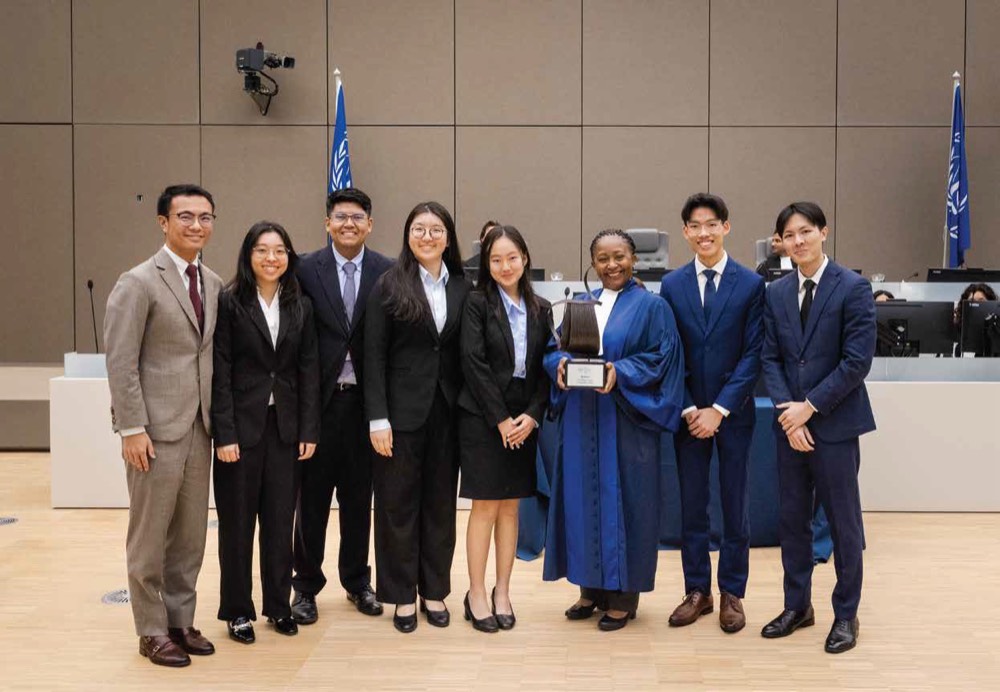
In 2015, SMU became the youngest ever law school to win the world championship of the Vis East, marking Singapore’s biggest moot win since 2002. SMU also set a world record by reaching eight world championship finals this season, a record it rewrote in 2016 (nine) and again in 2025 (11). Then in 2016, SMU successfully defended the world championship in the International Criminal Court Moot – the first time a university had done so in a Grand Slam. SMU repeated the feat in another Grand Slam (Price) in 2017. Both times, Dennis Saw was the lynchpin.
Coming to this decade, 2021 saw SMU reach its third world championship final in Vis and NUS reach the Jessup final, while 2022 saw SMU set a world record by winning six world championships in a season: Vis East, Frankfurt, Red Cross, Mandela, Asia Cup, and Perera. That record was broken in 2025 when SMU won seven world championships, including the Jessup and Vis East; members of the Jessup-winning team had also brought back the Lachs world cup the year before. Finally, in 2026, NUS won the Jessup after a 25-year hiatus, ensuring the cup remained in Singapore for another year.
Search for purpose
By consistently excelling in international competitions, our mooters have flown the Singapore flag high and cemented their universities on the world map. In so doing, they have also created a uniquely rich mythology surrounding moot court, inspiring generations of students to compete on the world stage. And our mooters have done this despite the gradual erosion of the advantages Singapore used to have, be it course credit, financial support, access to research resources, or coaching. They have also done this despite the changes in scale of competition and quality of adversaries – to illustrate, 300+ teams participated in Jessup 2001; that number is 800+ today. But what does all of this have to do with finding purpose and the future of our legal system?
One must first understand that seeking glory has never been the dominant objective of participating in international moots. Instead, apart from the sharpening of critical lawyering skills, such participation is about witnessing the level of competition out there and being exposed to international advocacy and international adjudication. Our mooters’ performances on the world stage are not just a persisting reminder of what the Singapore brand is about (ie, small and vulnerable, but unafraid and able to punch well above our weight). They are also a reminder that nothing can be taken for granted, in that the things that have brought us thus far demand the most highly trained people to continue safeguarding them with a sense of mission.
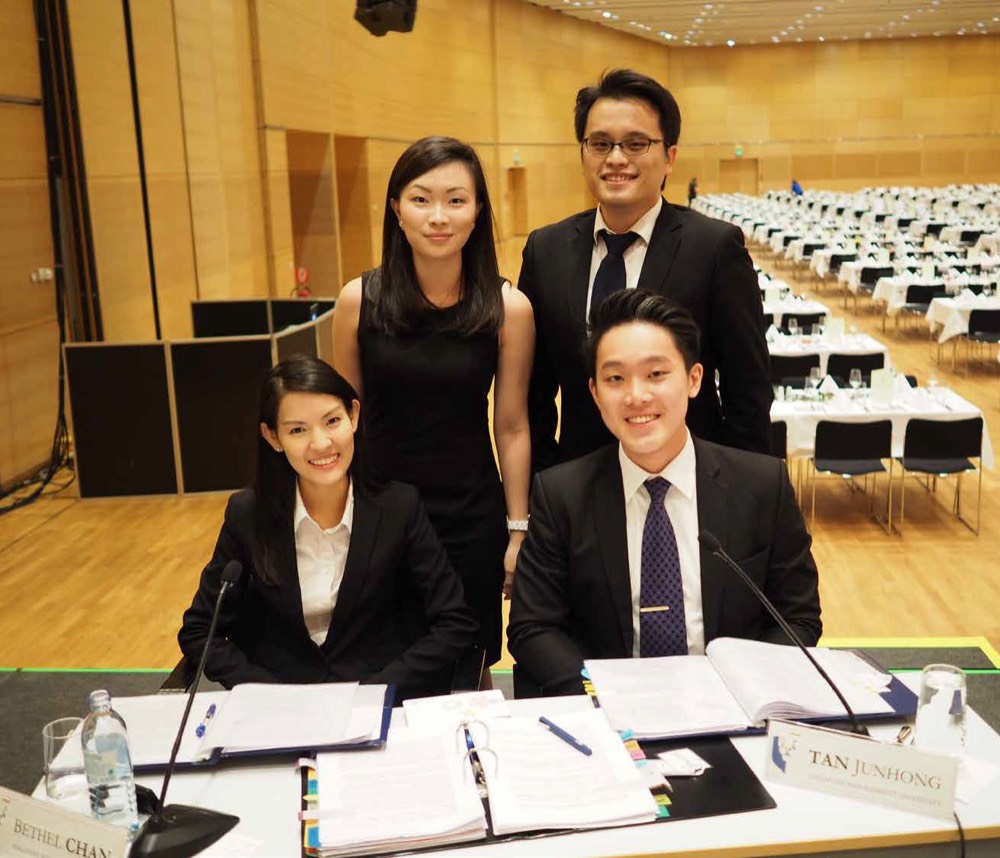
In the local context, those things would, at minimum, be the rule of law and the administration of justice. One should not be too cynical to believe that the bread-and-butter tasks of advising, drafting, and advocating are inherently incapable of being in service of a greater ideal. In a utopian society, everyone can understand every law, disputes never arise, and lawyers are redundant. Since no such society exists, lawyers are still needed to help protect interests, uphold rights, and enforce obligations. This is true even with the proliferation of AI, as lawyers remain custodians and, in many cases, fiduciaries. But when lawyers lack competence and conviction, the citizenry suffer, and confidence in the legal system diminishes, setting in motion the disintegration of a state and its economy – this is not a fanciful prospect when we are not a big country by any measure. In this regard, mooting further serves as a pivotal enculturation process, helping students internalise duties such as candour, professional civility, and intellectual integrity. This is all the more so when moot coaches are themselves lawyers, providing invaluable mentorship.
Of course, with our nation’s severely limiting characteristics and its fortunes tethered to forces of globalisation, we cannot afford to be only inward-looking. With the current international geopolitical climate likely to stay, we should also be thinking about how we can lead the way with respect to reimagining the international rule of law. As I have written elsewhere, Singapore has produced a steady stream of students who excel in international law, but most of them do not practice what they learn in school. Equally dissonant is that despite positioning ourselves as a world-class dispute resolution hub, there does not seem to be obvious pathways as to how our world-class students can become world-class advocates. This may be in part due to a perceived lack of opportunity. However, there may also be a perceived lack of need, since everything is already put in place. This is something that, in our view, needs to be addressed.
But regardless of whether our lawyers of tomorrow see their mission as only domestic or something more, even as we celebrate the past and present with great pride, the Bicentennial is as good a time as any to start thinking more deeply about the future. When society reaches a certain level of comfort and affluence, the search for purpose should assume greater, and not lesser, importance. Lawyers can profoundly impact the fate of a nation. They just need a platform to see it.