
Singapore and International Law
I will begin my essay by telling you a story. I was the chairman of the International Advisory Panel of the NUS Law School. The members of the panel were legal luminaries from around the world. As part of the programme for their visit, I accompanied them to call on the then Chief Justice Yong Pung How.
The Chief Justice was in an aggressive mood. He started the dialogue by proclaiming that there was no such thing as international law. I asked him what law was used by the International Court of Justice, in awarding sovereignty over Pedra Branca, to Singapore. He couldn’t answer my question.
A member of the panel, Professor Michael Reisman, from Yale University, was more tactful in his response to the Chief Justice. He said that, early that morning, he had called his wife in New York. He said that his call was either carried by a submarine cable or a satellite. He explained that there is a law, the UN Convention on the Law of the Sea, which governs submarine cables. Satellites are governed by the International Telecommunications Union (ITU) and by air and space law.

Leifer versus Acharya
I want to deal with an important question about the role of international law in Singapore’s foreign policy. One school of thought is represented by the late Professor Michael Leifer. In his book, Singapore’s Foreign Policy: Coping with vulnerability, Leifer stated that Singapore’s foreign policy was based on Realism. In such a worldview, there was no role for international law.
The opposite view is represented by Professor Amitav Acharya. In his book, Singapore’s Foreign Policy: The Search for Regional Order, Acharya argued that Singapore’s commitment to ASEAN suggested that Singapore’s foreign polling was not based on realism but on pragmatism.
Singapore has a realistic view of the world. We take the world as it is and not as we wished it to be. We believe that, in a crisis, no other country will save us. We must therefore have a strong Singapore Armed Forces (SAF) to defend ourselves.
At the same time, we are not cynical about the world. We don’t see the world as a jungle where only force mattered. We see the world as one which is governed imperfectly by laws, treaties, international cooperation and multilateral institutions. We believe in the rule of law. It is of course true, that some countries, especially powerful ones, often behave like outlaws. Russia in Ukraine and Israel in Gaza are two prime examples of lawless behaviour.
We believe in diplomacy. We see the Ministry of Defence and the Ministry of Foreign Affairs as two sides of the same coin. Our first line of defence is diplomacy. If diplomacy fails, our ultimate defence is the SAF.
Sword and Shield
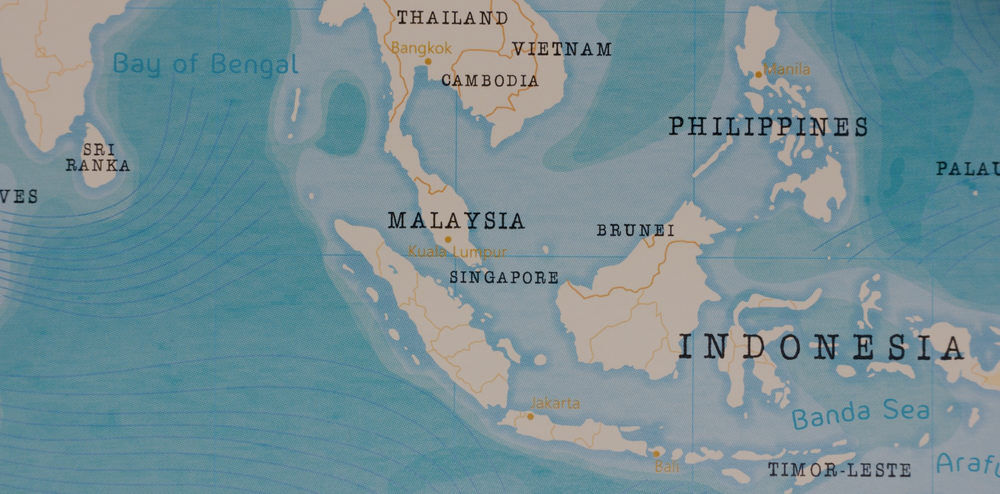
My thesis is that international law is our sword and our shield. It is our shield because international law has defended Singapore’s national interests. I was the Agent of Singapore in two legal disputes with Malaysia. The first legal dispute was over Pedra Branca, Middle Rocks and South Ledge. In 2008, the International Court of Justice ruled that sovereignty over Pedra Branca belonged to Singapore. The Court also ruled that Middle Rocks belonged to Malaysia. Our primary interest was in Pedra Branca. The Court’s judgment rejected Malaysia’s claim that the island belonged to her and affirmed Singapore’s position that the island belonged to Singapore.
The second legal dispute revolved around Singapore’s land reclamation works in Pulau Tekong and in Tuas. Malaysia had applied to the International Tribunal for the Law of the Sea for a provisional measure to stop Singapore’s land reclamation activities until the disputes had been resolved by arbitration. Fortunately for Singapore, the tribunal did not grant Malaysia the provisional measure. The case was finally resolved through negotiations. An amicable agreement was agreed upon and signed by the two Agents, in the presence of their two foreign ministers.
Let me now refer to a little-known case. In 2004, a Singapore company was shipping organic waste to Batam, Indonesia. The Indonesian government arrested the Singapore company and alleged that the waste was toxic and that Singapore had violated the Basel Convention on the Control of Transboundary Movement of Toxic Waste. Both Indonesia and Singapore are parties to the Convention.
Indonesia made a complaint against Singapore to the Secretariat of the Convention, based in Geneva. Singapore took the opportunity to invite the Secretariat to send a team to Batam to inspect the waste. The inspectors reported that the waste was not toxic and not a violation of the Convention. As a gesture of goodwill, the Singapore government managed to persuade the Singapore company to ship the waste back to Singapore.
Conclusion
I had the great privilege of having worked closely with our three key founding fathers: Lee Kuan Yew, Goh Keng Swee, and S Rajaratnam. All three men were realistic and had no illusions about the world. On foreign policy, Mr Lee was the main policy maker. He was very scrupulous about the need for Singapore to conform to international law. In our internal meetings, he would sometimes suggest an idea for our consideration. Whenever we told him that his idea was not consistent with international law, he would drop the idea.
Mr Lee understood that the law could be used to promote and defend Singapore’s national interests. For this reason, he made sure that we were always on the side of the law. His commitment to international law was not ideological. It was a pragmatic decision. For him, international law was an important weapon in our tool kit. International law is our sword and our shield.
Singapore’s support for ASEAN and for multilateral institutions, such as, the UN, WTO, IMO, ICAO, WHO, etc., is not based on idealism but on pragmatism.
We support ASEAN because it has helped to keep the peace in our region for many years. ASEAN has promoted the integration of the 10 ASEAN economies into a single economy. ASEAN has nurtured the culture of consultation, mutual accommodation and consensus. In short, ASEAN has been a force for peace and prosperity.
Why do we support the UN and other multilateral institutions? We do so because they are founded on the principle of the sovereign equality of states. In the UN and other multilateral institutions, countries, big and small have one vote. Small countries are empowered by multilateralism. When they unite and organise themselves, this will amplify their voices and enhance their influence.
Due to an initiative taken by Singapore, in 1992, at the UN, we have the Forum of Small States or FOSS. The forum has 108 members, which is a majority of the UN membership. With the existence of FOSS, the big and powerful countries can no longer ignore or bully the small countries.
The world will always favour the big over the small and the strong over the weak. Singapore accepts this reality. However, it does not accept the narrative that the big countries can do what they like and the countries have to accept their fates. We have shown that small countries have agency and they can neither be bought nor bullied.
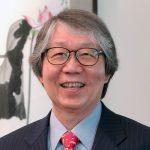
Tommy KOH is currently Professor of Law at NUS; Ambassador-At-Large at the Ministry of Foreign Affairs; the Rector of the Tembusu College at NUS; Chairman of the Governing Board of the Centre for International Law at the National University of Singapore (NUS) and Special Adviser to IPS. He is the Chairman of the International Advisory Panel of the Asia Research Institute (NUS) and Chairman of the Advisory Committee of the Master’s Degree on Environmental Management (NUS). He is also the Co-chairman of the Asian Development Bank’s Advisory Committee on Water and Sanitation. He is the Chairman of the Board of Directors of the SymAsia Foundation of Credit Suisse (pro bono).
He had served as Dean of the Faculty of Law of NUS, Singapore’s Permanent Representative to the United Nations in New York, Ambassador to the United States of America, High Commissioner to Canada and Ambassador to Mexico. He was President of the Third UN Conference on the Law of the Sea. He was also the Chairman of the Preparatory Committee for and the Main Committee of the UN Conference on Environment and Development (Earth Summit). He was the UN Secretary General’s Special Envoy to Russia, Estonia, Latvia and Lithuania. He was the founding Chairman of the National Arts Council, founding Executive Director of the Asia-Europe Foundation and former Chairman of the National Heritage Board. He was Singapore’s Chief Negotiator in negotiating an agreement to establish diplomatic relations between Singapore and China. He was also Singapore’s Chief Negotiator for the US-Singapore Free Trade Agreement. He acted as Singapore’s Agent in two legal disputes with Malaysia. He has chaired two dispute panels for the WTO. He is the Co‑Chairman of the China‑Singapore Forum and the Japan-Singapore Symposium.
Professor Koh has received awards from the Governments of Singapore, Chile, Finland, France, Japan, Netherlands, Spain and the United States. Professor Koh received the Champion of the Earth Award from UNEP and the inaugural President’s Award for the Environment from Singapore. He was conferred with honorary doctoral degrees in law by Yale and Monash Universities. Harvard University conferred on him the Great Negotiator Award in 2014.