
A Review of the 2024/25 International Moots Season
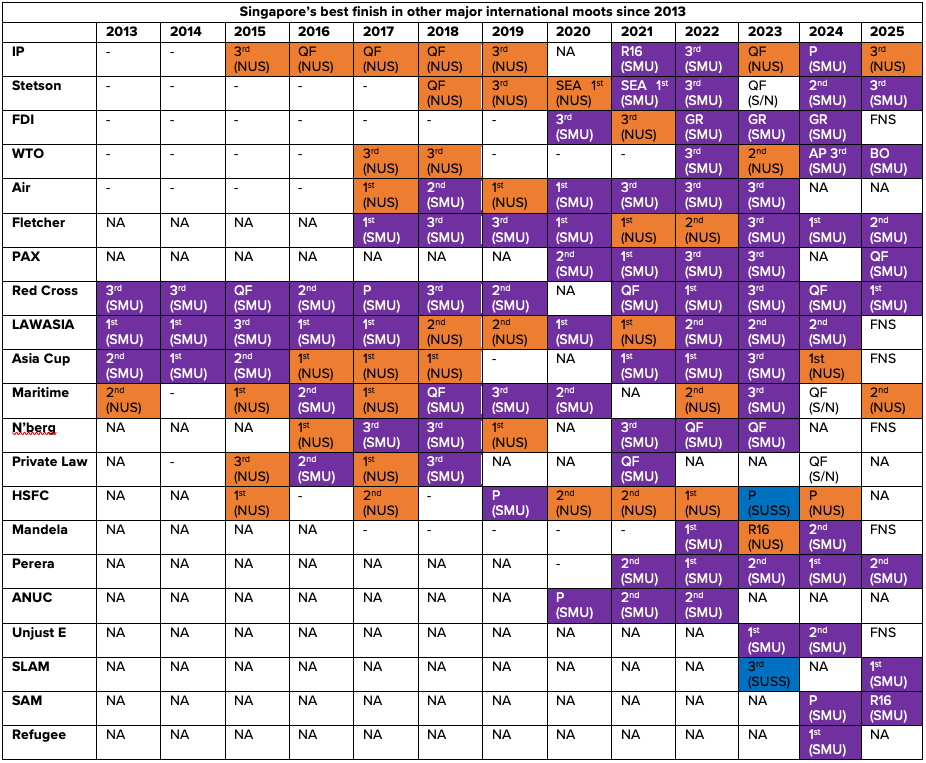
This is the 11th1The previous reports can be found in “A review of the 2023/24 international moots season”, Law Gazette, November 2024. annual review of Singapore’s performance in international moot court competitions.2Mediation or negotiation competitions are excluded from this recap, though our schools continue to excel in such competitions. In 2023 for instance, Singapore teams won the CDRC Vienna and HSF-Delhi competitions; this streak continued in 2024 with wins in competitions such as A&O Negotiation and the INC, and in 2025, ICC Paris. In a nutshell, 2024/25 has been a tremendous, record-breaking season for Singapore – and a particular duck has finally been broken. In the highest-tier or Grand Slam competitions,3Grand Slams are class-leading competitions that attract a substantial number of teams and are perceived to have a particular prestige not just due to scale and number of teams participating but also the quality of the organisation, participants, judging, and surrounding events. They currently comprise the Jessup, Vis, Vis East, Price, International Criminal Court, Lachs, and Frankfurt moots: see The International Moot Court Compendium: https://www.internationalmoots.org. Singapore Management University emerged world champions in the Jessup, Vis East, International Criminal Court, and Frankfurt competitions; the previous world record for most Grand Slam wins in a season was 2 (held by various universities), and this new record may well increase to 5, depending on whether SMU can successfully defend its world championship at the Lachs Space Moot in Sydney in October.
Other notable SMU results this season include winning the Red Cross IHL, Sports Law Arbitration, and Perera Arbitration moots, making the world championship final of the Price, Fletcher, and Unjust Enrichment moots, and winning the Southeast Asian title in the Stetson moot. Three additional world records were set by SMU in the process: most world championship finals in a season (10), most world championships in a season (7), and most Grand Slam world championship finals in a season (5) – again, these numbers may potentially grow come October; apart from the aforementioned Lachs, a couple other moots are outstanding.
Records were also set on an individual basis. Before this season, only 5 mooters had ever won multiple Grand Slams in the history of international moots. The list would now be joined by the Lachs’24 and Jessup’25 world champions Elizabeth Ho, Raelee Toh, and Genieve Wu, as well as the ICC’24 and Jessup’25 world champion Lovein Sui. Also notable is John Hoy’s winning of both ICC’24 and Red Cross IHL’25, the two biggest moots on international criminal law.

Although the Jessup Cup has finally returned to Singapore after more than 20 years – and tournament records established in most of the Grand Slams have been reinforced4SMU is now tournament leader in 4 of the 7 Grand Slams: ICC (6 chips), Price (4), Vis East (3), and Frankfurt (3). The tournament leaders for the remaining Grand Slams are Sydney (6 in Jessup), Ottawa (3 in Vis), and NLSIU (3 in Lachs). – none of us can afford to sit on our laurels. Singapore is only as relevant as what it has most recently achieved, not what it has done in the distant past. We would have to keep innovating and finding ways to retain our competitive edge. At the same time, our students and coaches who have sacrificed much to fly the Singapore flag high ought to be commended.
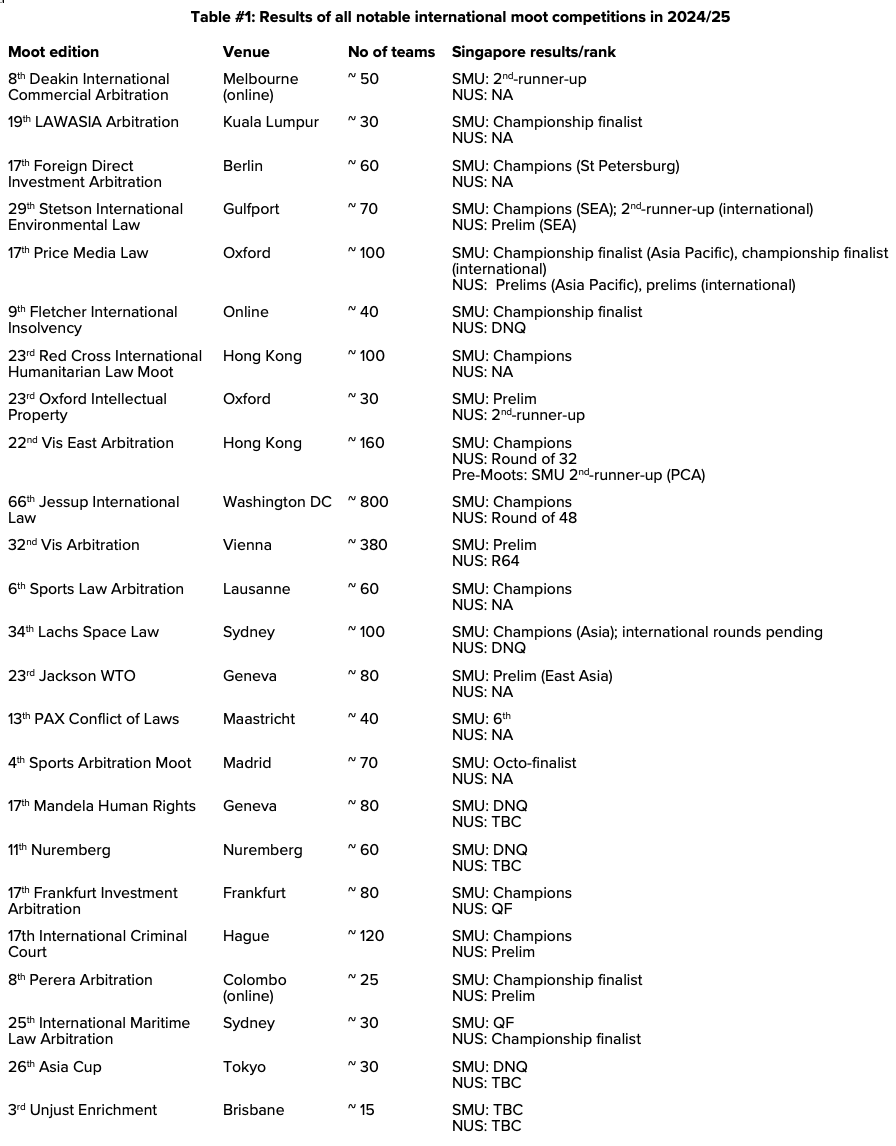

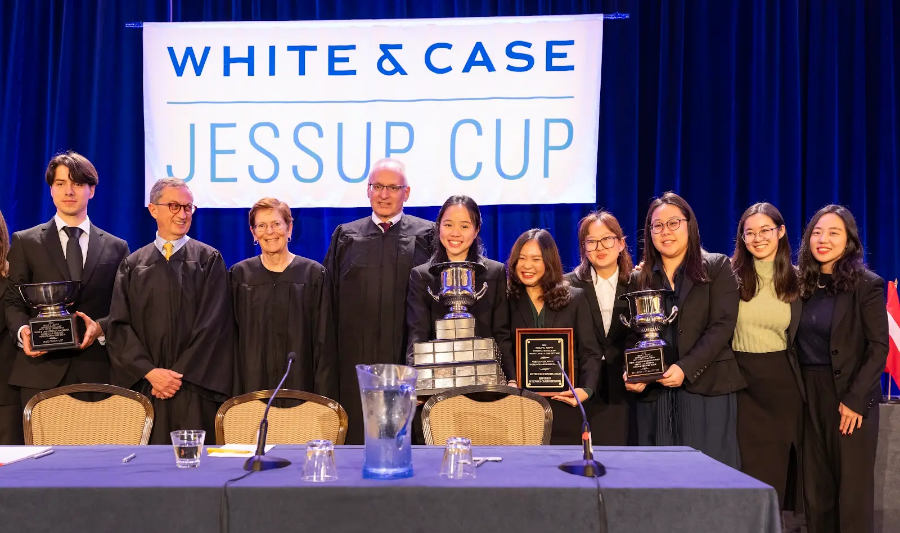
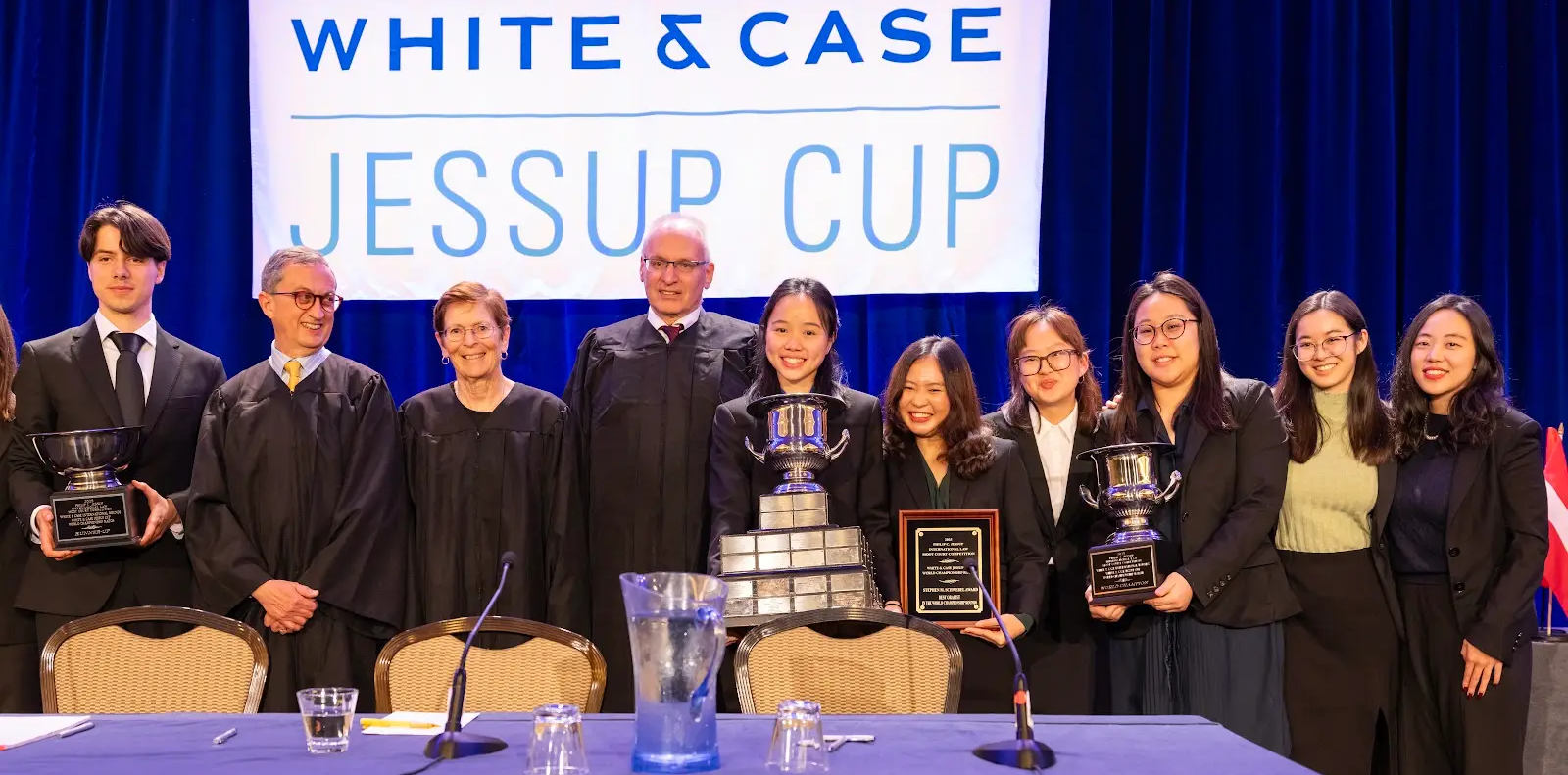
SMU made its fourth world championship final appearance in the Jessup this year, and won. The Jessup is the world’s largest, oldest, and most prestigious moot, with more than 800 teams participating in the latest edition. SMU started participating in the international rounds of the Jessup in 2013.
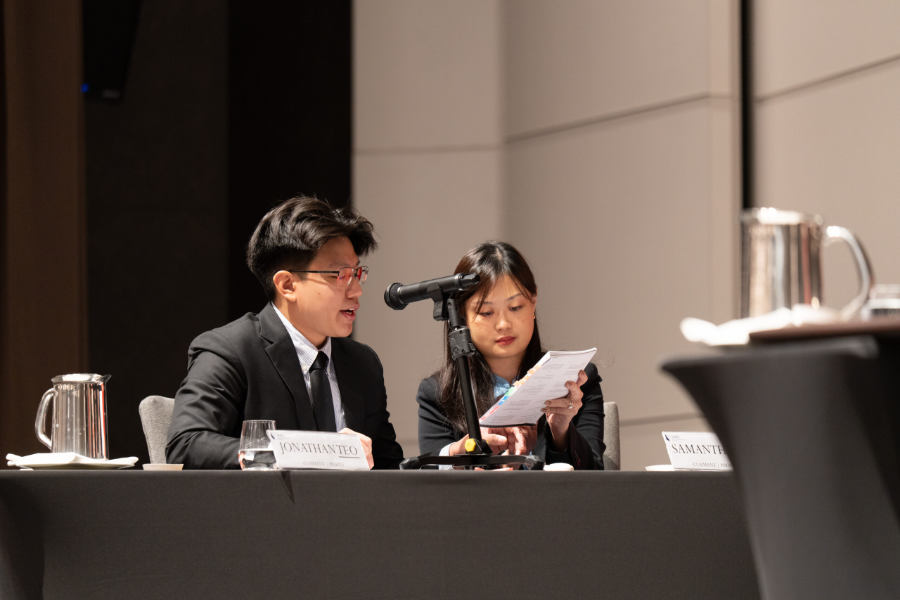
SMU won the 22nd Vis East, extending its tournament record for most championships to three. The Vis East is the world’s second largest international commercial arbitration moot.
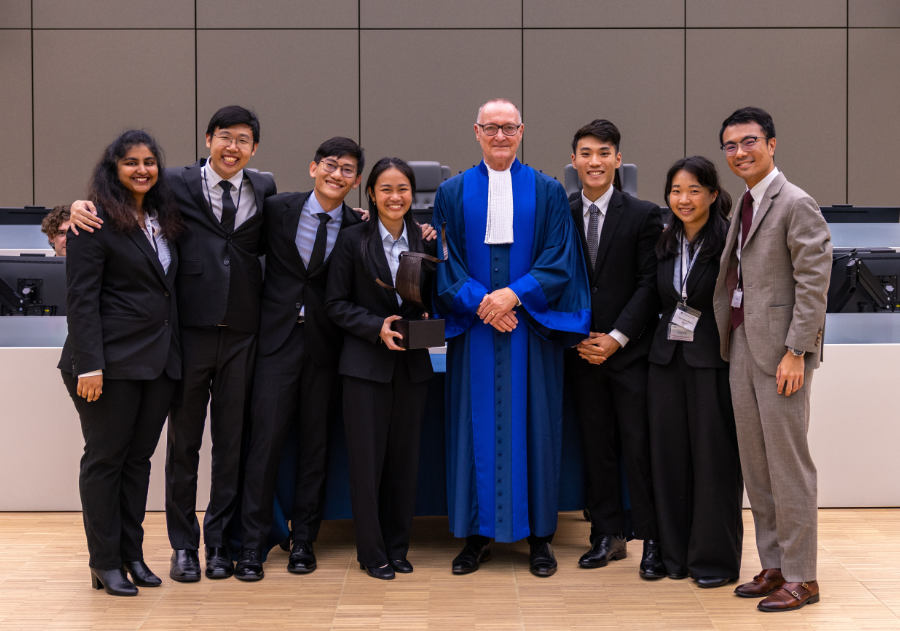
SMU successfully defended its ICC world championship at The Hague, and extended its tournament record for most championships to six. The ICC Moot is the world’s largest and most prestigious competition on international criminal law, with the final being presided by a sitting ICC Judge.
Endnotes
| ↑1 | The previous reports can be found in “A review of the 2023/24 international moots season”, Law Gazette, November 2024. |
|---|---|
| ↑2 | Mediation or negotiation competitions are excluded from this recap, though our schools continue to excel in such competitions. In 2023 for instance, Singapore teams won the CDRC Vienna and HSF-Delhi competitions; this streak continued in 2024 with wins in competitions such as A&O Negotiation and the INC, and in 2025, ICC Paris. |
| ↑3 | Grand Slams are class-leading competitions that attract a substantial number of teams and are perceived to have a particular prestige not just due to scale and number of teams participating but also the quality of the organisation, participants, judging, and surrounding events. They currently comprise the Jessup, Vis, Vis East, Price, International Criminal Court, Lachs, and Frankfurt moots: see The International Moot Court Compendium: https://www.internationalmoots.org. |
| ↑4 | SMU is now tournament leader in 4 of the 7 Grand Slams: ICC (6 chips), Price (4), Vis East (3), and Frankfurt (3). The tournament leaders for the remaining Grand Slams are Sydney (6 in Jessup), Ottawa (3 in Vis), and NLSIU (3 in Lachs). |