
Connecting the Asia-Pacific and the World
American Bar Association International Law Section Asia-Pacific Conference in Singapore
In February 2025, the American Bar Association’s International Law Section (ABA ILS or Section) held its Asia-Pacific Conference in Singapore for the first time. This milestone event brought the Section’s global community to the heart of one of the region’s most dynamic legal and commercial hubs. The theme, “Connecting the Asia-Pacific and the World: Emerging Legal Challenges and Opportunities”, set the stage for three days of vibrant panel discussions, thought-provoking insights, and meaningful exchange.
Hosted at the Singapore Management University, the conference welcomed over 230 participants from across Asia, North America, South America, and Europe. The diverse group of delegates and guests included lawyers, in-house counsels, government officials, judges, academics, and business professionals. They represented a wide range of organisations, from international and regional law firms to arbitration institutions, multinational corporations and advisory firms.
This rich mix of jurisdictions and professional perspectives underscored not only the conference’s global scope, but also the growing importance of cross-border legal collaboration in an increasingly interconnected world.

Founded in 1878, the ABA ILS comprises over 12,000 members in more than 100 countries today. With a mission to advance the practice of international law, support legal education, and promote the rule of law worldwide, the Section has convened conferences in cities across the globe — from Washington to Buenos Aires, and from Seoul to Paris. Its debut in Singapore marked not only the Asia-Pacific region’s rising influence in global legal practice, but also affirms Singapore’s role as a natural meeting point between East and West. In this place, international legal minds come together to exchange ideas, forge connections, and help shape the future of the profession.
Conference Highlights
The conference officially opened with a reception held at the Singapore Management University, during which the ABA ILS and the Law Society of Singapore signed a friendship agreement. This symbolic moment not only marked the start of the three-day event, but also signalled a commitment to deepening collaboration and creating more opportunities for knowledge exchange and professional networking between the two bar associations.
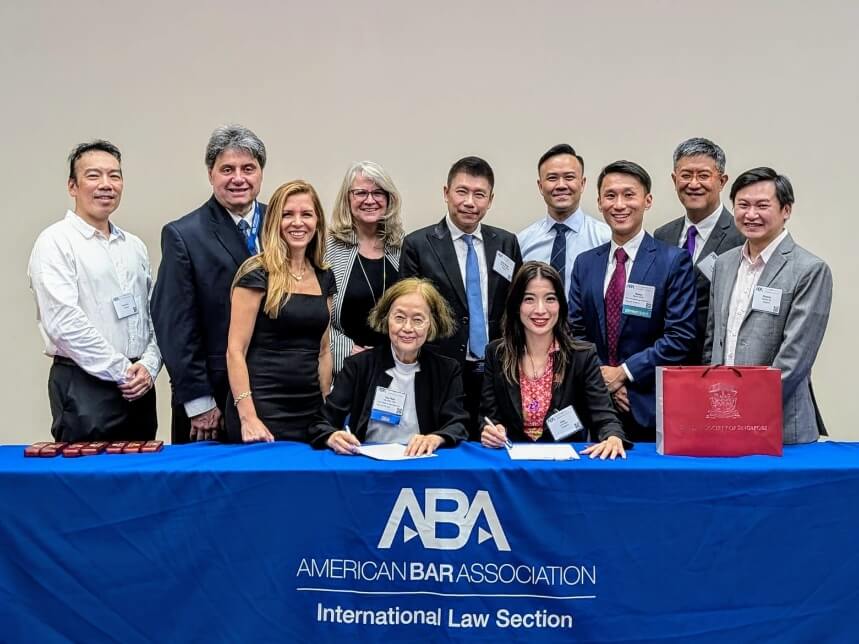
Building on this spirit of cooperation, the following two days featured a rich and diverse array of 27 programmes, covering a diverse range of topics that reflected the evolving legal landscape in the Asia-Pacific and beyond. Panels explored topics such as the effective enforcement of arbitral awards in the Asia-Pacific region, the evolving regulatory landscape regarding human rights and environmental due diligence in Europe, and the legal dimensions of cross-border data transfers and data privacy frameworks. Other sessions examined Singapore’s role as an investment hub in Southeast Asia, and legal developments in the energy transition.
Technology-related sessions also featured prominently, including discussions on the integration of artificial intelligence (AI) and Web3 technologies, mergers and acquisitions (M&A) transactions in the tech sector, and the growing legal and regulatory challenges arising from innovation. Complementing these discussions were talks on geopolitical shifts and their impact on investor-state disputes, the significance of the Singapore Convention on Mediation, and practical insights from in-house counsel on managing risks in transactions, compliance, and disputes. Collectively, the sessions offered attendees a forward-looking perspective on key issues shaping international legal practice.
Among the conference highlights was a keynote address by the Attorney-General of Singapore, Lucien Wong SC, at the programme titled “Decoding the AI Advantage: Ethical, Cross-Cultural & Decision-Making Innovations in Dispute Resolution.” The session explored how AI-driven tools are transforming the effectiveness, efficiency, and impartiality of dispute resolution, providing a behind-the-scenes look at the possibilities and challenges of innovation in this field.
A landmark programme on “The Singapore International Commercial Court (SICC): Ten Years of Innovative Dispute Resolution Benefitting the Asia-Pacific Region and the World” was held at the Singapore Supreme Court Building. With insights from Justice Philip Jeyaretnam, President of the SICC, and Judge James Peck, the session reflected on the SICC’s development and influence over the past decade. The panel was followed by a reception and guided tours of the Supreme Court and SICC courtrooms, offering delegates a rare opportunity to experience Singapore’s legal infrastructure up close.
Further enriching the programme was an interactive career planning and mentoring session led by Kala Anandarajah (Rajah & Tann). This session brought together students and lawyers with seasoned practitioners from diverse professional backgrounds, including in-house roles, government service, private practice, and entrepreneurship. Participants engaged in a panel discussion and shared insights on navigating diverse legal careers, followed by a networking tea that provided space for deeper connection and mentorship.
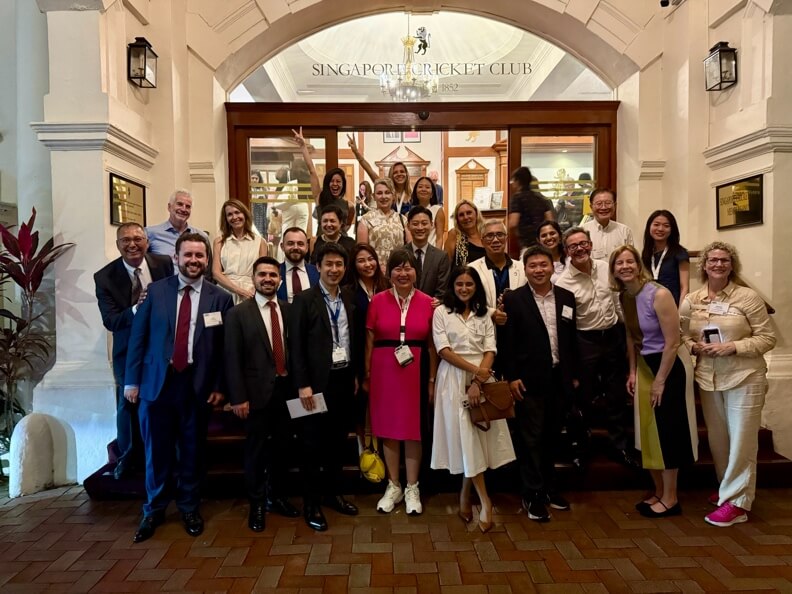
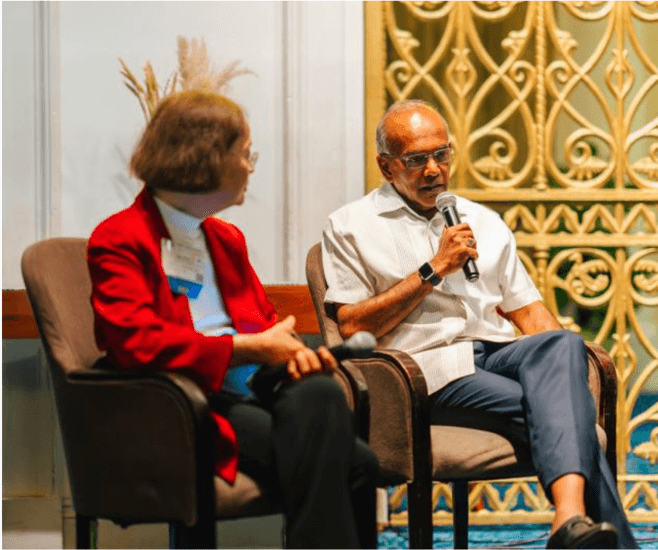
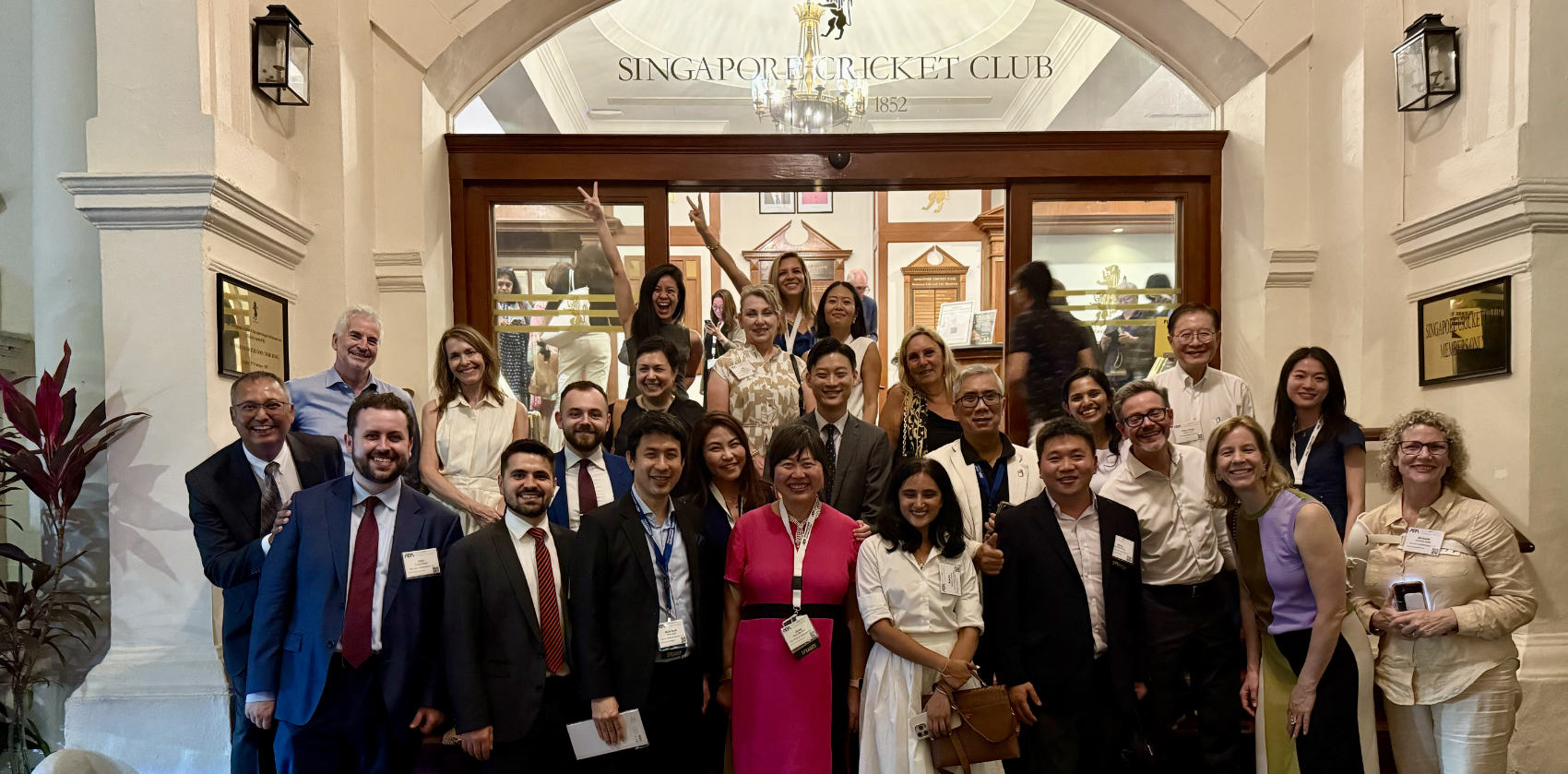
The conference drew to a close with a fireside chat at the iconic Singapore Cricket Club, featuring Minister for Law and Home Affairs, K. Shanmugam SC. In a wide-ranging conversation, the Minister shared candid reflections on Singapore’s evolving role on the global stage and its distinctive approach to preserving harmony among its diverse racial, religious, and social communities.
Taken together, these programmes underscored the breadth and depth of international legal practice, reinforcing the ABA ILS’s enduring commitment to dialogue, inclusion, and professional development across generations and geographies.
Lawyers Are People Too: Stories Beyond the Conference Rooms
Joint Committees Networking Cocktail
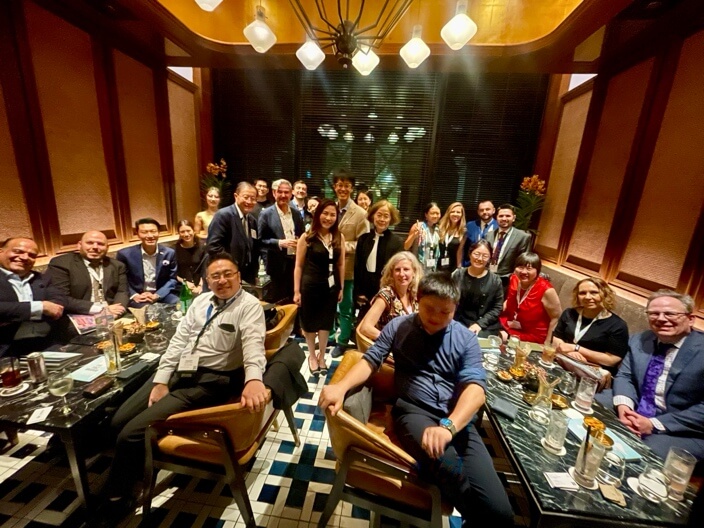
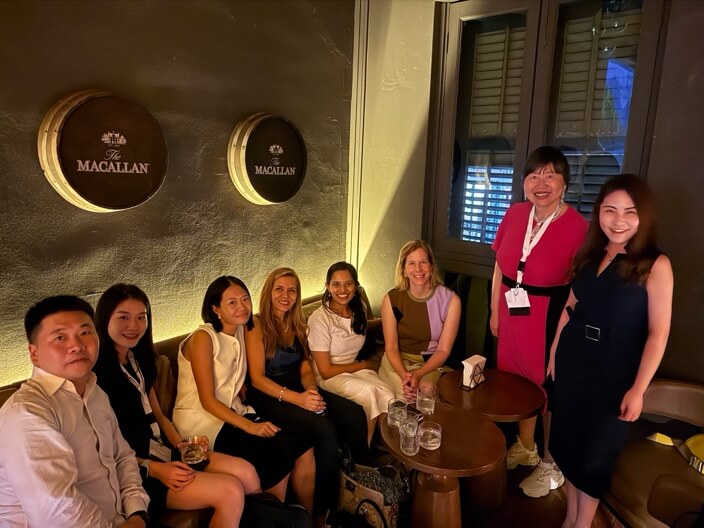
Following the opening reception, I had the pleasure of hosting a joint-committees networking cocktail in my capacity as the Vice Chair of the ABA ILS’s International Finance and Securities Committee and International M&A and Joint Ventures Committee.
It was a cosy and convivial gathering of around 35 lawyers from more than a dozen jurisdictions, including the United States, Singapore, China, the United Kingdom, Spain, South Korea, Mexico, Malaysia, Romania, Japan, Thailand, and the Netherlands. Some of us had been meeting virtually regularly over the past few years, and this was the first time we could finally greet each other in person. We shared drinks, laughter, and long-awaited handshakes. There were familiar faces from previous conferences — including some I had first met in New York years ago — and, as always, the joy of making new friends.
The conversations flowed freely. Topics ranged from cross-border M&A trends and the rise of AI to captivating courtroom anecdotes and evolving political climates. A litigator from the United States kept us entertained with stories from the trial, while others shared insights on judicial reform in Mexico, a major fraud case in Vietnam involving a real estate tycoon, and their cross-border career journeys. It was an evening of good wine, lively conversation, friendships, and a shared experience that transcended borders.
Weekend Excursions and Hawker Centre Discoveries
After several days of panels and professional dialogue, the Saturday following the conference offered a different rhythm — one without name tags or agendas, just the city and its stories.
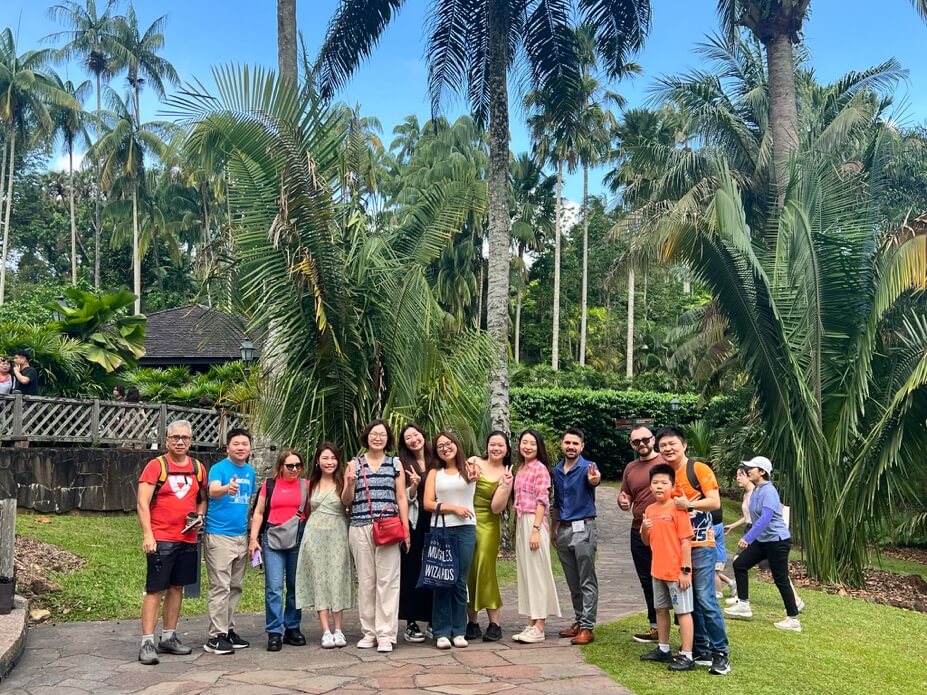
Together with fellow event committee members, Nathan Bush (DLA Piper), Helen Wang (Carey Olsen), Lip Hang Poh (Baker McKenzie Wong & Leow), and Pauline Tang (Herbert Smith Freehills), we curated a series of small-group excursions designed to give our overseas guests a more intimate experience of Singapore. One group wandered through the tranquil paths of the Botanic Gardens, followed by a leisurely lunch at a café nearby. Another strolled along the Singapore River, pausing by the Merlion at dusk and ending the day with sunset cocktails atop Marina Bay Sands. The third group spent the afternoon at the National Museum, taking in the country’s layered history and heritage.
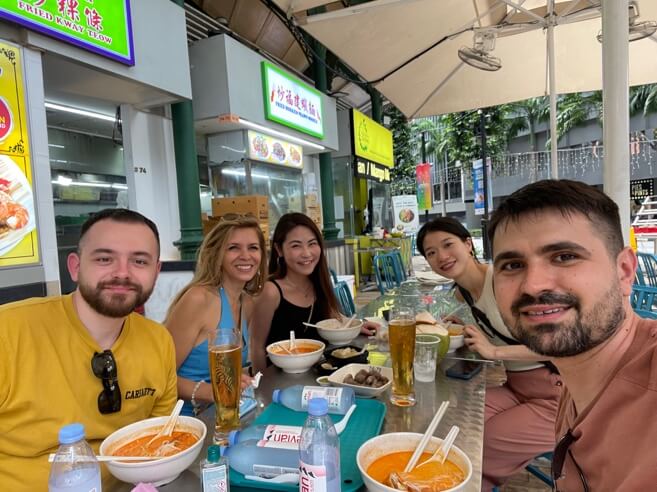
On Sunday, in a true celebration of local flavour, a few of us made an impromptu visit to the hawker centres. In Chinatown, our friends from Europe and the United States tried durian for the first time — reactions ranged from surprise to bemusement, but everyone gave it a fair shot. At Lau Pa Sat, we enjoyed laksa and fresh coconut juice while swapping stories of travel, career turning points, and the everyday stories that reminded us of who we are beyond our work.
Behind every legal mind lies a personal journey. By then, we were no longer merely exchanging business cards, we were sharing meals, stories, and the kind of laughter that signals something more enduring: community.
A Month Later: Crossing Paths Again
A few weeks after the conference, I found myself in Shanghai, where I reconnected with some of the lawyers I had met at the ABA conference — one even introduced me to a new contact, extending the ripple effects of our earlier encounter. Then, a few months later, I came across photos from the ABA Annual Conference in New York, familiar faces gathered once again, this time halfway around the world.
These serendipitous reunions remind us that while our profession may span continents, the relationships we build are more enduring than the conference itself. Legal conferences may start with formal agendas, but they often end with something richer — a growing community of colleagues, collaborators, and friends.
A Platform to Showcase Singapore Law and Legal Talent
International legal conferences such as the ABA Conference present a valuable opportunity for Singapore law firms and lawyers to enhance their visibility and deepen relationships with the global legal community. Beyond the formal programming, these conferences serve as a dynamic platform to showcase Singapore’s legal expertise, robust regulatory environment, and world-class dispute resolution infrastructure.
Throughout the conference, Singapore-based panellists highlighted key aspects of the country’s legal and business environment, from M&A trends and tax incentives to its comprehensive and neutral framework for cross-border dispute resolution, whether through litigation, arbitration, or mediation. These discussions not only demonstrated the professionalism and technical depth of the speakers but also highlighted the legal infrastructure that makes Singapore an attractive jurisdiction for international investment and collaboration. Delivered in front of a diverse international audience, these panels subtly reinforced the expertise of Singapore lawyers within their respective fields, strengthening their credibility on a global stage.
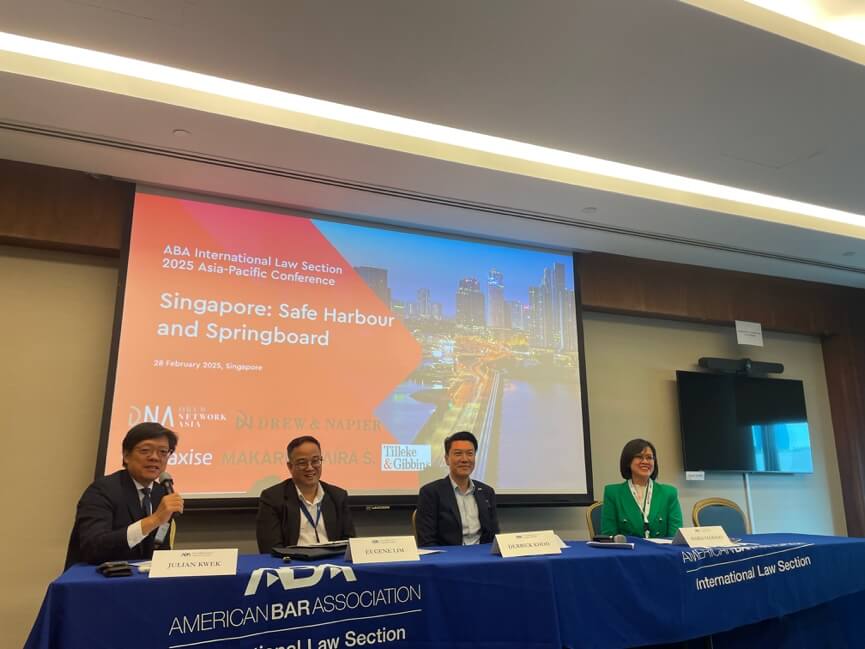
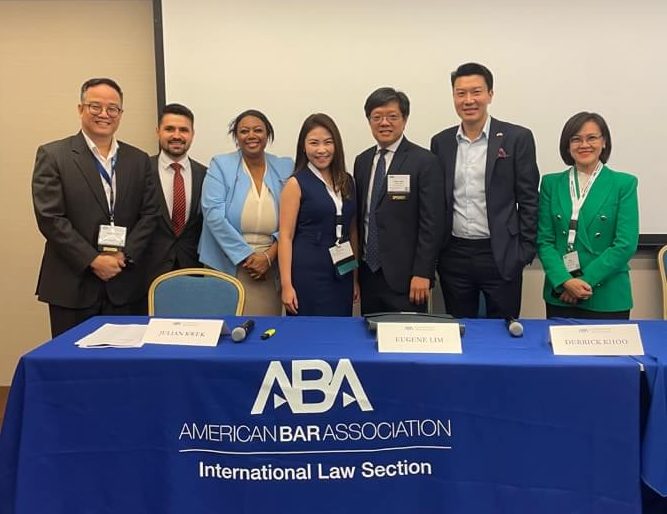
The exposure extends beyond the podium. Singapore law firms also engage with their international counterparts in the lead-up to the conference and through related networking events. Many of the panel programmes are co-chaired or co-moderated by lawyers from multiple jurisdictions, providing a natural setting for cross-border collaboration. For example, I co-chaired a panel titled “Singapore: Safe Harbour and Springboard” alongside the Director of my firm, Julian Kwek (Drew & Napier). Together with speakers from Singapore, Indonesia, and Thailand, we held preparatory meetings and built working relationships that extended beyond the event. In another programme, “The 5Ds of Corporate Sustainability: Due Diligence, Disasters, Destruction, Danger and Disputes,” the panel brought together legal professionals from Singapore, the Netherlands, France, Hong Kong, and Taiwan. The collaborative preparation for such sessions opened the door to meaningful exchanges and potential partnerships.
Equally important is the role of the conference planning committee. Comprising more than 100 lawyers from Singapore and abroad, the committee worked together for nearly a year to develop the conference agenda, review and curate programme proposals, and organise various side events and initiatives, including student-focused career planning sessions and small-group excursions. These months of regular meetings and shared responsibilities allowed lawyers from Singapore firms to interact meaningfully with their international peers, fostering relationships built on mutual respect and trust.
Outside of the formal structure, local firms also hosted visiting delegates at their offices or met with old contacts who were in town for the conference. Some participants visited Maxwell Chambers or made time to reconnect with Singaporean counsel they had previously worked with. These informal interactions further reinforced existing ties and created space for new ones to form.
In fact, in the weeks following the conference, a lawyer from another jurisdiction reached out to ask if I could recommend Singapore counsel for his client. This inquiry stemmed directly from the connections made during the conference, and the outreach itself reflected the real-world value of these conferences in raising the profile of Singapore firms and fostering cross-border professional opportunities.
In sum, international legal conferences do more than offer academic or policy insights, they actively contribute to the growth and internationalisation of Singapore’s legal community. Through shared panels, collaborative planning, and relationship-building, Singapore lawyers and firms can enhance their presence in the global legal market and demonstrate why Singapore remains a hub for international legal and commercial activity.

Kelly Ian I Lei is an international lawyer in the Corporate & Finance team at Drew & Napier LLC. She is admitted to the New York Bar, registered as a foreign lawyer in Singapore, and has passed the bar examination of the People’s Republic of China. Her practice focuses on capital markets, financial regulatory matters, and a broad range of corporate and compliance issues.
Kelly has previously gained exposure to legal practice at law firms in Asia, Europe, and the United States. She holds a law degree from Portugal, with a focus on EU and Portuguese law, and an LL.M. from the New York University School of Law.
She currently serves as the Vice Chair of the Finance and Securities Committee and the M&A and Joint Ventures Committee of the American Bar Association’s International Law Section. She is fluent in English, Mandarin, and Cantonese, and has reading proficiency in Portuguese.