


Voices of Women in the Industry: Female Founders
“Voices of Women in the Industry” is an initiative by the Women in Practice Committee, which presents perspectives from female practitioners in the legal industry. In this article, we speak to two dynamic female founders of law firms – Shobna Chandran, Director of Shobna Chandran LLC and Sze-Hui Goh, Managing Partner of GT Law LLC. Shobna shares her experience from a disputes standpoint, whereas Sze-Hui provides her insights from a corporate angle.
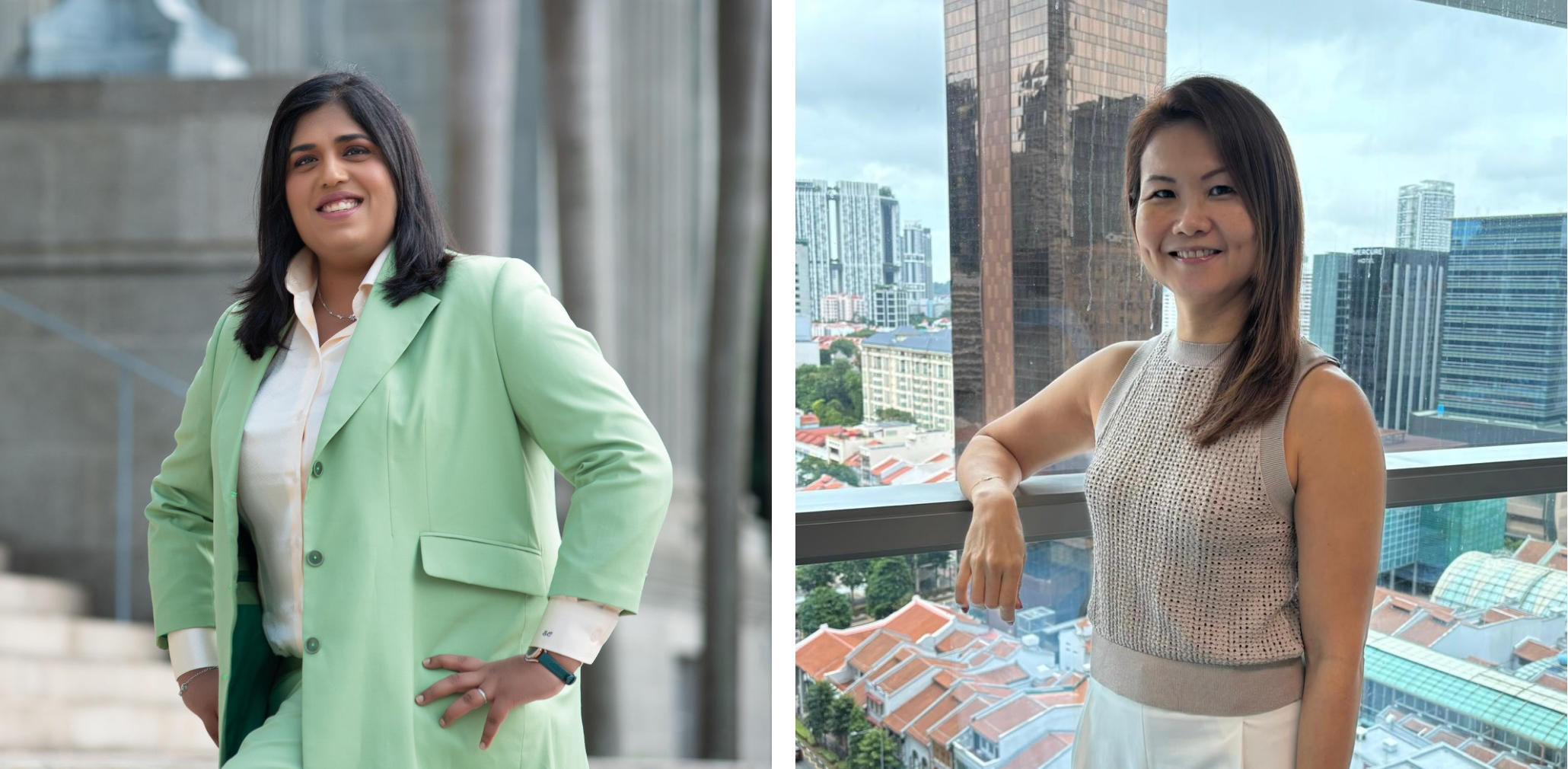
Left: Shobna Chandran, Right: Sze-Hui Goh
What made you decide to start your own firm?
Shobna: “Women need to shift from thinking, I’m not ready to do that, to thinking I want to do that, and I’ll learn by doing it.” – Sheryl Sandberg
Reflecting on my journey, I am blessed to have a career involving complex and high-value cross-border cases spanning commercial litigation, arbitration, insolvency and appellate matters. This is due in no small part to the honour of having worked alongside three Senior Counsels. Along the way, with the unwavering support of my family, friends and team, I have been fortunate to gain the support and trust of loyal clients (many of whom are instructing counsel). Finally, being recognised as a leading disputes lawyer gave me the courage to make the leap.1In 2023 and 2024, Shobna was recognised as a “Litigation Star” by Benchmark Asia Pacific and ranked as one of the top arbitration lawyers in the region by Benchmark Asia Pacific’s Top 40 under 40.

In 2023, it was a natural progression to start my own boutique disputes firm, Shobna Chandran LLC (SC LLC). SC LLC’s culture is shaped by a trifecta of excellence, a commitment to values, and fearless advocacy for our clients. I also saw building a law firm as a good opportunity to create a platform for training and mentoring younger lawyers to be courtroom advocates. I decided to take the plunge and here I am one year in, speaking to you about my journey!
Sze-Hui: It was during the COVID-19 period when it happened, and it was actually brought about by circumstances at that time. I saw it as an opportunity in a rapidly changing world to build a transformational practice taking only the good aspects and avoiding practices which I felt were outdated in these times. Another motivation close to my heart is the ability to run a firm that could give women the platform to continue developing their careers in private practice at their own pace – without having to sacrifice their careers altogether due to family demands.
The international law firm I was with was very supportive of me when I became a mother (twice over) when I was just starting out as a partner, and I saw this as an opportunity to build a platform for outstanding lawyers (regardless of gender) with a support structure where women and men can work on equal terms. I hope that my experience can support them in the decision to combine commitment to parenthood and a successful and rewarding legal career – as was given to me.
Has starting your own firm changed the way you practise law? If so, in what ways?
Shobna: Fundamentally, the values of fearless advocacy, striving for excellence, and a commitment to the best results for our clients remain at the cornerstone of SC LLC’s practice. My practice, even prior to SC LLC, was based on creating value for clients – one that grew organically out of trust and relationships.
Starting my own firm has taught me the importance of toeing the fine balance between strategising to pursue excellence while valuing progress. This has been one of the most significant areas of personal growth for me as a leader. I am inherently a perfectionist, which naturally leads me to strive for my best in every endeavour. However, I had to learn how to be patient and trust the process – including have faith that the small steps will advance us towards our goals. I also realised the importance of valuing team members for their unique set of strengths and contributions to the firm’s fabric. In essence, I have come to embody the notion that “If you want to go fast, go alone. If you want to go far, go together”.
As I build my own team, I am grateful for the opportunity to groom the next generation of courtroom advocates for the profession. I encourage my lawyers to take on stretch opportunities but also guide them so that they can grow sustainably. As a strong believer in paying forward the mentorship I received throughout my career, I also head a mentorship programme with the Women in Practice Committee to play my part in fostering more female participation in legal practice.
Sze-Hui: I believe it has. Lawyers are always taught to develop technical legal skills to become better lawyers, but no one really teaches the soft skills of being a better communicator, managing and developing inter-personal relationships (with colleagues or clients) or managing finances.
Running a firm also heightened my awareness of balancing financial considerations, people and all other commitments which contribute to a successful business. I have more empathy towards clients who are juggling these issues every day. It is vital to communicate the answers clients need in a clear and concise manner, having regard to the commercial realities of their business. In fact, the ability to identify the exact question the client wants answered without reciting the law is similarly crucial. This circles back to my point about developing soft skills, training lawyers to understand clients’ needs, and communicating with clients – all of which are highly valuable.
Have you ever felt like leaving practice?
Shobna: The thought of leaving practice has never crossed my mind! Advocacy is my lifeblood, and I enjoy both written and oral advocacy tremendously, especially appellate work! I cannot imagine doing anything else that will fill me with joy and satisfaction the way advocacy does!
The law is an honourable profession, and I consider it a blessing to be able to do what I love. Even in the most difficult cases, our clients know and trust that when they come to us, we remain steadfast in putting their best case forward. Regardless of the outcome, the satisfaction of doing justice to the trust that our clients repose in us, personally keeps me going!
Sze-Hui: No, I have not. There is an immense amount of pride and satisfaction when you are able to work with clients and provide practical, commercial solutions within the realms of the law. It is immensely satisfying to see clients’ businesses grow and succeed as well as to see junior lawyers thrive with us or go on to become great lawyers elsewhere.
What are some of the challenges you face as female founders, and how do you tackle them?
Shobna: I do not think these challenges are unique to female law firm founders.
As a boutique disputes firm, we often find ourselves against larger teams, including those with King’s Counsel or Senior Counsel on them. To me, technology is key. My practice utilises technology (and our resourcefulness) to punch above our weight. I have personally argued in the Court of Appeal successfully against Senior Counsel and also appeared against King’s Counsel in an SICC Appeal. We remain unfazed as we leverage our strengths – our experience, our commitment to excellence and our niche, in areas concerning novel and complex points
of law.
Another oft-cited challenge is branding and standing out in a saturated legal market. To combat this, we strategically prioritise disputes/cases in high growth areas such as technology and private wealth as well as appellate work ranging from aviation, equity and trust to negligence and fraud claims. Thankfully, our focus on excellence and building strong relationships has served us well thus far in setting us apart.
Sze-Hui: I believe that females may generally be more risk-averse and we often lack confidence in our own abilities. We tend to second-guess ourselves and, as a result, sabotage our own efforts. For me, having a female co-founder helps – I really appreciate having the ability to sound her out, have her challenge my thinking and sometimes download my frustrations at the end of a difficult day with a glass of wine. I also surround myself with friends who are fellow practitioners (both male and female), and I have an amazing mentor/coach!
What are some of the unexpected upsides of having your own firm?
Shobna: The opportunity to build SC LLC’s firm culture and collaborate with other firms. I truly believe in the power of collaboration. I recognise my strengths in courtroom advocacy and value the contributions of instructing counsels and partners in other firms who work with us for their wide array of talents. Collaboration also allows us to structure our team in a lean manner and provide high quality, conflict-free representation at reasonable and accessible prices.
My team gets the benefit of working seamlessly with other law firms and a wider exposure to different cases across jurisdictions. They also get the opportunity to work with and learn from other senior lawyers apart from myself. These collaborations have increased client satisfaction and bolstered my firm’s client relationships.
Sze-Hui: Flexibility in choosing how we want to work and the pace of work, and the ability to adopt practices and implement ideas which our lawyers and staff come up with. We are able to positively influence legal practice for the younger generation of lawyers in a way the profession has not traditionally focused on. We have always desired a firm that has a collaborative and communicative approach, and we encourage everyone in the firm to give us ideas which we can implement – it can be something as small as requests to top up our office snack corner, to voting for locations for the next firm trip! We work and play together as a team, so everyone knows what part they play in the bigger picture.
What are your thoughts on making practice sustainable for lawyers? Are there any policies in your firm that are geared towards encouraging lawyers to have a sustainable practice?
Shobna: Legal practice is a marathon and not a sprint. In your early days, young lawyers must work hard at the fundamentals (i.e. learn the law and master the facts of each case). As one advances in seniority, people skills and client management skills become as important as producing good work. As a partner, client acquisition takes centre-stage, and she also becomes responsible for managing a team or a firm (in my case). Therefore, it is important for one to enjoy each phase of legal practice and work towards mastery of the phase they are at while planning for the next phase.
I firmly believe in work-life integration. For a team to be productive, they must be happy and find a sense of meaning and fulfilment in what they do professionally. As firm leaders, we must recognise that our teams have responsibilities outside work and help them navigate and integrate these as seamlessly as possible. This will allow younger lawyers to be hopeful about their legal careers.
Personally, some strategies that I have employed include the following:
- Build a team that you trust;
- Good communication within the team;
- Give lawyers stretch opportunities and delegate effectively;
- Leverage technology for task management;
- Build a supportive and flexible firm culture premised on efficiency and productivity;
- Be deliberate about ensuring that my team takes their leave, that they disconnect from work, and come back refreshed.
Sze-Hui: As a firm that opened its doors in the midst of the COVID-19 pandemic, we started with flexible work arrangements and will continue with such arrangements. We believe this is crucial in affording our lawyers and staff the flexibility of balancing family and work demands.
We have seen far too many talented female lawyers leave practice to go in-house because they believe that they do not have what it takes to juggle family and work. More can be done to change this mindset if we can show by example that practice can be sustainable in the long run.
We also believe that the partners have to take the lead in managing clients’ expectations (and showing younger lawyers how to manage them) when clients have unreasonable demands on timelines. I had a young associate tell me how much she appreciated me telling a client – who gave instructions on a Friday afternoon and asked for an opinion by the end of that business day – that we will be doing the client a disservice if we were to rush the advice without adequate time to review documents and formulate the opinion. Because of that, she was willing to work over the weekend even though we obtained an extension of the deadline till the end of Monday.
What advice do you have for female lawyers who are thinking of starting their own practice and/or leading their team?
Shobna:
- Leverage your unique selling point and strengths. As a female leader, you bring with you a unique perspective to problem-solving, client relationships, and team dynamics. If these strengths are embraced, your clients and team would appreciate the value you add to making practice more collaborative, empathetic, and inclusive.
- Develop a strong personal brand grounded on your own values and perspective towards legal practice.
- Build authentic and genuine relationships.
- Ensure a strong support network by prioritising mentorship, peer networks, and personal support systems.
Sze-Hui: Women have excellent skills needed to set up a practice and/or lead a team.
Sometimes women tend to focus more on the downsides. Women need to speak up more, and try and see the positives as well as the risks. Research constantly shows that women undersell themselves, even where they know they possess skills and experience.
Therefore, support is key – surround yourself with family, colleagues, and friends who are supportive. Having a mentor to help build your confidence in yourself also works – don’t be afraid to ask for help, whether from fellow practitioners, friends in the industry or a professional coach.
Where do you see yourself in the next five to 10 years?
Shobna: Building a legacy and making an impact!
What I envisage is an independent firm that provides high quality conflict-free representation embodying our firm values. I would love for SC LLC to be a platform for mentoring and training the next generation of courtroom advocates (fostering female litigators). I see SC LLC collaborating with firms in Singapore and across the region. Finally, I would like to devote more of my time to novel and complex legal matters and pro bono work.
Sze-Hui: Still in practice, running a bigger firm and working with like-minded lawyers within the firm to make a positive influence on the legal profession as a whole.
Sze-Hui to Shobna: I started out practice as a litigator and have always admired female lawyers who can withstand the rigors of litigation! I will always remember not being able to sleep the night before a hearing, stressing about what sort of questions I might get asked by a judge and having butterflies in my stomach whenever I am due to appear in Court. What are your tips for young litigation lawyers to deal with this kind of stress?
Shobna: Preparation, preparation, and preparation!
Regardless of how hard one prepares; it is impossible to get rid of the “nerves”. The “nerves” are a sign that one cares deeply about the client’s case and wants to do their best to present it before the Court and/or Tribunal. Experience does help channel the exhilaration one feels productively towards an excellent oral submission.
I recall when I was first given the opportunity to argue a high stakes case involving a USD 250 million dispute. I only had an hour’s lead time to argue the injunction hearing to secure an adjournment, so the hearing can be conducted on an inter-partes basis thereafter. As I had completed all the preparation and research the preceding weekend, after hearing opposing counsel’s arguments and with Senior Counsel’s blessings, I completed the substantive arguments and defeated the application on the spot! I still remember how thrilled I was. In the two months post-hearing, I was fortunate enough to argue three other substantive applications related to the same matter, all of which concluded successfully. My confidence soared appearance after appearance, and it definitely helped that we were on a winning streak.
I recount this to show that oral (and written advocacy) is a like a muscle and it grows with exposure and practice. Preparation and considering the weaknesses of your own arguments and attractiveness of your opponent’s case are key so that you can candidly address the Court and/or Tribunal’s concerns. Personally, I take great ownership and pride in my team’s growth and look forward to guiding them through their first oral advocacy opportunity. I would say that mentorship and guidance is important – do not hesitate to ask your senior/boss to spar with you to refine your oral arguments especially before your first few hearings!
Shobna to Sze-Hui: How do you approach the issue of networking and any tips for younger lawyers seeking to build a practice?
Sze-Hui: If you approach networking the same way you make friends and build relationships with friends and family, then it is not as scary as it sounds. However, the younger generation is used to working in the digital age – instead of picking up the phone or meeting people, they are more comfortable messaging each other with their phones and their keyboards. My primary school son just asked me why schools still mandate oral exams – doesn’t everyone just message each other anyway?! I fear that the younger generation may be losing the nuances of social interaction and building interpersonal relationships.
My advice to younger lawyers is to be curious about people, be authentic and acknowledge that you may not appeal to everyone. It works the same way as making friends – you will “click” with some people, and you don’t with others. Our firm has started a series of training aimed at demystifying “networking” and it just takes practice for younger lawyers to get better at it. You will often find that you build better client relationships if you pick up the phone and speak to a client, than sending three emails to get a point across. Better yet, make the effort to meet clients or contacts in person. Have a buddy (colleague) with you and help each other out if you need a wing-woman or a wing-man. Clients are often appreciative of the time and effort that you take to meet them in person and this will reap you benefits in the long run.
Endnotes
| ↑1 | In 2023 and 2024, Shobna was recognised as a “Litigation Star” by Benchmark Asia Pacific and ranked as one of the top arbitration lawyers in the region by Benchmark Asia Pacific’s Top 40 under 40. |
|---|