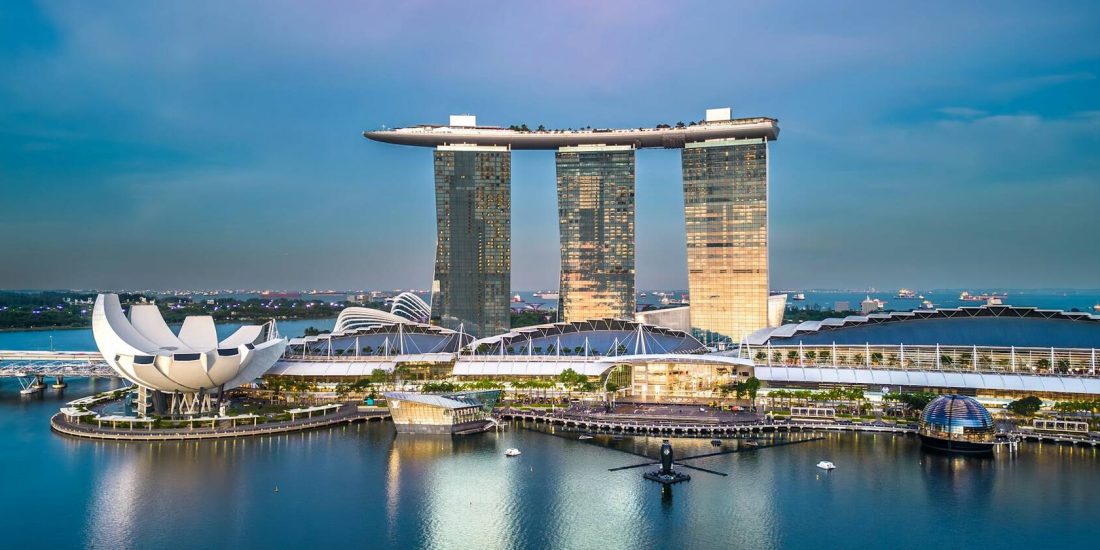


Hopes and Dreams for the Future: Legal Practice in 2085
As our nation celebrates 60 years of independence, three young lawyers from the Young Lawyers Committee share their views on how they think law practice will evolve in the next 60 years, and what ought to remain unchanged, even as the legal landscape marches to the relentless beat of time.
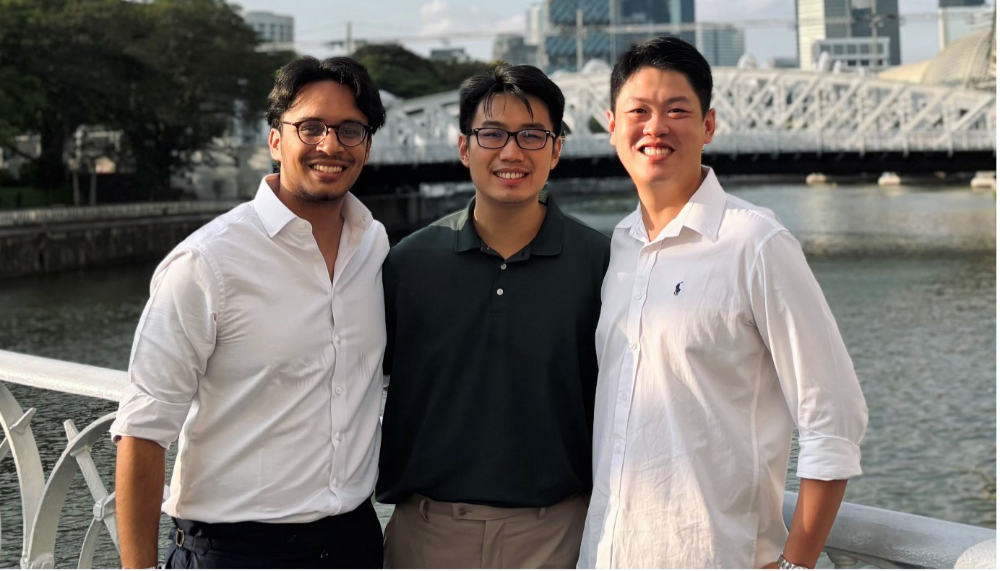
(L to R): Shaquil, Hsien Weng and Terence
Interviewer: Welcome Shaquil, Hsien Weng and Terence! I understand you are part of the Young Lawyers Committee (YLC). Could you introduce yourselves?
Terence: Hi! I was called to the Bar in 2021 and am now a disputes lawyer at TSMP Law Corporation, where I started as a trainee.

Shaquil: I was called to the Bar in 2023 and currently practise dispute resolution at Chua & Partners LLP. I am also a proud member of the YLC, working to support lawyers of less than seven years’ standing.
Hsien Weng: I was called to the Bar in 2023 as well and am a second-year associate in WongPartnership LLP’s Commercial and Corporate Disputes Department. I focus on commercial litigation and arbitration. I also enjoy taking on criminal cases pro bono.
Interviewer: Before we jump straight into today’s topic on young lawyers’ hopes and dreams for the future, let me set the context.
2025 will mark 60 years of independence for Singapore. In the last six decades, Singapore has built a robust legal system and a respected judiciary. We have also established ourselves as a global legal and financial hub. With this in mind, it is perhaps a fitting time to imagine what legal practice will look like 60 years from now, in 2085.
1. The happy, well-adjusted lawyer
Interviewer: How do you see the legal profession evolving by 2085, especially regarding work-life balance and technology?
Terence: For a start, I hope that by 2085, the legal profession will prioritise balance, purpose and well-being.
I have heard from seniors about how in the early 2000s, technology disrupted, rather than enhanced, work-life balance for lawyers. The introduction of email and the Internet, though revolutionary, brought an unrelenting expectation of constant availability. Many lawyers now find themselves under pressure to respond to clients, colleagues and superiors at all hours – blurring the lines between work and personal life.
I hope that legal practice in 2085 will be sustainable for all, and technology will help facilitate work-life balance. Because of the increasingly cross-border and complex nature of litigation and transactional work, digital nomad lawyers may actually become the norm!
Anyway, hopefully by 2085, I am well retired!
Hsien Weng: Imagine in 2085, where flexible working is not a privilege but the norm!
Terence: And hopefully by 2085, mental health days, rest periods and emotional wellness support should become standard practice. Talking about mental health will not only be accepted – it will be expected.
Mentorship, too, should evolve into structured programmes that ensure no one navigates the profession alone. Whether you are the first in your family to enter the field, or you bring a voice long underrepresented in legal spaces, you are not only welcomed. You are valued!
We will hopefully also see more diversity in mentorship. We will be creating a profession where young lawyers can see people who look or were like them in positions of leadership and guidance. Encouragingly, we are already seeing initiatives like women managing partners mentoring younger women lawyers!
2. The global lawyer
Interviewer: That’s a great perspective, Terence! Moving on, what might the lawyer’s role look like in a more globalised legal environment?
Terence: By 2085, I think that the very nature of the courtroom will have fundamentally shifted. Litigation will no longer be bound to any physical locations; legal proceedings will take place in fully virtual or hybrid formats, connecting parties from around the world with unprecedented ease.
Hsien Weng: Perhaps, it will no longer be unusual for a Singaporean lawyer to cross-examine a witness in Tokyo, while a judge in London presides over the proceedings – all virtually. The result is a legal environment that is not only cutting-edge, but truly global.
Shaquil: Hopefully, case management will also be much easier thanks to entirely digital systems that automatically track and update or remind lawyers of critical milestones – from filings to timelines to procedural steps. Lawyers can navigate cases through immersive platforms, enabling them to stay connected and on top of every development in real time. Even hearings and trials may be conducted in virtual reality environments that replicate the atmosphere and respect of traditional courtrooms, ensuring that the integrity of the process is preserved while enhancing accessibility.
Interviewer: In this truly interconnected global legal landscape in 2085, where do you think the Singaporean lawyer fits in?
Terence: Hopefully, as a global leader or thinker in the legal profession – adept in both common law and civil law systems, with strong cross-cultural communication skills, and anchored by ethics.
Shaquil: If the legal education prepares our lawyers in this direction, I hope that Singaporean lawyers will not just be involved – but spearheading “bet the company” arbitrations, coordinating ground-breaking deals, and shaping the future of international legal practice.
Hsien Weng: Apart from the role of the Singapore lawyer, I also hope to see Singapore firmly establish itself as the go-to hub for dispute resolution and cutting-edge deals. Achieving this vision would likely require a strong, respected rule of law, efficient administration of justice, and seamless global connectivity combined with cultural sensitivity.
3. Domestic legal landscape
Interviewer: Apart from developments on the global stage, how do you think our own domestic legal landscape is faring in 2085? How would community law – the kind that directly affects everyday Singaporeans – evolve?
A. Legal literacy
Hsien Weng: By 2085, I hope to see an increase in the foundational level of legal literacy among the citizens in Singapore. From primary school through lifelong learning programmes, legal education would be integrated into the national curriculum and workforce training.
In this way, citizens will be equipped with (at least) a basic understanding of legal principles that affect their everyday lives. Imagine students from an early age learning how to read and interpret contracts and understanding their rights under, among other things, the Constitution and the Criminal Procedure Code.
Terence: Yes, I think this is the right step forward. This would play a part in fostering a legally conscious society that values fairness, responsibility and the rule of law.
B. Community legal advisor
Hsien Weng: To dream bigger, every household could also be supported by a dedicated Artificial Intelligence (AI) Legal Bot or advisor within a nationwide legal support system framework.
In this vision for 2085, this legal support system could perhaps (a) provide confidential support to each household for basic legal issues through their own personalised AI Legal Bot; and (b) propose to escalate more complex issues to human lawyers where necessary.
Specifically, the AI Legal Bot would be designed to offer proactive legal guidance by monitoring a range of data points or key life events – such as property transactions, new business ventures, changes in family relationships or (where unfortunate) interactions with the criminal justice system – ensuring timely and relevant assistance.
Terence: I was thinking – is it truly effective to assign a single legal advisor to an entire household? I mean, in practice, legal issues often also arise at the individual (rather than household) level, and a shared advisor may be conflicted to manage situations where interests within the household diverge. For example, in matters such as divorce, domestic or inheritance disagreements, it may be professionally inappropriate – and legally impermissible – for the same advisor to represent both parties.
Hsien Weng: That is a good point. In this context, perhaps each household is assigned a primary legal advisor for shared or collective matters, every individual is also provided with a secure personal, encrypted legal profile through the national legal platform. This approach would allow shared concerns could be addressed in a coordinated manner, while individual matters would be managed discreetly.
4. Transformation of legal technology
Interviewer: Technology seems central to all your visions. Could you elaborate on what you envision its future role to be?
Shaquil: I think, in 2085, the practice of law and technology will be inseparable. AI will not just assist – it will collaborate. Document review, contract drafting, due diligence, and even aspects of litigation strategy will be powered by sophisticated AI engines. An example I can think of pertains to the use of Large Language Models (LLMs).
I think by 2085, LLMs will have matured far beyond their early iterations (like those in the early 2020s). As you may be aware, LLMs are machine learning models that are capable of understanding and generating human language by processing vast amounts of text data.
In 2085, they will likely serve as dynamic legal research partners, capable of digesting entire regulatory frameworks, case law repositories, and transactional precedents across multiple jurisdictions and languages. Off the top of my head:
- For disputes lawyers, LLMs function as sophisticated legal research agents, capable of mapping case strategies by synthesizing arguments from decades of precedents. They can produce litigation briefs, prepare witness statement outlines, and even suggest cross-examination angles drawn from behavioral pattern recognition.
- For corporate lawyers, LLMs generate first cuts of complex agreements, review multi-jurisdictional legal risks in cross-border transactions, and produce real-time comparative legal analyses. LLMs are also integrated into client-facing dashboards, offering answers to regulatory queries or transactional structuring issues.
Terence: Add to that agentic systems – AI that autonomously executes legal workflows. Disputes lawyers could simulate litigation strategies overnight, while corporate teams automate negotiations within set risk limits.
Interviewer: Given that these technologies are so powerful, are you concerned that they would diminish, or even replace, the role of the human lawyer?
Shaquil: I don’t think so – although the playing field would likely have changed. I would think that in 2085, one way in which lawyers would value-add would be to overlay legal analysis with commercial awareness, ethical considerations, and cultural fluency, particularly in cross-border or sensitive regulatory matters. In other words, lawyers guide clients through not only what the data says, but what it means in the real world by considering stakeholder reactions, regulatory expectations, and reputational impacts that no model can fully predict.
Terence: Agreed. For disputes lawyers, argumentation is rooted in the Aristotelian principles of logos (appeal to logic), pathos (appeal to emotion) and ethos (credibility and trust). At least for the foreseeable future, AI will struggle to replicate these fully in the nuanced, human-centric world of law.
This ensures that while systems may automate, lawyers retain ultimate accountability for the decisions made, the fairness of the processes applied, and the outcomes delivered to clients and for society.
5. Values of the profession
Interviewer: These all sound really exciting. Perhaps we could look at things from a different perspective. What do you hope doesn’t change by 2085?
Hsien Weng: Hmmm … I hope that the soul of legal practice remains the same. I mean, in these 60 years, we will likely move towards practising law in virtual courts, negotiating deals across continents in augmented reality, and relying on AI collaborators to handle the complexities of data, etc. But at the core of it, I hope and believe that 60 (or even 100 or 200) years from now, the practice of law is still about serving the people.
The people still look to us to navigate not just laws, but the human consequences of those laws. To illustrate, imagine representing a client who is facing the death penalty; your role (as a human being and a lawyer) would still ultimately be to provide counsel, assurance and advocacy in the provision of legal service.
Terence: Law is, and should remain, a human enterprise. The core values identified by the Ethics and Professional Standards Committee back in 2025 (integrity, professionalism, and justice) should not be discarded, but the compass that guides us through this brave new world.
Conclusion
Interviewer: Final thoughts – what should future lawyers hold on to, and what must they be ready to rethink?
Terence: Hold on to the best of our profession’s traditions. But always ask: how do we bring value in a changing world?
Shaquil: Stay rooted in values, but flexible in form. As the profession evolves, embrace tools that allow you to focus on what truly matters: sound judgment, empathy, and service.
Hsien Weng: We are standing at the frontier of change. It’s up to us – the lawyers of today – to shape what the lawyers of tomorrow become.