

The YBC Conference 2025: The Art of Regulation
On 30-31 October 2025, delegates from the Young Lawyers Committee of the Law Society of Singapore (“YLC”) had the privilege of attending the Hong Kong Bar Association (“HKBA”) Young Barristers’ Committee (“YBC”) Conference 2025. The event drew more than a hundred attendees, including representatives from the European Young Bar Association (“EYBA”) and the National Young Lawyers and Pupils Committee (“NYLPC”) of the Malaysian Bar.
This year’s conference explored the Art of Regulation through two seemingly disparate lenses: art law and cryptocurrency. The conference opened with a thought-provoking remark from Mr José-Antonio Maurellet SC, Chairman of the HKBA, who contrasted the two fields by noting that “[a]rt is there to reveal its artist. Crypto is there to conceal its owner”.
Building on this theme, Mr Paul Lam SC, the Secretary for Justice of Hong Kong, highlighted in his keynote speech that “[w]hile the two topics may seem entirely unrelated, they are in fact both fast-evolving domains that will provide enormous opportunities for young lawyers”, emphasizing the shared potential for development in these emerging areas.

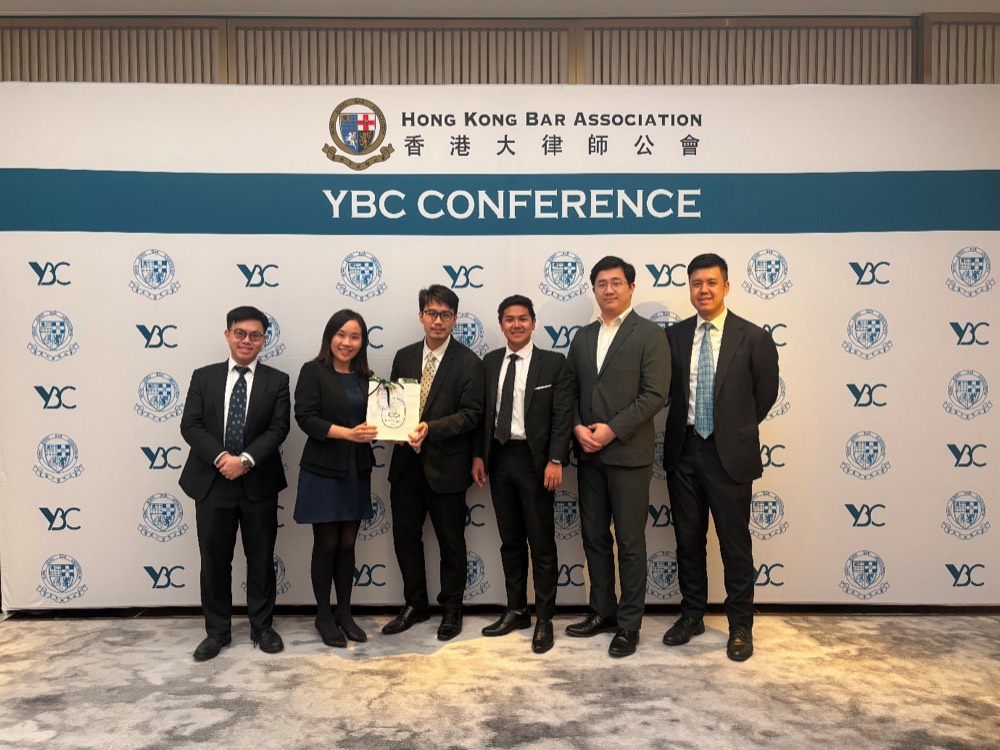
Pictured: Delegates from the YLC and the YBC presenting the token of appreciation
Panel 1: Navigating Art Law Challenges and Regulation
The first panel discussion brought together professionals from a wide range of disciplines within the art law ecosystem: (a) Mr Val Chow, a Hong Kong barrister with a special interest in art law; (b) Mr Ephraim Tan, a Research Consultant from the Institute of Art and Law (UK); (c) Ms Leanne Tse, a loans and exhibitions registrar from M+, Hong Kong’s Asia’s leading global museum of contemporary visual culture; and (d) Ms Martha Visser, the Chief Governance Officer and General Counsel of the Stedelijk Museum, Netherlands.
- Mr Val Chow set the context by emphasising that art law disputes cannot be viewed in isolation and must be understood within the broader art world. He highlighted the growing use of arbitration to resolve art-related disputes confidentially, mitigating negative publicity that could stigmatise artworks and reduce their value, while also enabling effective enforcement of awards in cross-border disputes. Arbitration, he added, also allows for the appointment of experts familiar with the art market to serve as arbitrators.
- Mr Ephraim Tan examined the financial dimension of art law, discussing the 2020 New York lawsuit filed by Athena Art Finance involving Jean-Michel Basquiat’s Humidity (1982). The case concerned art-secured lending and the fraudulent conveyance of said artwork as collateral for a multi-million-dollar loan. He also outlined key legal principles arising from the case, including the nemo dat quod non habet and the bona fide purchaser principles, which were particularly relevant for the common law practitioners in attendance.
- Ms Leanne Tse discussed the evolving scope of art collections, which now extend beyond tangible works to digital and intangible assets, including AI-generated artworks that adapt and develop distinct personalities through machine learning and visitor interactions, highlighting emerging legal and curatorial challenges.
- The panel concluded with Ms Martha Visser’s historical reflection on the intersection between art, warfare, and legal protection. Tracing the lineage of cultural property safeguards from Hugo Grotius’ De jure belli ac pacis (1625) (On the Law of War and Peace) to the 1954 Hague Convention for the Protection of Cultural Property in the Event of Armed Conflict and the 1970 UNESCO Convention on the Means of Prohibiting and Preventing the Illicit Import, Export, and Transfer of Ownership of Cultural Property, she demonstrated how the law has progressively sought to define the limits of wartime conduct to prevent the erosion of cultural identity. It served as a reminder that art law is not merely about commerce or disputes, but about safeguarding cultural identity through generations.
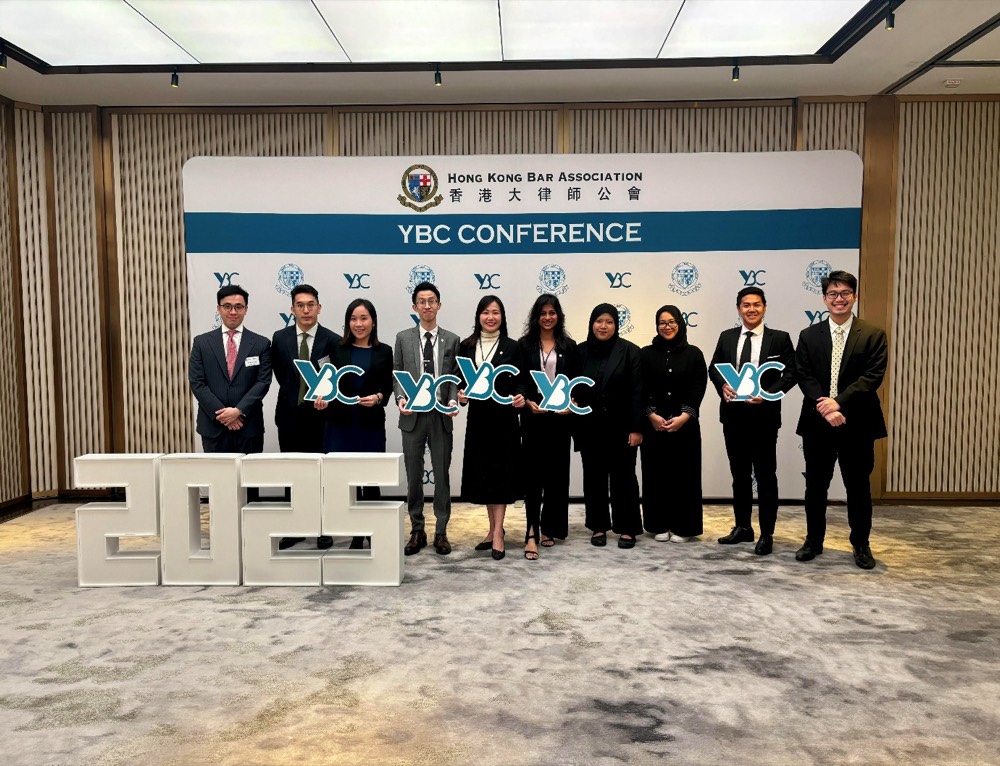
Pictured: Delegates of the YLC, NYLPC and YBC at the YBC Conference
Panel 2: The Law and Cryptocurrency
The second discussion featured a distinguished 5-member panel: (a) Ms Eva Sit SC, the Vice Chairman of the HKBA; (b) Mr Derek Chan SC, a Council Member of the HKBA whose practice focuses on, among other things, commercial crime; (c) Professor Jack Poon, a Professor of Practice (Fintech, Entrepreneurial Finance) at the Hong Kong Polytechnic University; (d) Ms Agnes Mak, a Senior Director at the Hong Kong Securities and Futures Commission; and (e) Ms Hin Han Shum, a solicitor advocate and the Chair of the Young Solicitors Group.
- Given that commercial disputes increasingly feature in the work of young lawyers today, Ms Eva Sit SC’s discussion on the landmark decision of Re Gatecoin Ltd [2023] HKCFI 914 was particularly illuminating. She explained that the decision confirmed cryptocurrency as property at common law, capable of forming the subject matter of a trust, and illustrated how traditional legal principles may be applied to digital assets. Although this development may appear unsurprising considering the trajectory of international cases (including the local case of ByBit v Ho Kai Xin [2023] SGHC 199, where the High Court held that United States Dollar Tether (USDT), a form of stablecoin, constitutes property capable of being held on trust), such alignment underscores that courts across jurisdictions are increasingly prepared to apply established legal doctrines to novel asset classes, subject to principled adaptation where necessary.
- From a criminal law perspective, Mr Derek Chan SC highlighted issues that both Singapore and Hong Kong will inevitably confront: the legal impact and criminal consequences of cryptocurrency misuse. He explained that while civil courts in Hong Kong have accepted cryptocurrency as property, this principle has yet to be fully tested in Hong Kong’s criminal courts. When such cases arise, unique evidentiary challenges are to be expected, including the need for detailed expert reports, forensic tracing of digital transactions across platforms and evidence from crypto exchanges, such as KYC records and IP address tracking.
- Beyond legal cases, Professor Jack Poon provided an economic and policy-driven perspective on how Hong Kong is integrating virtual assets into traditional finance, particularly through cryptocurrency ETFs. Complementing this, Ms Agnes Mak discussed the regulatory challenges faced by all jurisdictions (including Singapore): how to foster innovation in the rapidly evolving cryptocurrency sector while ensuring adequate investor protection. Hong Kong’s answer is the “ASPIRE” framework: Access, Safeguards, Products, Infrastructure, and Relationships.
- Lastly, Ms Hin Han Shum emphasized a point that resonated with all practitioners: the virtual world is not exempt from real-world legal principles. Contract law, misrepresentation, negligence, trust law, and fiduciary duties etc. continue to apply to cryptocurrency disputes. The risks are multidimensional, and so too must be our legal approach.
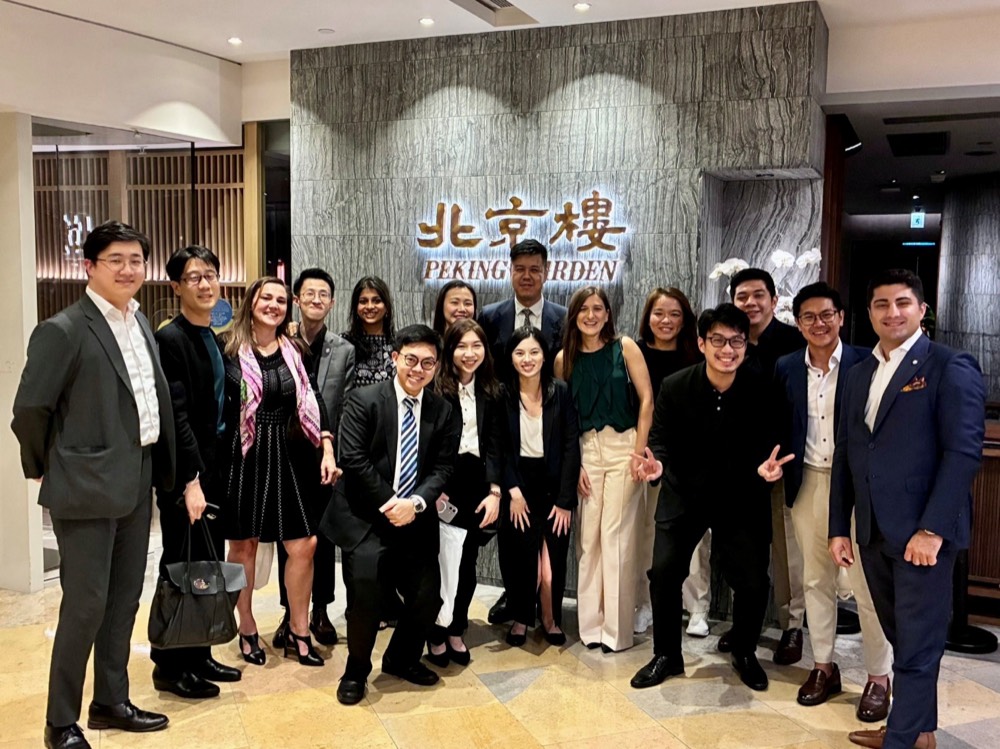
Pictured: Delegates from the YLC, YBC, NYLPC, and EYBA at the welcome dinner
Closing: Gala Dinner at the Magistracy Dining Room
The conference drew to a close with a gala dinner at the Magistracy Dining Room, housed within the iconic Central Magistracy at Tai Kwun. In its golden heyday up to the 1980s, the building served as an affiliated building of the Hong Kong Supreme Court while accommodating offices of the Hong Kong Immigration Department and the police force.1https://www.hkmemory.hk/en/collection_details.html?catalogueRecordId=95890&f=search. Its halls bear witness not only to decades of justice and enforcement but also to the unfolding development of the rule of law in Hong Kong.
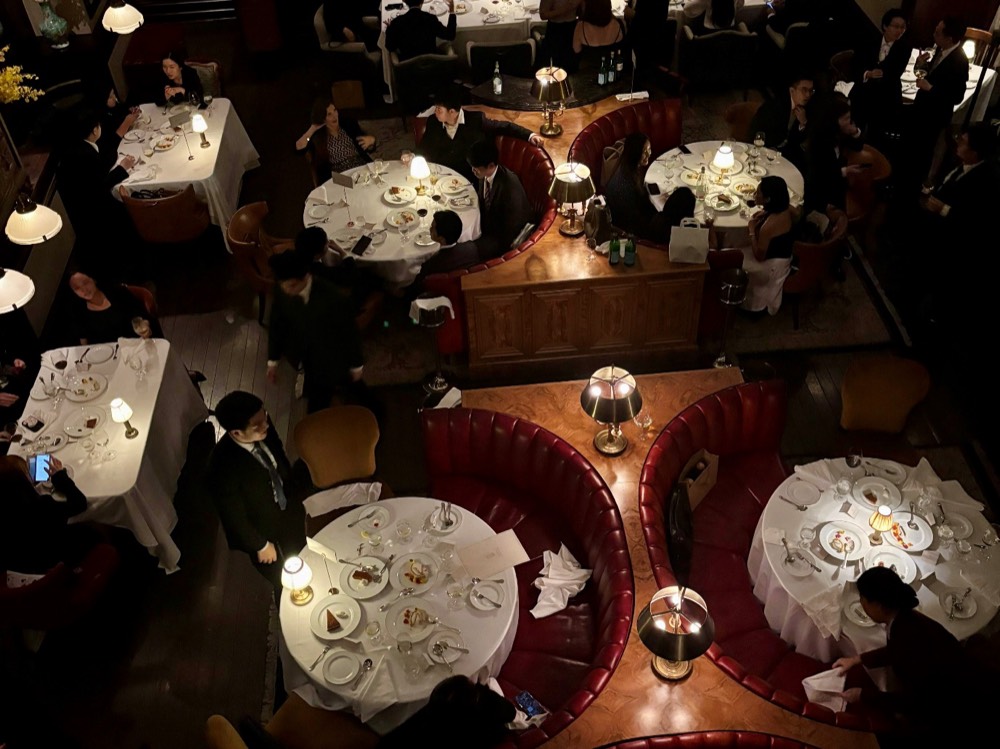
Pictured: The Magistracy Dining Room
More than an academic exchange, the conference provided a vibrant platform for young lawyers and barristers from Singapore, Hong Kong, Malaysia and Europe to strengthen professional ties and explore avenues for future collaboration. Its timing was particularly fitting, coming less than a week after the Singapore-Malaysia Young Lawyers Summit, which also included young barristers from Hong Kong, reflecting growing cross-border engagement within the regional legal community.
During the gala dinner, conversations lingered and ideas for future collaboration quietly took shape. In that historic setting, there was a subtle awareness that the steps we take today may, in time, become part of the enduring story of the profession – just as those who once walked these halls have become part of its history.
On behalf of the YLC, the authors extend their sincere gratitude to the YBC for their unparalleled hospitality.
Young Lawyers Committee 2025